Folate test with vitamin B12, B1 and B6 from one draw
Folate, vitamin B12, B1 and B6 from one blood draw, no referral needed.
Add to your order
No referral needed
Added to your order
Click the button to view your cart
Included Markers
4 markersFolate (Folic Acid), Vitamin B1 (Thiamine), Vitamin B12, Vitamin B6
The Lunara folate test measures folate, vitamin B12, B1 and B6 from one blood draw. You do not need a referral from your GP. You see your result in your account, assessed by a BIG-registered doctor.
You order the test online and have your blood drawn at a draw site near you. You do not need to fast.
Why this test?
A folate test shows if your body has enough folate for new cells, like red blood cells. During pregnancy, folate also plays a part in the development of the foetus.
A folate deficiency usually builds up slowly. The first signs, such as tiredness or pale skin, also fit many other causes. A blood measurement can show a possible deficiency where a symptom alone cannot.
Who is this test for?
Folate testing may suit pregnant women and women trying to conceive. It can also suit you if you get little folate from food, for example if you:
- want to become pregnant or are newly pregnant and want to know your values
- eat few leafy greens, legumes or wholegrain foods
- eat a vegetarian or vegan diet, since vitamin B12 is found mainly in animal products
- have a bowel condition such as coeliac disease, which can reduce folate absorption
- take medicines such as methotrexate or some epilepsy drugs, which can lower your folate
What is tested?
This folate blood test measures four B vitamins in your blood:
- Folate: also known as vitamin B9 (B11 in the Netherlands), measured in serum. Folate is the natural form in food. Folic acid is the synthetic form in tablets and fortified foods.
- Vitamin B12: needed for your nerves and, together with folate, for making red blood cells.
- Vitamin B1 (thiamine): helps your body get energy from carbohydrates.
- Vitamin B6: is involved in breaking down protein and in substances your nervous system uses.
What can this test tell you?
Your folate value shows how much folate is in your blood right now. Serum mainly reflects your folate intake over the past days to weeks, from food or supplements.
A low value can fit with low intake, poor absorption in your gut or heavy alcohol use. Your B1 and B6 mostly reflect your diet and any supplements you take.
How is the sample collected?
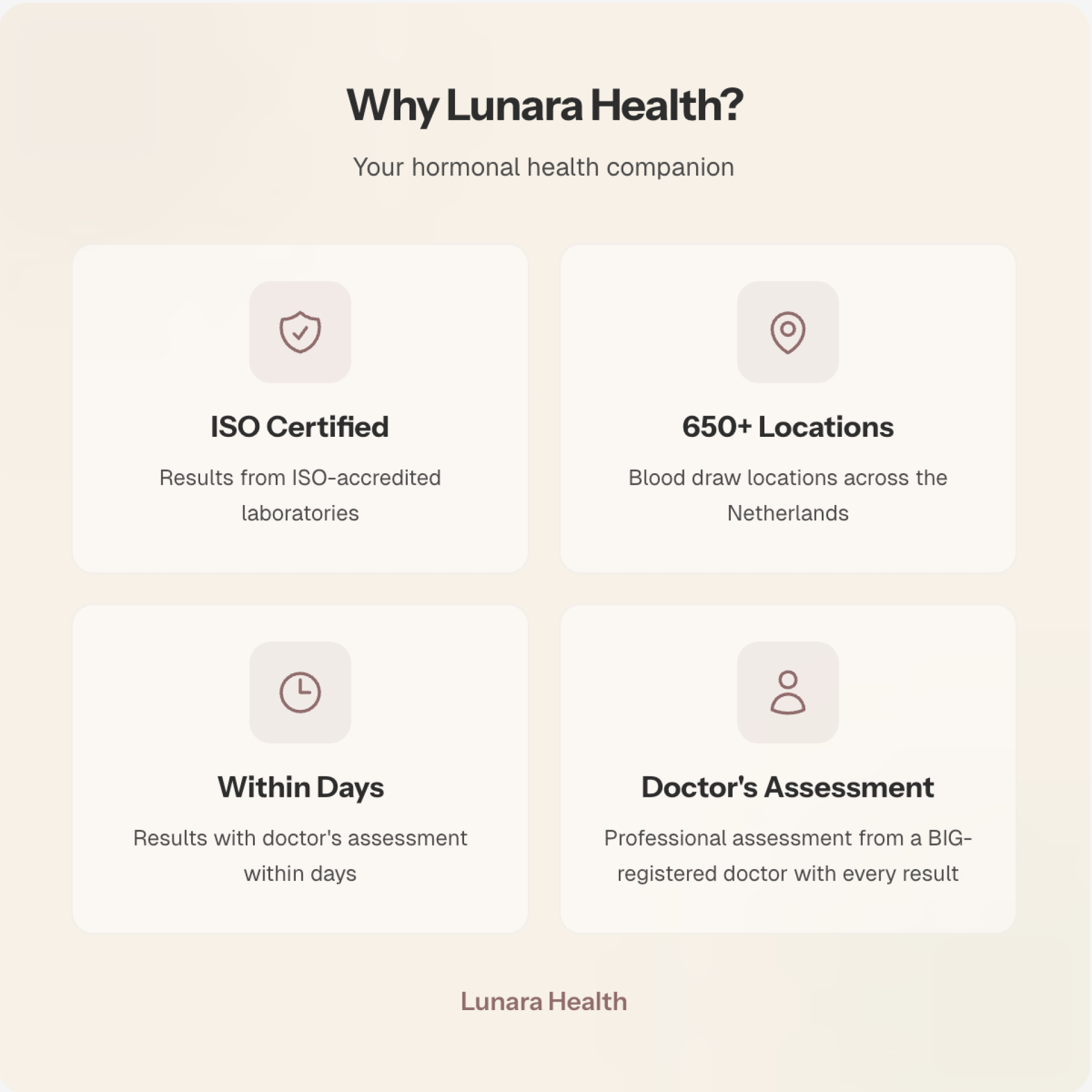
The folate test needs a small blood draw at a draw site. It is not a home self-test. In the Netherlands you choose from 650+ draw sites, run by independent, certified laboratories we work with.
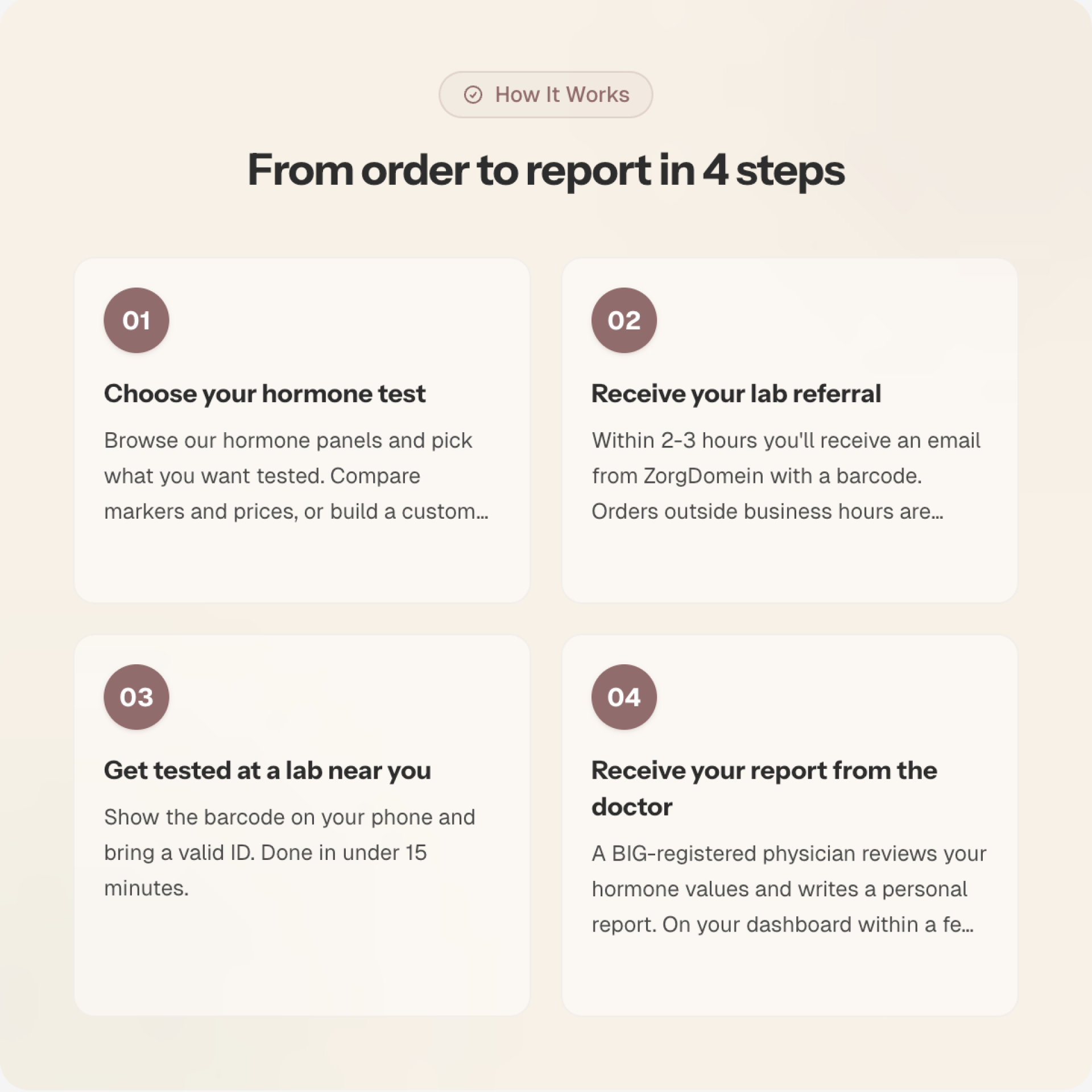
After your order, Lunara arranges your referral through ZorgDomein. Allow 1 business day; orders after 17:00 or at the weekend start on the next business day. You then receive an email from ZorgDomein with a barcode.
At the draw site you show that barcode. Many sites have walk-in hours, at others you make an appointment. If you have no BSN, you print your referral form through the link in the email. You bring that form along.
When is this test useful?
A folate deficiency test can be useful when there is a reason for it, for example:
- symptoms that can fit anaemia, such as tiredness, shortness of breath or a sore tongue
- an earlier blood count showing large red blood cells
- an earlier low folate or B12 value you want to follow up
- supplements whose effect on your blood you want to see
What do the results mean?
Your folate result sits next to the reference range of the lab that measures your blood. For folate in serum, a lab uses for example 5.9 to 35.4 nmol/l. Reference values differ per lab, so compare your value with the range on your own result.
A value below the range can point to a folate deficiency. A high value usually comes from supplements or fortified foods.
A folate deficiency and a vitamin B12 deficiency can both cause anaemia. Taking folic acid can also hide a B12 deficiency. That is why this panel measures both.
Trying to get pregnant? Then the advice is to take 400 micrograms of folic acid every day. You start about 4 weeks before a possible conception. From the tenth week of pregnancy it is no longer needed.
A normal folate value does not replace that advice. Discuss your result with your GP or midwife.
Preparation
For your folate measurement through Lunara you do not need to fast. The same goes for B12, B1 and B6. Drinking water is always fine and makes the draw easier.
If you take folic acid or another B vitamin supplement, note when you last took it. A tablet shortly before the draw can briefly raise your serum folate.
What happens after the results?
The folate test result comes in per measurement. This is our indicative planning, counted from the draw:
- folate: about 48 hours
- vitamin B12: 72 hours
- vitamin B1: 96 hours
- vitamin B6: 144 hours
These times differ per lab.
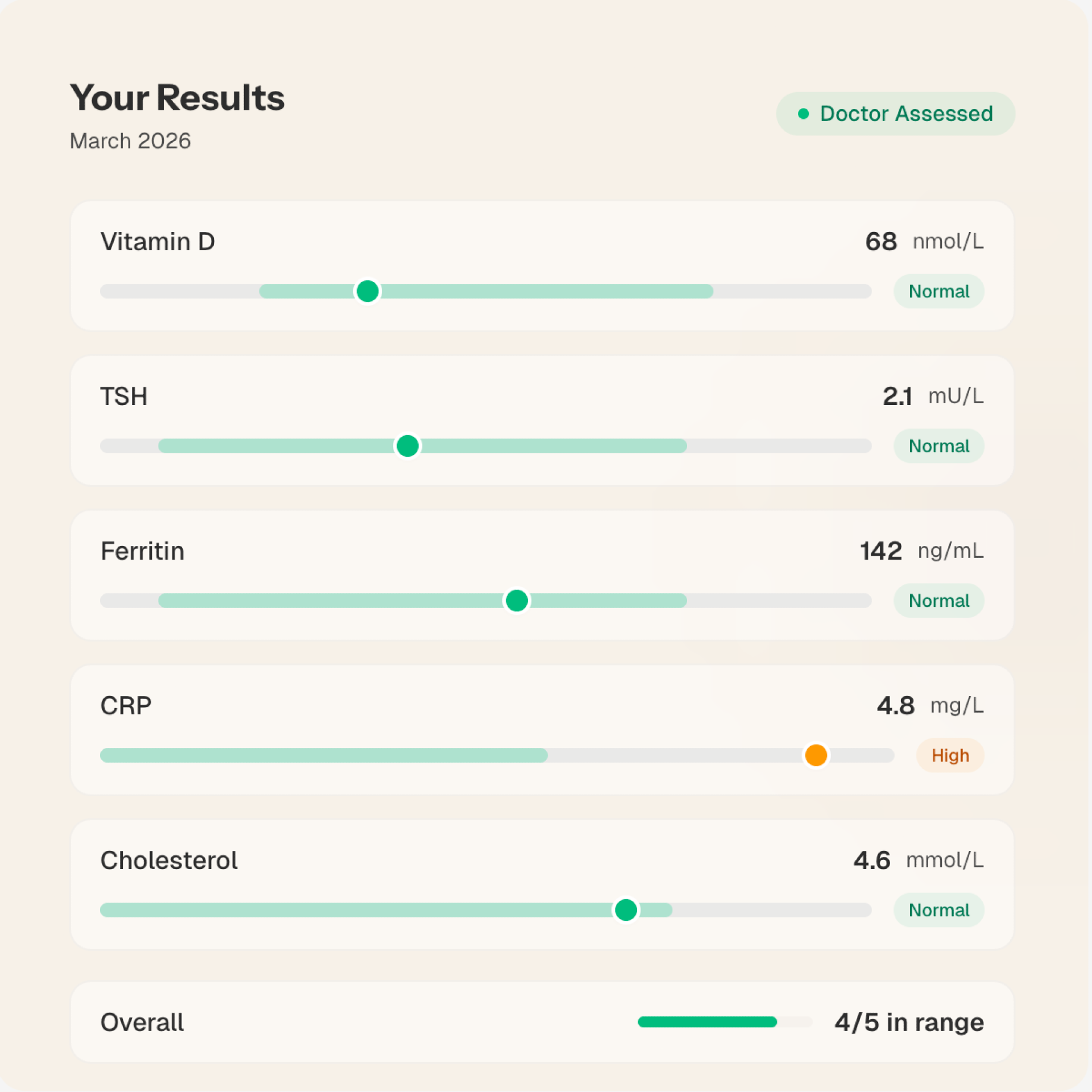
Every blood test result includes a professional assessment from a BIG-registered doctor. For treatment decisions, discuss your results with your GP.
Frequently asked questions
A folate deficiency often only shows once it causes anaemia. You then feel tired or dizzy, have a headache or look pale. Those complaints often have another cause. A folate test shows whether your value is below the reference range.
A normal folate level falls within the lab's reference range. In serum that is for example 5.9 to 35.4 nmol/l. Other labs use slightly different limits, so the range on your own result is the one that counts.
A high folate value usually comes from folic acid tablets, a multivitamin or fortified foods. This is especially true if you took them shortly before the draw. A high value does not mean you have enough vitamin B12. Discuss a striking result with your GP.
No. You do not need to fast for folate, vitamin B12, B1 or B6. If you take folic acid or B12, note when you last took it.
No. After your order, Lunara arranges the referral through ZorgDomein, which takes one business day. You take the barcode from that email to the draw site.
You pay €133,-. The blood draw is already included, so nothing is added.
No, a test you request yourself is not part of the basic Dutch insurance. You pay it yourself, and your deductible (eigen risico) stays untouched.
Count on one business day, a day longer for an order after 17:00 or at the weekend: by then the referral email has arrived, and you cannot go before it does. Some draw sites then take walk-ins and the rest work by appointment. Each location says which.
Your barcode from the ZorgDomein email and a valid ID. Showing the barcode on your phone is fine. Without a BSN you get no barcode; print the referral form from the link in the email instead.
Yes, unless your own doctor said otherwise. Some markers ask for extra preparation, such as no alcohol for 24 hours or no heavy training for 48 hours. You see this on the test and in the instructions after you order.
You show your barcode and your ID at the draw site, and then your blood is taken. Allow about a quarter of an hour.
Yes, a BIG-registered doctor assesses every result and explains your values in your account. If you want treatment, discuss the result with your GP.
In one of the independent, certified laboratories across the Netherlands that Lunarahealth works with. They also run the draw sites, which Lunarahealth does not own. Reference values can differ a little between labs.
No, your test bypasses your GP and does not end up in your medical record. Data goes to a healthcare provider only with your written consent, and it is never sold. Anonymous is not possible: a valid result needs your name, date of birth and ID.
What We Test
| No. | Biomarker | Unit |
|---|---|---|
| 01 | Folate (Folic Acid) | nmol/l |
| 02 | Vitamin B1 (Thiamine) | nmol/l |
| 03 | Vitamin B12 | pmol/l |
| 04 | Vitamin B6 | nmol/l |
| Your results are usually in your Lunarahealth account within 2 working days of the blood draw. The laboratory states a longer turnaround for Vitamin B1 (Thiamine), Vitamin B12 and Vitamin B6. | ||
Preparation
Nothing special is needed for these tests.
- Water is always fine. Drink as usual beforehand, it makes the draw easier.
- Take your usual medication, unless your own doctor told you otherwise.
Extend this panel
Same draw, no second appointment.
You Might Also Like
Celiac Disease
Anti-TTG and Endomysium IgA: a commonly used celiac disease screening.
Vegetarian
Key nutrients at risk on a plant-based diet: Ferritin, CBC, B12, Vitamin D, Zinc, Magnesium.
Tiredness
Investigate some common causes of fatigue: CBC, thyroid, iron, vitamins, glucose, and HbA1c.