Anemia blood test: hemoglobin, iron and B12 measured
Anemia workup: hemoglobin, iron, transferrin, CBC, and B12.
Add to your order
No referral needed
Added to your order
Click the button to view your cart
Included Markers
7 markersIron (Serum), Hemoglobin, Transferrin Saturation, Vitamin B12, Ferritin, Transferrin, Basic Blood Count
Have you been feeling more tired, run down or short of breath lately, with things that used to be easy now taking more out of you? Those signals are completely understandable, and an anemia blood test can help you find out whether your blood has something to say about them.
Anemia means your blood may carry too few healthy red blood cells or too little hemoglobin, which makes it harder for your body to move oxygen around. If you menstruate, your iron and hemoglobin levels can fluctuate. This panel gives you a factual starting point instead of leaving you to guess.
Why this test?
Symptoms like fatigue, paleness, dizziness or palpitations can sometimes be linked to anemia, though they can also have other causes. An anemia blood test can help you get a clearer view.
With anemia, there may be too little hemoglobin or too few healthy red blood cells in your blood. This panel looks not only at your hemoglobin, but also at your iron stores and vitamin B12, so you get a broader view of where a shortage might come from.
Who is this test for?
This test can be useful if you notice your energy running low, or if you are curious about your iron and hemoglobin levels. Think of women with heavy periods, where iron is regularly lost.
If you eat vegetarian or vegan, are pregnant, or have recently given birth, your need for iron and B12 can be higher. A blood test can then be a handy way to map your values, without having to visit your GP first.
What is tested?
This panel looks at seven blood values that together can say something about anemia and its possible causes:
- Hemoglobin: the protein in your red blood cells that carries oxygen; a low value can fit with anemia.
- Complete Blood Count (CBC): gives an overview of your red and white blood cells and platelets, including the size of your red cells.
- Iron (Serum): the amount of iron in your blood, a building block for hemoglobin.
- Ferritin: reflects your iron stores and can drop before your hemoglobin responds.
- Transferrin: the transport protein that carries iron through your body.
- Transferrin Saturation: shows how much of your transferrin is actually loaded with iron.
- Vitamin B12: a vitamin you need for the production of red blood cells.
What can this test tell you?
The results can give you an impression of whether there are signs of anemia, and whether a possible shortage seems to sit more with iron or with vitamin B12. Your hemoglobin and blood count give a broad overview, while ferritin and transferrin saturation say more about your iron stores.
A low ferritin value, for example, can point to declining iron stores before your hemoglobin changes. On its own this test does not make a diagnosis, but it can offer useful reference points that you can review together with your GP.
How is the sample collected?
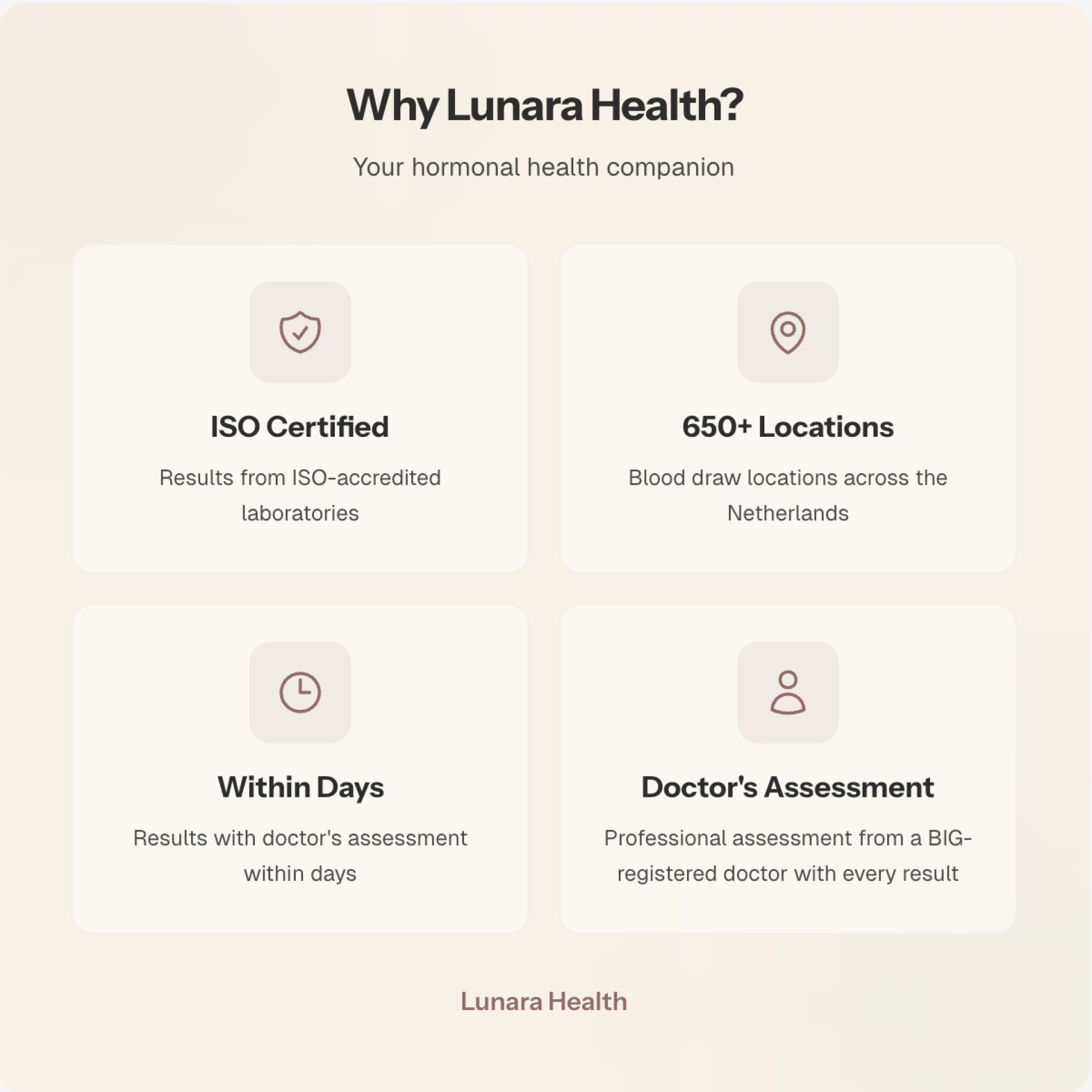
This panel requires a small blood draw at a certified lab. In the Netherlands you can choose from 650+ sample points, so there is a good chance one is close to you.
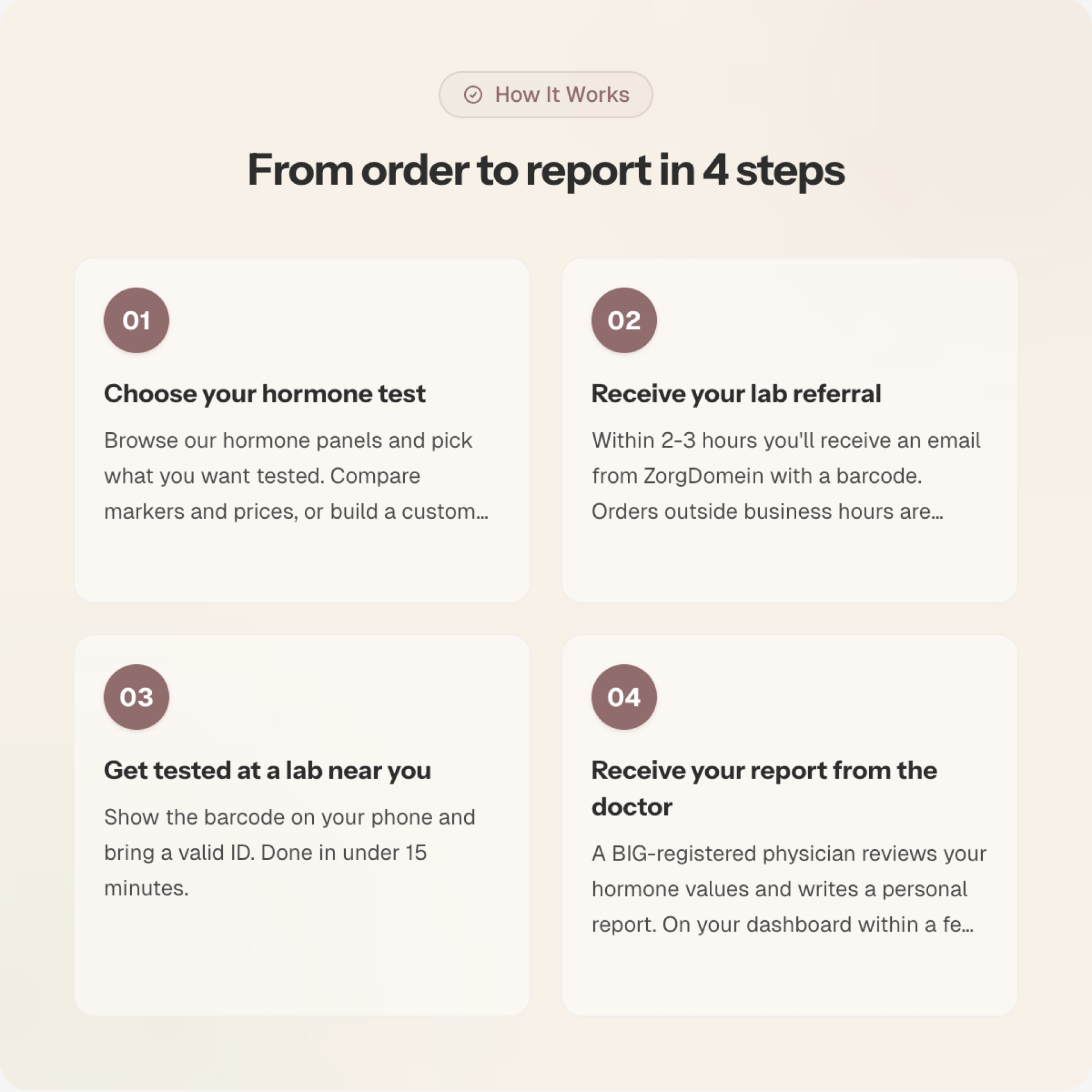
After ordering, you pick a location and a moment that suits you. The draw itself usually takes only a few minutes, and you do not need a referral from your GP.
When is this test useful?
An anemia blood test can be valuable at different moments, for example:
- when you feel tired or run down for a long time and want to know if your blood values fit with that
- when you have heavy periods and want to keep an eye on your iron level
- when you eat a plant-based diet and are curious about your iron and vitamin B12
- when you had a low hemoglobin before and want to measure your hb value again
Some people choose to test now and then to stay informed about their values.
What do the results mean?
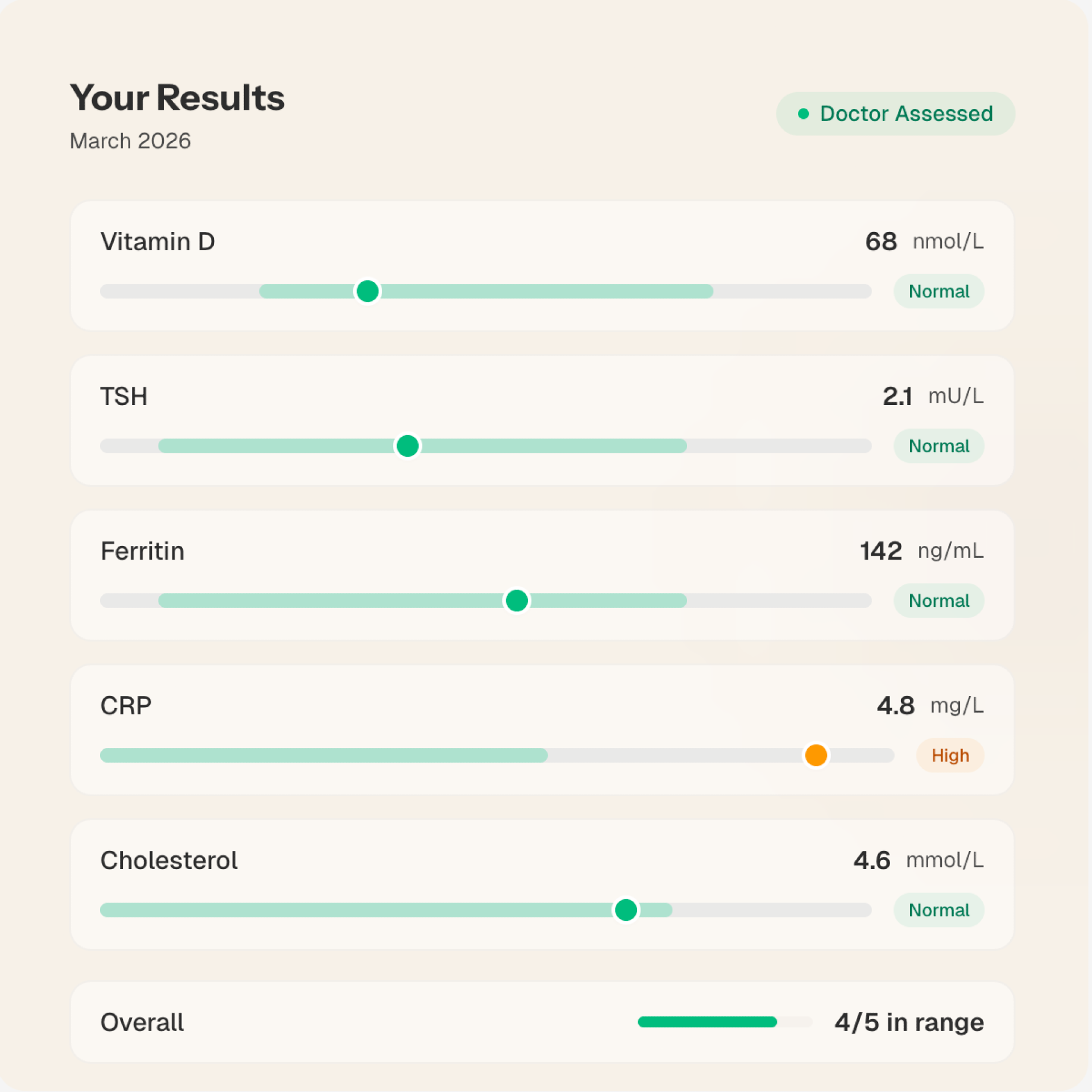
Your result shows where you stand for each value, together with a reference range and a short explanation. What counts as usual can vary by laboratory and from person to person.
A hemoglobin value below the range can fit with anemia, while your ferritin, iron and transferrin saturation help explore whether iron plays a role. The doctor helps you place these values in the right context.
What happens after the results?
Your results are usually in your Lunarahealth account within 2 working days of the blood draw, often the next day. Some markers take longer. Each value is shown clearly with a reference range and an explanation, so you understand what you see.
Every blood test result includes a professional assessment from a BIG-registered doctor. For treatment decisions, discuss your results with your GP.
Frequently Asked Questions
Anemia means you have too little hemoglobin or too few red blood cells. Iron deficiency is a common cause of that, but not the only one; a shortage of vitamin B12 can also play a role.
For this panel you usually do not need to fast. It can help to have had enough to drink so the blood draw goes smoothly.
No, you can order this test yourself online without a referral. You then choose a sample point near you and pick a moment that suits you.
The test can give signs of whether anemia might be involved, but tiredness has many causes. Your GP can help place the result in the right context.
You pay €132,-. The blood draw is already included, so nothing is added.
No, a test you request yourself is not part of the basic Dutch insurance. You pay it yourself, and your deductible (eigen risico) stays untouched.
Count on one business day, a day longer for an order after 17:00 or at the weekend: by then the referral email has arrived, and you cannot go before it does. Some draw sites then take walk-ins and the rest work by appointment. Each location says which.
Your barcode from the ZorgDomein email and a valid ID. Showing the barcode on your phone is fine. Without a BSN you get no barcode; print the referral form from the link in the email instead.
Yes, unless your own doctor said otherwise. Some markers ask for extra preparation, such as no alcohol for 24 hours or no heavy training for 48 hours. You see this on the test and in the instructions after you order.
You show your barcode and your ID at the draw site, and then your blood is taken. Allow about a quarter of an hour.
Yes, a BIG-registered doctor assesses every result and explains your values in your account. If you want treatment, discuss the result with your GP.
In one of the independent, certified laboratories across the Netherlands that Lunarahealth works with. They also run the draw sites, which Lunarahealth does not own. Reference values can differ a little between labs.
No, your test bypasses your GP and does not end up in your medical record. Data goes to a healthcare provider only with your written consent, and it is never sold. Anonymous is not possible: a valid result needs your name, date of birth and ID.
What We Test
| No. | Biomarker | Unit |
|---|---|---|
| 01 | Iron (Serum) | umol/l |
| 02 | Hemoglobin | mmol/l |
| 03 | Transferrin Saturation | % |
| 04 | Vitamin B12 | pmol/l |
| 05 | Ferritin | ug/l |
| 06 | Transferrin | g/l |
| 07 | Basic Blood Count | — |
| Your results are usually in your Lunarahealth account within 2 working days of the blood draw. The laboratory states a longer turnaround for Iron (Serum) and Vitamin B12. | ||
Preparation
-
Been ill? Wait a little
RequiredHad a fever, an infection or a vaccination in the past 2 weeks? Wait with the draw until you are fully recovered. These values react to inflammation and would give a distorted picture.
-
Preferably fasting
RecommendedComing fasting gives a slightly cleaner value, but it is not required. If it suits you, eat nothing from 22:00 the evening before and drink only water.
-
Preferably in the morning
RecommendedA morning draw makes this value easiest to compare with its reference range. Plan the draw before 10:00 if you can.
- Water is always fine. Drink as usual beforehand, it makes the draw easier.
- Take your usual medication, unless your own doctor told you otherwise.
Extend this panel
Same draw, no second appointment.
You Might Also Like
Iron Status
Iron panel: commonly relevant for menstruating women.
Ferritin Test
Measure your ferritin, your body's iron store and a common cause of fatigue. No referral needed.
Tiredness
Investigate some common causes of fatigue: CBC, thyroid, iron, vitamins, glucose, and HbA1c.