Buy an IVF blood test for women with a wish to conceive
Complete female IVF intake panel: ovarian reserve, thyroid, infectious screening, immunity serology, blood group and CBC.
- Sample
- Blood
- Reliable after
- 3 months for HIV and hepatitis B
- Result within
- 120 hours
Add to your order
No referral needed
Added to your order
Click the button to view your cart
Included Markers
18 markersTSH (Thyroid Stimulating Hormone), Prolactin, AMH (Anti-Müllerian Hormone), Estradiol (E2), FSH (Follicle Stimulating Hormone), LH (Luteinizing Hormone), Chlamydia IgG, HIV 1/2 Antibody + p24 Antigen, Syphilis Screening, Blood Type + Rh, Hepatitis B Core Antibody, Hepatitis B Surface Antigen, Hepatitis C Antibody, Rubella IgG, Toxoplasmosis IgG, Varicella Zoster, D-Dimer, Basic Blood Count
A wish to conceive and an upcoming IVF journey often come with plenty of questions. An IVF blood test helps you walk into the conversation with your clinic well prepared, with a number of important blood values in hand.
This panel for women takes a broad look: from your hormones and ovarian reserve to infection serology, your immunity against a few common infections, your blood type and your blood count. In a single draw you gain insight into values that are often requested around an IVF intake.
Why this test?
Before IVF treatment starts, many clinics like to know a number of blood values. A blood test for IVF can give you and your care team insight into your hormonal starting point and into a few infections and immunities that can be relevant around pregnancy.
By having these values drawn all at once, you do not need a separate visit for each part. That can take some of the hassle out of arranging your appointments.
Who is this test for?
This panel is put together for women who are considering IVF or ICSI treatment, or who have already started. Even if you are simply exploring your options around your wish to conceive, an IVF intake blood test can give you a factual starting point.
Every clinic works a little differently. It can therefore be helpful to check in advance which values your clinic likes to see, so you measure exactly the right things.
What is tested?
This extensive panel measures a range of values in your blood:
- AMH (Anti-Müllerian Hormone): gives an impression of your ovarian reserve, that is, your egg supply.
- FSH (Follicle Stimulating Hormone): involved in the maturation of follicles and says something about your ovarian function.
- LH (Luteinizing Hormone): plays a role in ovulation and works together with FSH in your cycle.
- Estradiol (E2): an important estrogen that fluctuates with your cycle.
- Prolactin: a hormone that, when elevated, can influence your cycle.
- TSH (Thyroid Stimulating Hormone): gives insight into your thyroid function, which is linked to your fertility.
- HIV 1/2 Antibody + p24 Antigen: screening for antibodies and the p24 antigen that can point to HIV.
- Hepatitis B Surface Antigen: can point to an active hepatitis B infection.
- Hepatitis B Core Antibody: shows whether you have ever been in contact with the hepatitis B virus.
- Hepatitis C Antibody: antibodies that can point to contact with the hepatitis C virus.
- Syphilis Screening: screening for an infection with the syphilis bacterium.
- Chlamydia IgG: antibodies that can point to a past chlamydia infection.
- Rubella IgG: gives insight into your protection (immunity) against rubella.
- Toxoplasmosis IgG: shows whether you have been in contact with the toxoplasmosis parasite before.
- Varicella Zoster: gives insight into your immunity against chickenpox.
- Blood Type + Rh: determines your blood type and your Rhesus factor.
- Complete Blood Count (CBC): gives an overview of your red and white blood cells and platelets.
- D-Dimer: a marker that relates to clotting processes in your blood.
What can this test tell you?
The results can give you insight on several fronts. Your hormone values such as AMH, FSH, LH and estradiol together give an impression of your ovarian reserve and your cycle, while TSH and prolactin can say something about factors that co-influence your fertility.
The infection and immunity markers show whether there are signs of certain infections and whether you appear protected against infections such as rubella, chickenpox and toxoplasmosis. Your blood type and Rhesus factor are good to know around a possible pregnancy. Together these values form separate pieces of the puzzle that your doctor helps to interpret.
How is the sample collected?
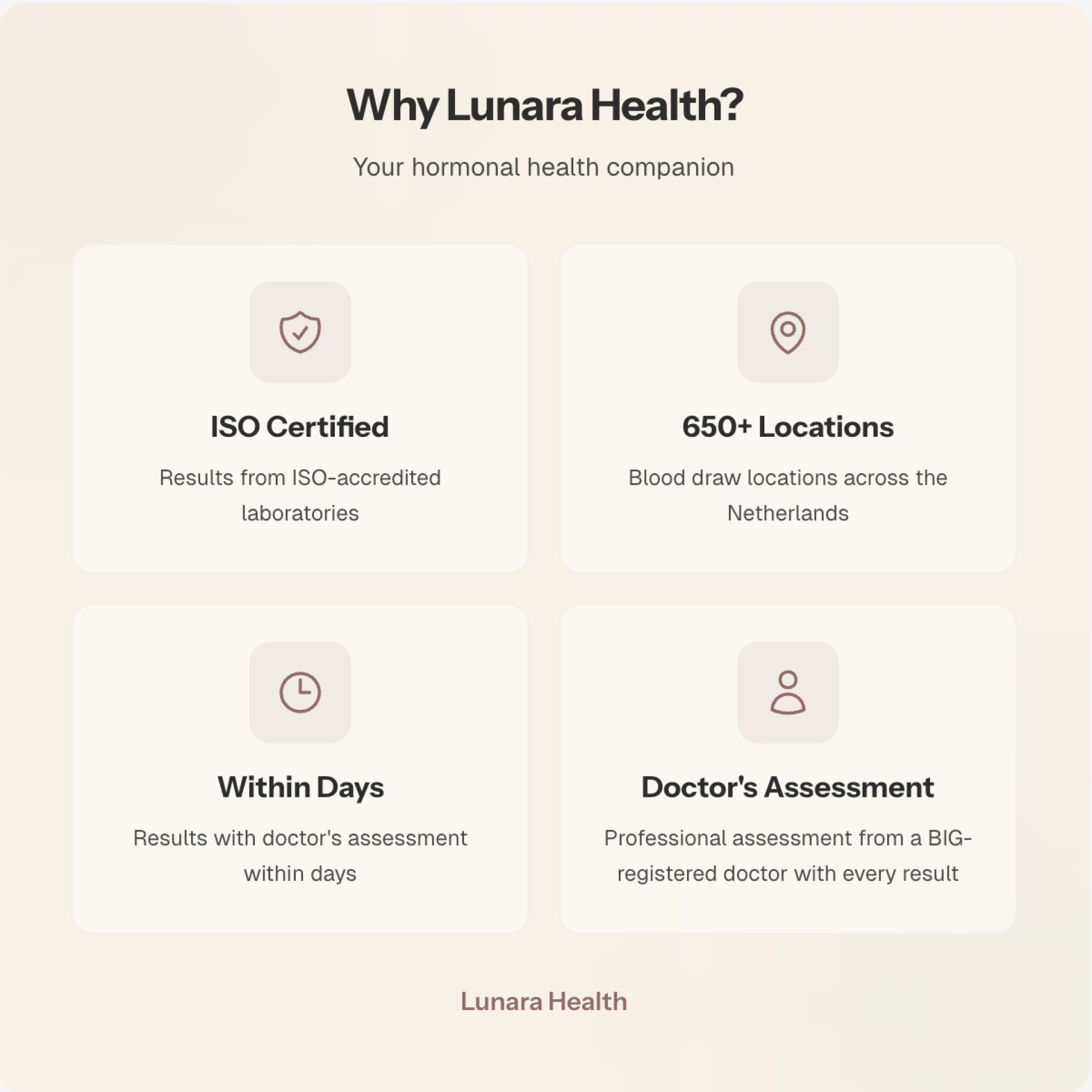
This test requires a blood draw at a certified laboratory. In the Netherlands you can choose from 650+ sample points.
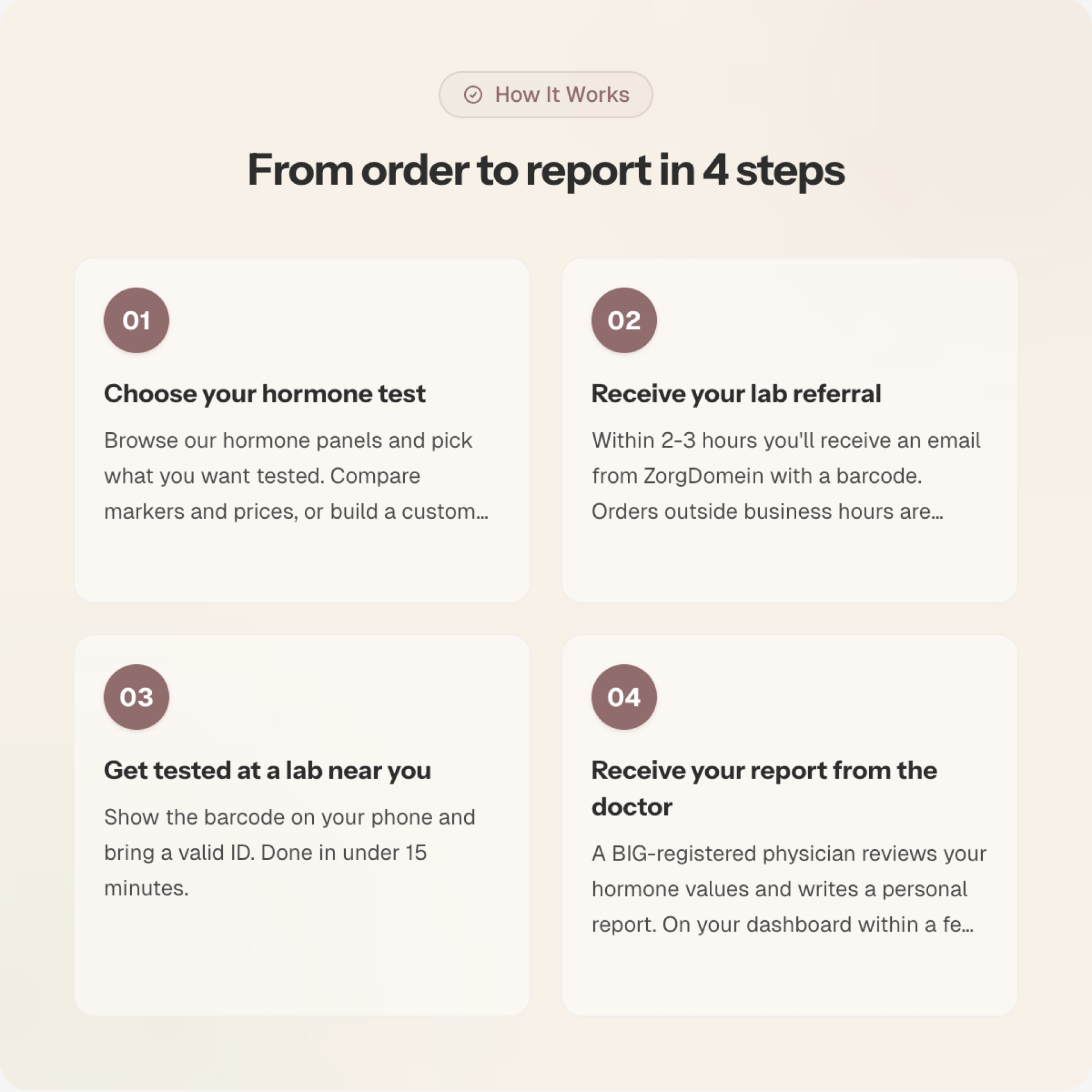
After ordering, you pick a location near you and schedule a moment that suits you. The draw itself usually takes only a few minutes. You do not need a referral from your GP.
When is this test useful?
An IVF blood test can be valuable at different moments, for example:
- when you are preparing for IVF or ICSI treatment and want your intake data in order
- when your clinic asks for a number of blood values before treatment begins
- when you are exploring your wish to conceive and want an early picture of your hormones
- when you want to measure again after an earlier treatment
Which values are relevant for you depends on your situation and the way your clinic works.
What do the results mean?
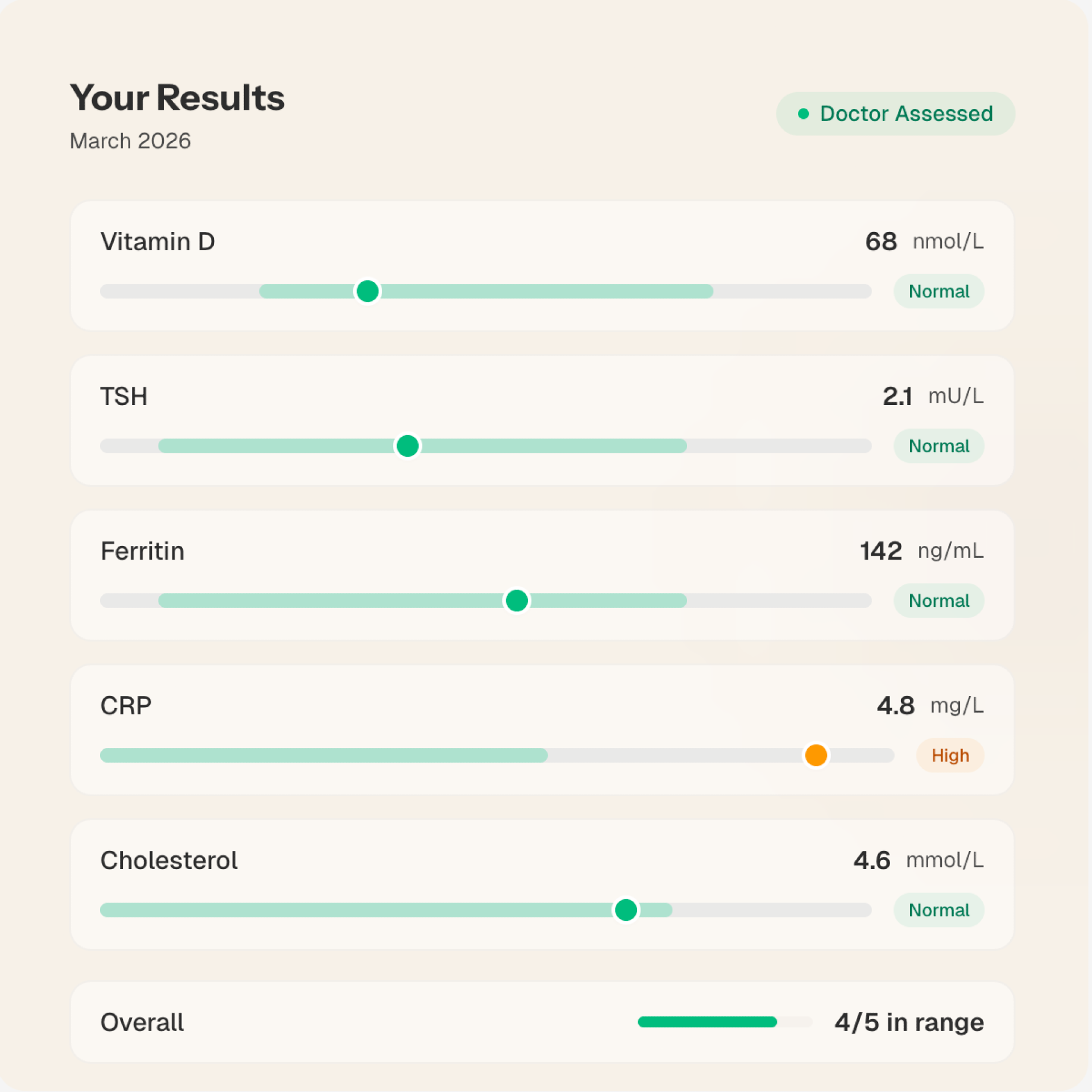
Your result shows a value with a reference range and a short explanation for each marker. What counts as usual varies by laboratory and sometimes by person.
A value inside or outside the range can mean different things, depending on your situation. For the infection and immunity markers it is often a positive or negative result. The doctor helps you place your results in the right context.
What happens after the results?
Your result is usually available online within a few working days. Each value is shown clearly with a reference range and an explanation, so you understand what you see and can take it to your clinic.
Every blood test result includes a professional assessment from a BIG-registered doctor. For treatment decisions, discuss your results with your GP.
Did your clinic send its own list?
Upload it on scan your test list and you will see, line by line, what we can run. This panel was assembled for a common intake and need not match what your clinic asks for.
Frequently Asked Questions
This panel looks at your hormones (including AMH, FSH, LH, estradiol, prolactin and TSH), infection serology such as HIV, hepatitis B and C, syphilis and chlamydia, your immunity against rubella, chickenpox and toxoplasmosis, plus your blood type, blood count and D-dimer.
No, you can order this test yourself online without a referral. You then choose a sample point near you and schedule a moment that suits you.
For hormones such as FSH, LH and estradiol the cycle day can make a difference; these are often drawn around the start of your cycle. For the other values the day usually does not matter. When in doubt, check with your clinic.
This panel is put together for women. Partners often have a separate set of tests. Your clinic can tell you which values they like to see for both of you.
What We Test
| No. | Biomarker | Unit | Turnaround |
|---|---|---|---|
| 01 | TSH (Thyroid Stimulating Hormone) | mu/l | 2 days |
| 02 | Prolactin | ug/l | 2 days |
| 03 | AMH (Anti-Müllerian Hormone) | ug/l | 3 days |
| 04 | Estradiol (E2) | pmol/l | 2 days |
| 05 | FSH (Follicle Stimulating Hormone) | U/L | 2 days |
| 06 | LH (Luteinizing Hormone) | U/L | 3 days |
| 07 | Chlamydia IgG | — | 2 days |
| 08 | HIV 1/2 Antibody + p24 Antigen | — | 5 days |
| 09 | Syphilis Screening | — | 2 days |
| 10 | Blood Type + Rh | — | 4 days |
| 11 | Hepatitis B Core Antibody | — | 4 days |
| 12 | Hepatitis B Surface Antigen | — | 3 days |
| 13 | Hepatitis C Antibody | — | 4 days |
| 14 | Rubella IgG | iu/ml | 4 days |
| 15 | Toxoplasmosis IgG | — | 5 days |
| 16 | Varicella Zoster | % | 2 days |
| 17 | D-Dimer | ug/l | 2 days |
| 18 | Basic Blood Count | — | 2 days |
| Your result arrives once the slowest test is finished: 5 days. This is indicative; turnaround varies per laboratory. | |||
Preparation
-
Respect the window period
RequiredThis test is only reliable from 4 weeks after the exposure. Full certainty takes 90 days and a second test. If you have symptoms, test straight away.
-
Pause biotin
RequiredDo you take a supplement with biotin (vitamin B8, common in hair, skin and nail supplements)? Stop it 72 hours before the draw. Biotin interferes with the measurement of these values.
-
Preferably in the morning
RecommendedA morning draw makes this value easiest to compare with its reference range. Plan the draw before 10:00 if you can.
-
Arrive early and sit quietly first
RequiredThis value rises with stress and exertion. Arrive 30 minutes early and sit quietly before your blood is drawn.
-
Do you have a cycle? Pick the right day
RequiredIf you have a menstrual cycle, count the first day of your period as day 1 and have the draw on day 2 to 5. On hormonal contraception, or without a cycle, any day works.
- Water is always fine. Drink as usual beforehand, it makes the draw easier.
- Take your usual medication, unless your own doctor told you otherwise.
Extend this panel
Same draw, no second appointment.
You Might Also Like
Fertility Assessment
Ovarian reserve panel with AMH, FSH, LH, and Estradiol.
Pregnancy Blood Test
An hCG blood test measures the pregnancy hormone in your blood. The result is an exact value in IU/L, measurable from 8 to 10 days after conception.
IVF Blood Test Complete (Women)
Everything in the IVF panel plus full thyroid, preconception nutrients, progesterone and CMV immunity.