Pregnancy blood test: blood group, rhesus and Hb
Prenatal screening commonly included during pregnancy.
Add to your order
No referral needed
Added to your order
Click the button to view your cart
Included Markers
9 markersFolate (Folic Acid), HbA1c (Glycated Hemoglobin), TSH (Thyroid Stimulating Hormone), Iron (Serum), Free T4 (Thyroxine), b-hCG (Human Chorionic Gonadotropin), Vitamin B12, Vitamin D (25-OH), Ferritin
Are you expecting, or hoping to be soon? A lot comes your way during this time, including questions about your health. A pregnancy blood test can give you insight into a number of blood values that are often looked at during this period.
That way you get a factual starting point about things like your iron, your folate and your thyroid, something tangible to hold on to while so much is changing in your body.
Why this test?
During pregnancy a lot changes in your body, and your blood tells part of that story. A prenatal blood test can offer insight into values connected to this phase, such as your iron stores, your vitamin status and how your thyroid is working.
This panel measures a number of markers that are often looked at around a pregnancy. It does not give you a diagnosis, but it does give information you can calmly discuss with your midwife or GP.
Who is this test for?
This test can be useful if you are pregnant or hoping to conceive and want to know more about your blood values. Think of women in the first trimester, women preparing for a pregnancy, or those who simply want to know where certain values stand.
Are you already being seen by a midwife or gynaecologist? Then this test can be an addition to that care, never a replacement for it.
What is tested?
This panel looks at nine blood values that are often relevant around a pregnancy:
- b-hCG: the pregnancy hormone, whose level can confirm a pregnancy and say something about the early phase.
- Ferritin: reflects your iron stores, which are often watched more closely during pregnancy.
- Folate (Folic Acid): a B vitamin that gets a lot of attention around conception and in early pregnancy.
- HbA1c: gives a picture of your average blood sugar over the past two to three months.
- Iron (Serum): the iron circulating in your blood at that moment.
- TSH: the hormone that signals your thyroid.
- Vitamin B12: involved in the formation of red blood cells and your energy metabolism.
- Vitamin D (25-OH): plays a role in your bones and your immune system.
- Free T4 (Thyroxine): the free, available form of the thyroid hormone thyroxine that, together with TSH, shows how your thyroid is working.
What can this test tell you?
The results can give you an impression of how these values are doing. A low ferritin or a low iron level may, for instance, fit with a reduced iron reserve, something that is more common during pregnancy.
Your thyroid values, TSH and free T4, can show whether your thyroid seems in balance. The b-hCG level can confirm a pregnancy and, together with other information, say something about the early phase. On its own, no single value makes a diagnosis; they mainly offer insight you can discuss with a healthcare provider.
How is the sample collected?
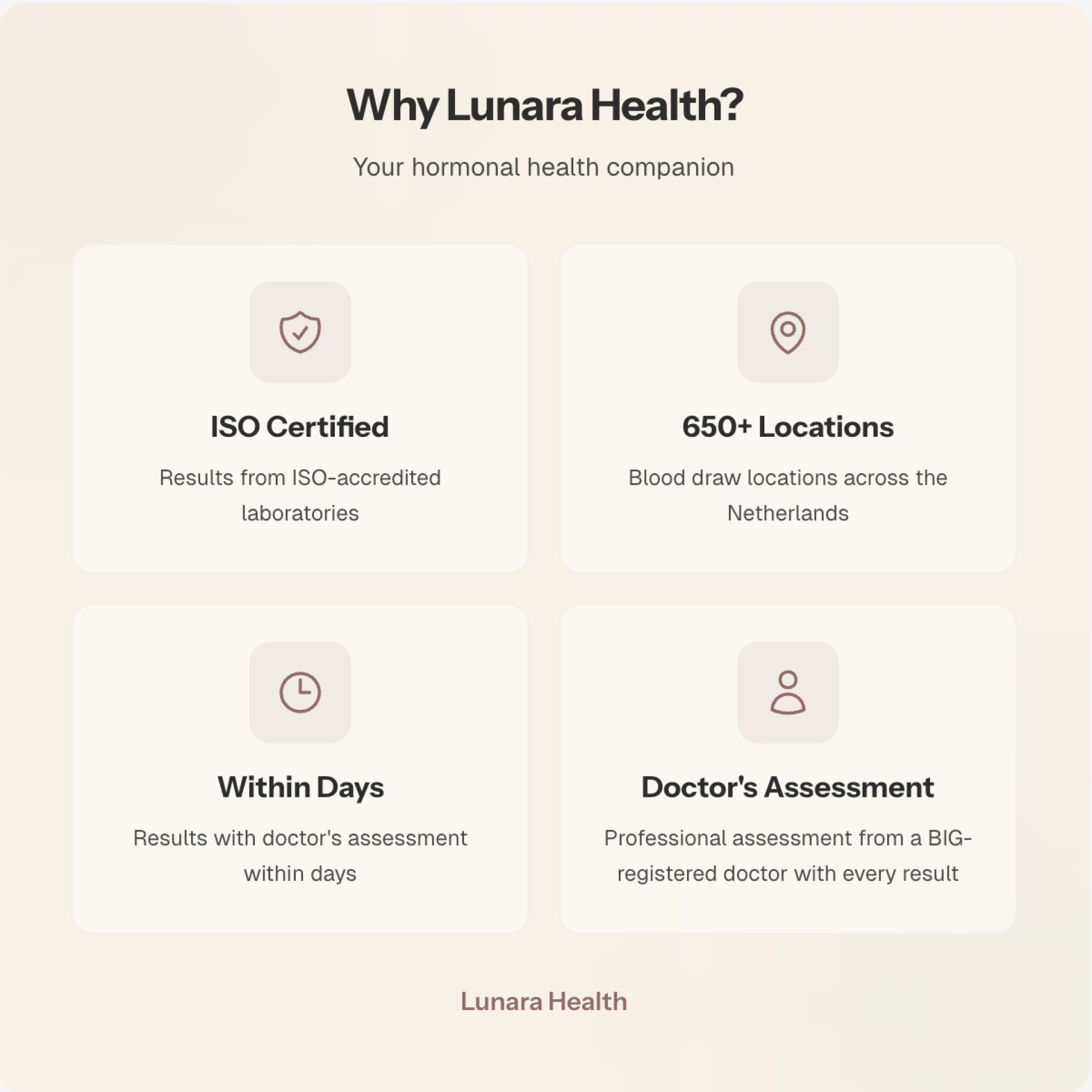
This test requires a small blood draw at a certified lab. In the Netherlands you can choose from 650+ blood draw locations, so there is usually one near you.
After ordering, you pick a location and schedule a moment that suits you. The draw itself usually takes only a few minutes, and you do not need a referral from your GP.
When is this test useful?
A pregnancy blood test can be valuable at different moments, for example:
- when you have just found out you are pregnant and want a picture of some baseline values
- when you are trying to conceive and preparing for a pregnancy
- when you dealt with anemia or thyroid issues in an earlier pregnancy
- when you are simply curious about your blood values during this period
What the right moment is for you depends on your own situation and on what your midwife or GP advises.
What do the results mean?
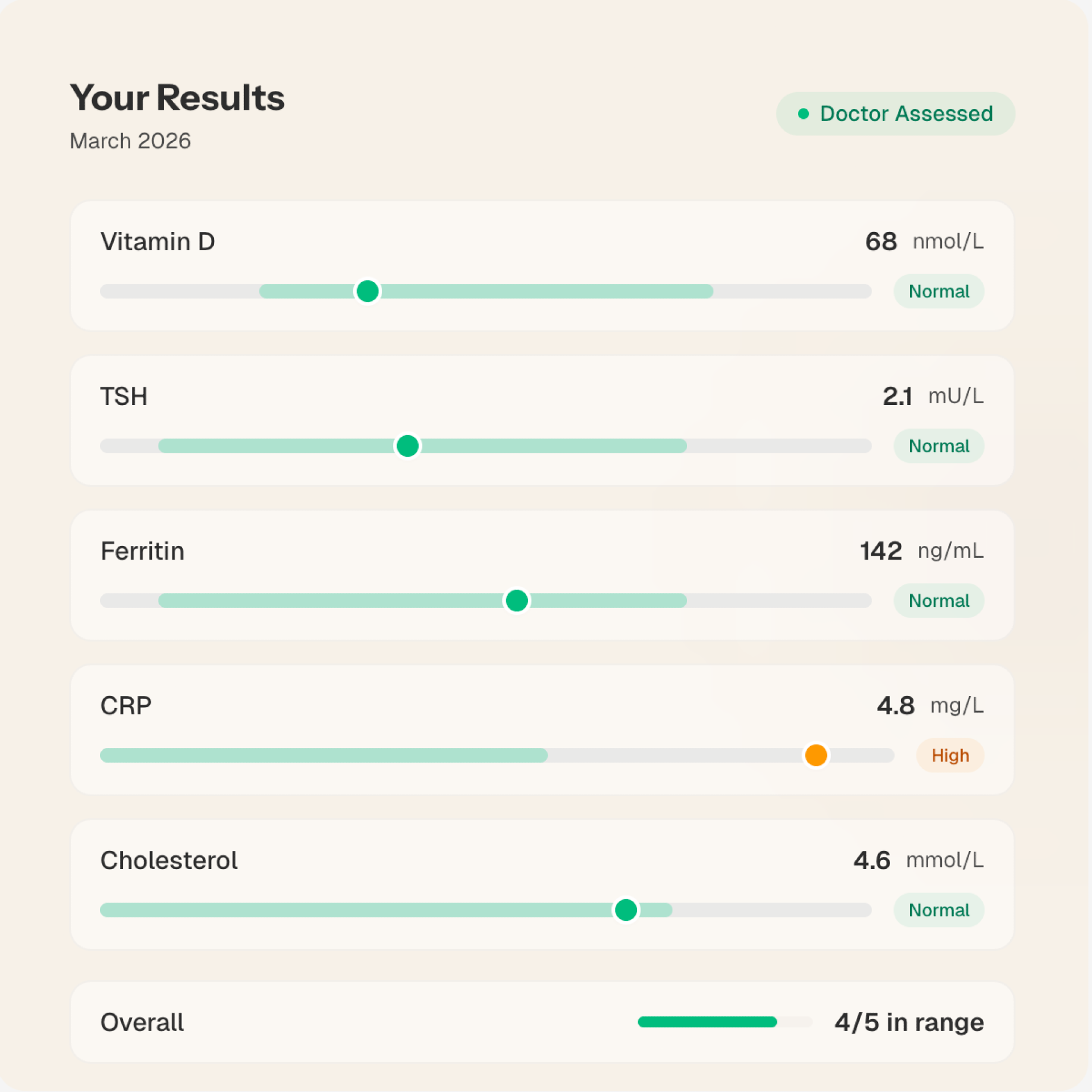
Your result shows your value for each marker, together with a reference range and a short explanation. What counts as usual can differ during pregnancy compared with outside of it, because your body adapts.
A value below or above the range can mean different things and does not say much on its own. The doctor helps you place your blood values in the right context, in line with your pregnancy.
What happens after the results?
Your results are usually in your Lunarahealth account within 2 working days of the blood draw, often the next day. Some markers take longer. Each value is shown clearly with a reference range and an explanation, so you understand what you see.
Every blood test result includes a professional assessment from a BIG-registered doctor. For treatment decisions, discuss your results with your GP.
Frequently Asked Questions
For this panel you usually do not need to fast. You can have blood drawn at a moment that suits you.
No. This test can be an addition to the care around your pregnancy, but it does not replace the check-ups with your midwife or gynaecologist.
Folate is already included in this panel. A standalone folate test is also possible, but many women choose a broader panel to look at more values at once.
No, you do not need a referral. You order the test online and choose a sample location near you yourself.
You pay €199,-. The blood draw is already included, so nothing is added.
No, a test you request yourself is not part of the basic Dutch insurance. You pay it yourself, and your deductible (eigen risico) stays untouched.
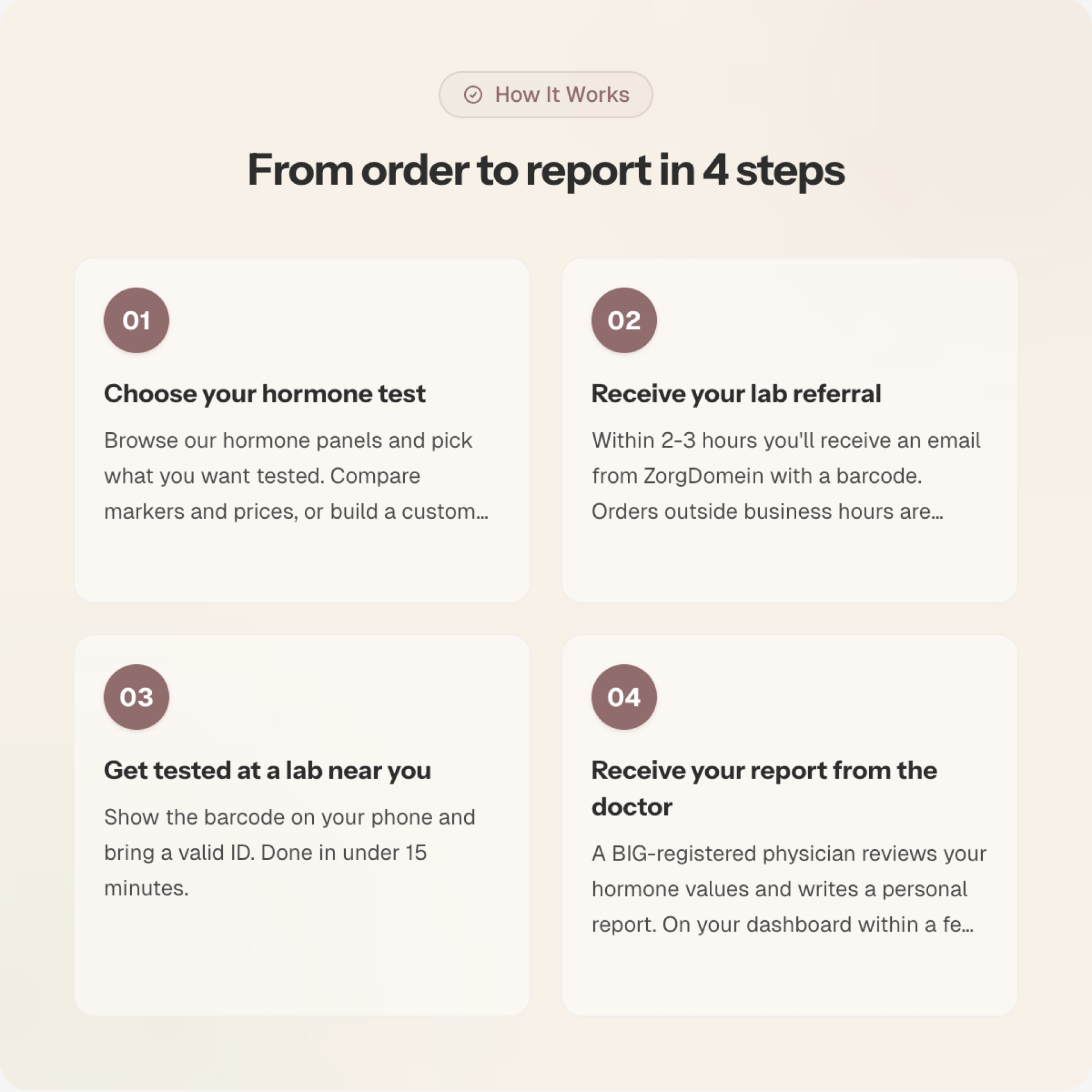
Count on one business day, a day longer for an order after 17:00 or at the weekend: by then the referral email has arrived, and you cannot go before it does. Some draw sites then take walk-ins and the rest work by appointment. Each location says which.
Your barcode from the ZorgDomein email and a valid ID. Showing the barcode on your phone is fine. Without a BSN you get no barcode; print the referral form from the link in the email instead.
Yes, unless your own doctor said otherwise. Some markers ask for extra preparation, such as no alcohol for 24 hours or no heavy training for 48 hours. You see this on the test and in the instructions after you order.
You show your barcode and your ID at the draw site, and then your blood is taken. Allow about a quarter of an hour.
Yes, a BIG-registered doctor assesses every result and explains your values in your account. If you want treatment, discuss the result with your GP.
In one of the independent, certified laboratories across the Netherlands that Lunarahealth works with. They also run the draw sites, which Lunarahealth does not own. Reference values can differ a little between labs.
No, your test bypasses your GP and does not end up in your medical record. Data goes to a healthcare provider only with your written consent, and it is never sold. Anonymous is not possible: a valid result needs your name, date of birth and ID.
What We Test
| No. | Biomarker | Unit |
|---|---|---|
| 01 | Folate (Folic Acid) | nmol/l |
| 02 | HbA1c (Glycated Hemoglobin) | mmol/mol |
| 03 | TSH (Thyroid Stimulating Hormone) | mu/l |
| 04 | Iron (Serum) | umol/l |
| 05 | Free T4 (Thyroxine) | pmol/l |
| 06 | b-hCG (Human Chorionic Gonadotropin) | U/L |
| 07 | Vitamin B12 | pmol/l |
| 08 | Vitamin D (25-OH) | nmol/l |
| 09 | Ferritin | ug/l |
| Your results are usually in your Lunarahealth account within 2 working days of the blood draw. The laboratory states a longer turnaround for Free T4 (Thyroxine), Iron (Serum), Vitamin B12 and Vitamin D (25-OH). | ||
Preparation
-
Been ill? Wait a little
RequiredHad a fever, an infection or a vaccination in the past 2 weeks? Wait with the draw until you are fully recovered. These values react to inflammation and would give a distorted picture.
-
Pause biotin
RequiredDo you take a supplement with biotin (vitamin B8, common in hair, skin and nail supplements)? Stop it 72 hours before the draw. Biotin interferes with the measurement of these values.
-
Preferably fasting
RecommendedComing fasting gives a slightly cleaner value, but it is not required. If it suits you, eat nothing from 22:00 the evening before and drink only water.
-
Preferably in the morning
RecommendedA morning draw makes this value easiest to compare with its reference range. Plan the draw before 10:00 if you can.
-
On levothyroxine? Worth knowing
Good to knowTell the staff at the draw when you took your tablet; for most values the timing makes no difference.
- Water is always fine. Drink as usual beforehand, it makes the draw easier.
- Take your usual medication, unless your own doctor told you otherwise.
Extend this panel
Same draw, no second appointment.
You Might Also Like
Fertility Assessment
Ovarian reserve panel with AMH, FSH, LH, and Estradiol.
Pregnancy Blood Test
An hCG blood test measures the pregnancy hormone in your blood. The result is an exact value in IU/L, measurable from 8 to 10 days after conception.
IVF Blood Test Complete (Women)
Everything in the IVF panel plus full thyroid, preconception nutrients, progesterone and CMV immunity.