What you put on your plate talks to your hormones all day long. You have dozens of hormones, and your eating pattern shapes a good number of them through your blood sugar, your gut and the building blocks you take in. Good nutrition for your hormone balance is not a strict diet, but a pattern you mostly already know.
Here is what strikes me: online this topic is full of promises about one miracle food. It does not work that way. Below you read, plainly, which foods may support your hormones, why that is, and what you may want to check first before you change everything.
Which foods bring your hormones into balance?
No single food brings your hormones into balance. A pattern rich in vegetables, whole grains, legumes, healthy fats and enough protein supports the systems your hormones lean on. The Schijf van Vijf from the Voedingscentrum is a fine base for this. Small, steady habits do more than isolated superfoods.
Think of a stable blood sugar, enough fibre for your gut and healthy fats as raw material for hormones. Those three return separately below. Prefer a list of concrete habits? Read our article on getting your hormones in balance.
How does what you eat affect your hormones?
Food steers your hormones along a few routes. Your blood sugar and insulin respond directly to what you eat. Your gut and liver process hormones such as oestrogen. And fats and proteins provide the building blocks for making hormones. Change your food, and those routes shift with it.
That sounds technical, but in practice it is reassuring. You do not have to do everything at once. One stable meal, one extra portion of vegetables, one serving of oily fish a week already counts.
Worth remembering: food is one of many factors. Sleep, stress, exercise, medication and your life stage all play a part. Food can make a difference, but it is not a dial that sets your hormones precisely.
Fibre, protein and healthy fats: the base
Together these three form the core of hormone-friendly eating. Fibre feeds your gut and helps your body clear oestrogen. Protein provides building blocks and keeps you full. Healthy fats, such as from oily fish, nuts and olive oil, are raw material for making hormones.
Fibre is in vegetables, fruit, legumes and wholegrain products. The Voedingscentrum advises adults roughly 30 to 40 grams of fibre a day, and most people fall short. Research suggests fibre plays a role in how your body processes and excretes oestrogen.
Spread protein across the day. A handy guide is a protein source at every meal, for example eggs, yoghurt, legumes, fish or chicken. Oily fish such as salmon or mackerel also provides omega-3, which is linked to less low-grade inflammation.
Your gut, liver and oestrogen
Your gut and liver help decide how much oestrogen circulates in your blood. Your liver prepares oestrogen for removal, and your gut makes sure it leaves your body. Fibre and a varied gut flora support that process. Without enough fibre, some can be reabsorbed.
Researchers sometimes call the gut bacteria that influence oestrogen the estrobolome. Put simply: a healthy gut helps keep your hormones in balance. Fermented foods such as yoghurt, kefir and sauerkraut may support your gut flora.
You do not need expensive products for this. Enough vegetables, fruit, legumes and wholegrain does most of the work. Drink enough water with it, because fibre only works well with enough fluid.
Sugar, insulin and your hormones
Fast sugars spike your blood sugar, after which your insulin has to work hard. If that happens all day long, your sensitivity to insulin can drop. That touches not only your energy, but also hormones that affect your cycle and ovaries.
With PCOS this often plays a bigger role. Insulin resistance can drive up the production of male hormones, which may worsen symptoms. Want to go deeper here? Read our article on nutrition for PCOS.
The answer is rarely to cut all carbohydrates. Choose slow carbohydrates with fibre more often, and combine them with protein and fat. That keeps your blood sugar calmer, without turning food into a sum.
Phyto-estrogens and oestrogen in food
Some plant foods contain phyto-estrogens, substances that weakly resemble oestrogen in your body. Soy, flaxseed and legumes are well-known sources. They are not a replacement for your own hormones, but fit fine in a varied pattern.
Around menopause these foods get a lot of attention. A 2013 Cochrane review found no convincing evidence that phyto-estrogens clearly reduce hot flushes, though the results were mixed. Want to know which foods contain oestrogen? Read our article on oestrogen in food, and for menopause specifically nutrition during menopause.
Around this theme seed cycling also circulates, eating seeds by cycle phase. It sounds appealing, but the evidence is thin. We line it up in seed cycling: does it really work.
Food and cortisol during stress
Cortisol is your main stress hormone. Food does not make you stress-free, but it can soften the swings a little. A stable blood sugar, enough magnesium and not too much caffeine on an empty stomach help some women get through the day more calmly.
Do not skip meals structurally when you experience a lot of stress. An empty stomach can send your blood sugar plummeting, which your body may read as an extra stress signal. Read more in lowering cortisol with food.
Nutrition and your thyroid
Your thyroid steers your metabolism and needs a few nutrients to work. Iodine and selenium are the best known. Iodine is found in bread with bakery salt and in fish, selenium in Brazil nuts and fish. Eating too little can also slow your thyroid.
Strict dieting is therefore rarely good for your thyroid. Your body may dial down the production of thyroid hormone to save energy. Fatigue, feeling cold and a slower feeling can go with that.
If you have symptoms that may point to your thyroid, food is rarely the whole explanation. A blood test with TSH and free T4 gives more clarity. Discuss persistent symptoms with your GP.
Nutrition and your menstrual cycle
Your hormones swing through your cycle, and your need for energy often moves with them. In the second half of your cycle some women feel more hungry. That is normal and not a sign of failure. Extra fibre and protein can soften that appetite a little.
Around your period you lose iron. Women with heavy periods therefore have a higher chance of a low iron. Iron-rich food such as legumes, wholegrain and green vegetables can help, along with vitamin C for absorption.
Above all, listen to your body rather than to a rigid schedule. Your cycle is not a problem you have to solve with food, but a rhythm you can support.
Which foods go with which hormone?
The table below links a few hormones to foods that may support them, and to the blood value you could have checked. See it as a starting point for a conversation with your GP, not as a recipe.
| Hormone or system | Food that may support it | Blood value to check |
|---|---|---|
| Oestrogen | fibre, flaxseed, legumes, soy | oestradiol |
| Insulin and blood sugar | slow carbohydrates, fibre, protein | glucose, HbA1c |
| Thyroid | iodine, selenium, enough energy | TSH, free T4 |
| Cortisol | stable meals, magnesium, less caffeine | cortisol |
| General production | healthy fats, omega-3, enough protein | vitamin D, iron |
What a hormone-friendly day looks like
Theory is nice, but what does this look like on an ordinary Tuesday? No strict schedule, just a few calm choices. Below is an example, meant as inspiration and not as a prescription.
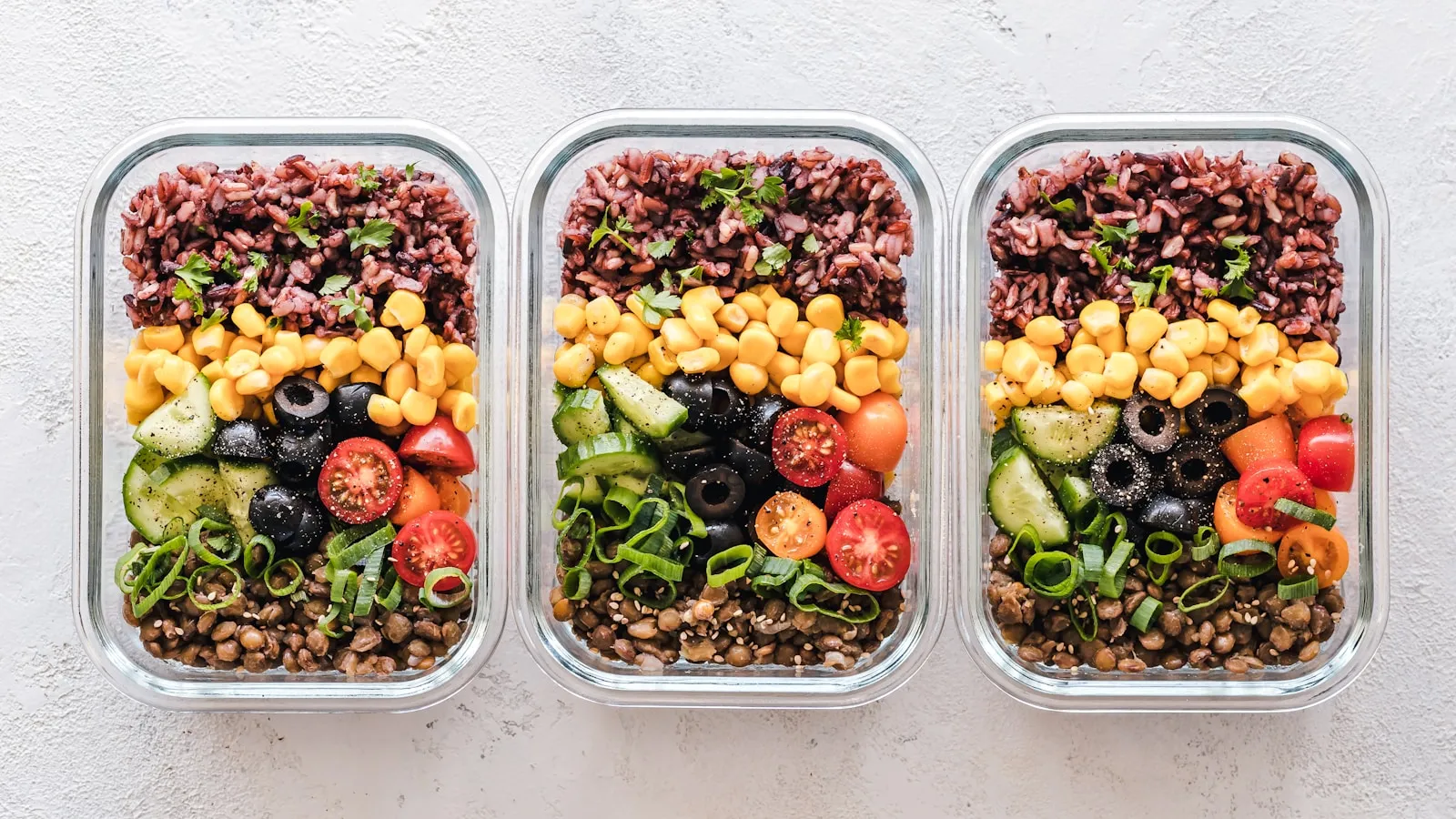
Breakfast: full-fat yoghurt with oats, berries and a spoon of flaxseed. That gives protein, fibre and slow carbohydrates in one bowl. Your blood sugar starts more calmly than with white bread and jam alone.
Lunch: a wholegrain wrap with chickpeas, plenty of vegetables and olive oil. A handful of unsalted nuts in between. Dinner: salmon or tofu with vegetables and brown rice.
See the pattern? Every meal has protein, fibre and a healthy fat. That is almost all hormone-friendly eating is at its core.
What you may want to limit
Hormone-friendly eating is not only about what you add, but also what you scale back. Highly processed products, a lot of added sugar and excessive alcohol can put extra strain on your blood sugar and your liver. You do not have to cut anything out completely, but less can already help.
Alcohol deserves a separate note. It affects how your liver processes hormones and can disturb your sleep, which in turn feeds back on your hormones. A few alcohol-free days a week is a realistic step for many women.
Caffeine is not bad, but timing helps. Coffee on an empty stomach can heighten the stress response in some women. Try your first cup with or after breakfast instead of before.
What may you want to test first?
Before you overhaul your food or buy supplements, it can be smart to know where you stand now. A blood test shows whether something is really going on, for example a low iron, a low vitamin D or a disturbed blood sugar. That way you change with purpose, not on a guess.
Unsure about supplements? We discuss per supplement what the research says in supplements for hormone balance. Often, spotting a deficiency is more useful than taking things blindly.
A broad Basic Health Checkup can give a first picture of values linked to your energy and metabolism. Your GP can help you decide whether further steps are needed.
Seeing food and your hormones through Lunara
If you want to look specifically at your female hormones, the Hormones for Women test is aimed at that. You test without a referral and receive your result digitally, with context from a BIG-registered doctor. That way you know whether your hormones fit your symptoms, before you adjust your food.
Food stays the base. A test only gives you the context to make more targeted choices, together with your GP.
Frequently asked questions
Can I really influence my hormones with food?
Partly. Food can affect systems such as your blood sugar and your gut, which in turn relate to your hormones. It is one of several factors, alongside sleep, stress and exercise. Expect support, not a miracle.
Is there a hormone diet that works?
There is no proven hormone diet that works for everyone. The common thread in the research is a varied pattern with fibre, protein and healthy fats. Extreme diets rarely deliver lasting benefit and can cause deficiencies.
Should I drop gluten or dairy for my hormones?
For most women that is not needed. Cutting out is only useful with a proven intolerance or allergy. Discuss persistent symptoms with your GP before you leave out whole food groups.
How quickly will I notice a difference if I eat differently?
That varies per person and per symptom. Some women notice steadier energy within a few weeks, while changes in your cycle often need more time. Give a new pattern at least two to three months.
Do I need supplements for my hormones?
Usually not if you eat varied. Supplements are mainly useful with a proven deficiency, for example in vitamin D or iron. Testing what you take in now is often more useful than supplementing in advance.
References
- Voedingscentrum. Schijf van Vijf and fibre. Available via voedingscentrum.nl.
- Gezondheidsraad. Dutch dietary guidelines 2015. The Hague, 2015.
- Lethaby A, et al. Phytoestrogens for menopausal vasomotor symptoms. Cochrane Database of Systematic Reviews, 2013.
- Gaskins AJ, et al. Dietary fiber and its association with reproductive hormones. American Journal of Clinical Nutrition, 2009.
Every blood test result through Lunara includes a professional assessment by a BIG-registered doctor. For treatment decisions, discuss your results with your GP.
See Lunarahealth more often in Google
Add us as a preferred source. Google will then show our articles more often in your search results and in AI overviews. You can turn this off again at any time.
That did not work. Please try again.
Author
Lunarahealth
Dr. Naimi, BIG-registered physician, oversees the medical standards behind our content and assessments. Read our medical policy
Related Tests
Related Posts
Iron rich foods: 14 sources and how much iron they provide
Supplements for hormone balance: what works and what to test first