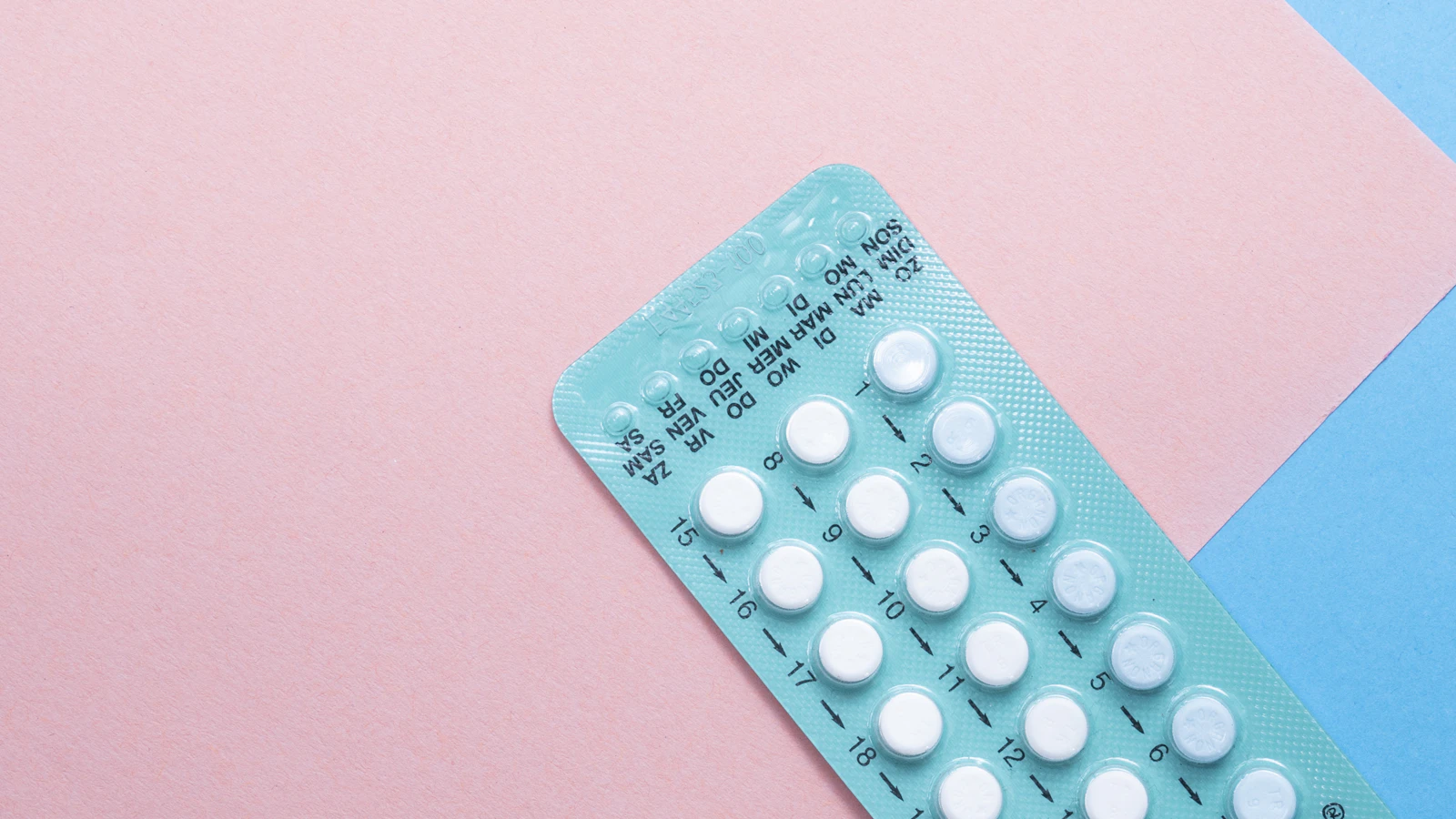
Diane 35 is not an ordinary contraceptive pill. It is a hormone treatment for acne and unwanted hair growth that also suppresses ovulation because of what it contains. For most women the side effects of Diane 35 are mild, but it carries a higher clot risk than most other pills, which is why stricter conditions apply to its use. What can you expect?
What is Diane 35 and how does it work?
Diane 35 contains two substances: 2 mg of cyproterone acetate and 35 micrograms of ethinylestradiol. Cyproterone acetate is an anti-androgen. It blocks the action of male hormones such as testosterone on your skin and hair follicles, which is exactly where acne, oily skin and unwanted hair growth come from in a proportion of women.
The ethinylestradiol adds something that is often overlooked: it raises your SHBG, the protein that binds testosterone in your blood. The more SHBG, the less free testosterone remains to act on your skin. So the two substances reach the same goal by two different routes.
Worth knowing: in the Netherlands Diane 35 is registered as a treatment for androgen-dependent conditions, not purely as contraception. After a European review in 2013 it may be prescribed for moderate to severe acne or unwanted hair growth when other treatments, such as a cream or a course of antibiotics, have not helped enough. You do not use it alongside another hormonal contraceptive.
Diane 35 compared with other options for acne and hair growth
Diane 35 is not the only route. Which option fits depends on your symptoms, whether you also want contraception, and your personal clot risk. This overview helps you prepare the conversation with your doctor:
| Option | Active substance | Often used for | Also contraceptive? | Point to consider |
|---|---|---|---|---|
| Diane 35 | Cyproterone acetate + ethinylestradiol | Persistent acne, hair growth | Yes, suppresses ovulation | Higher clot risk than a levonorgestrel pill |
| Second-generation pill | Levonorgestrel + ethinylestradiol | Contraception, mild acne | Yes | Lowest clot risk of the combined pills |
| Yasmin and variants | Drospirenone + ethinylestradiol | Acne, fluid retention | Yes | Clot risk higher than levonorgestrel |
| Spironolactone | Spironolactone | Hormonal acne, hair loss | No | Separate contraception needed |
| Metformin | Metformin | PCOS with insulin resistance | No | Works through insulin, not androgens |
These doses and indications come from the patient leaflet and the Dutch Farmacotherapeutisch Kompas. A Cochrane review of treatments for unwanted hair growth (2016) found that cyproterone acetate combined with a pill clearly reduced hair growth scores, although the quality of the evidence varied.
Diane 35 experiences: what do users say?
Experiences with Diane 35 for acne are often positive, but it asks for patience. Your skin does not respond within two weeks, and unwanted hair growth takes longer still because a hair has to complete its whole cycle. These are the experiences women share most often.
Positive experiences: clearly fewer breakouts and less oily skin after three to six months, calmer skin around menstruation, less hair on the chin, jawline and stomach after six to twelve months, a predictable cycle, and less hair loss in women with an androgen-sensitive pattern.
Points women mention: skin and mood can be more changeable in the first weeks, tender breasts, headache and nausea in the early months, lower sex drive linked to the fall in free testosterone, and acne returning after stopping, sometimes more forcefully than before.
Picture two women of 26 with almost the same jawline acne. One sees skin after four months on Diane 35 that she has not had in years, and stays happily on it. The other keeps getting headaches and a low libido, stops, and eventually does better on spironolactone with separate contraception. The same symptoms, a different outcome.
Side effects of Diane 35
Most side effects of Diane 35 are mild and ease as your body adjusts, usually within two to three months. Commonly reported are headache, tender or full breasts, nausea, mood changes, reduced libido and spotting during the first cycles.
The point that genuinely stands out is thrombosis. All combined pills raise the chance of a blood clot, but not all to the same degree. Danish cohort research in the BMJ (2011) showed that the type of progestogen makes a difference, and that pills containing levonorgestrel had the most favourable profile. For cyproterone acetate combined with ethinylestradiol, European regulators judged the risk to be higher than for a levonorgestrel pill. The chance remains small, but it is precisely why this medicine is not given as a first choice.
Contact a doctor straight away if you have a painful or swollen leg, sudden breathlessness, chest pain, or a severe headache with neurological symptoms. Smoking, excess weight, long periods of immobility and a family history of clots raise the risk further, so they are important to mention.
Benefits and points to consider
The benefit of Diane 35 is that it does two things at once for complaints that often occur together: it dampens androgen action on your skin and gives a predictable cycle. For women whose creams and antibiotics did nothing, that can make a real difference.
Against that, you have to weigh the risk profile seriously, and symptoms often return after stopping if the underlying cause, such as PCOS, has not been addressed. Research in the Journal of Clinical Endocrinology and Metabolism (2003) compared this combination in women with PCOS against metformin and found both reduced hair growth, but by very different routes. That illustrates why it helps to know what sits underneath your symptoms.
Alternatives to Diane 35
If Diane 35 does not suit you, or you want to avoid the clot risk, there are other routes. We think the question of what is causing your symptoms deserves more attention than the brand name on the box.
- Spironolactone, an anti-androgen with no contraceptive effect, alongside separate contraception
- A pill with a different progestogen, such as Yasmin with drospirenone or a second-generation pill
- The mini-pill with desogestrel if oestrogen is not an option for you
- Want to understand what sits behind your skin complaints? Read about hormonal acne and which hormones to test
Testing your hormones before you start
Here is a detail that often goes wrong. As soon as you begin a combined pill, your SHBG rises and your free testosterone falls. An androgen measurement taken while you are on Diane 35 therefore says most about the pill, and much less about your underlying hormone balance. If you want to know whether something like PCOS sits beneath your symptoms, it makes more sense to map that before you start.
Values often looked at are total and free testosterone, SHBG, DHEA-S, LH and FSH, and where insulin resistance is suspected, fasting glucose and insulin as well. The PCOS screening from Lunara covers these in one go, with an assessment by a BIG-registered doctor. Want to understand what each value means first? Our guide to which hormones to test for PCOS explains it. See also what SHBG in women actually does.
Frequently asked questions
How quickly does Diane 35 work for acne?
You usually see the first improvement after six to twelve weeks, with the clearest effect after three to six months. Unwanted hair growth takes longer, often six to twelve months, because existing hairs have to finish their cycle first.
Do you gain weight on Diane 35?
Weight gain appears in the patient leaflet, but research has not convincingly shown a clear causal link between combined pills and lasting weight gain. Fluid retention in the first weeks can show temporarily on the scales.
How long can you use Diane 35?
There is no fixed maximum duration, but the advice is to review periodically with your doctor whether continuing is still needed. Because clot risk is highest in the first year and after a restart, repeatedly stopping and starting is less favourable than a stable plan.
What happens when you stop Diane 35?
Your SHBG falls again and your free testosterone rises, so acne or hair growth can return within a few months. That is not a sign the medicine failed, but that the underlying sensitivity is still there. Discuss a follow-up plan before you stop.
Is Diane 35 a contraceptive pill?
It suppresses ovulation and therefore works as contraception, but in the Netherlands it is registered as a treatment for acne and unwanted hair growth, not as a contraceptive in its own right. That is why you do not use it alongside another hormonal contraceptive.
Diane 35 can be a real answer for persistent acne and unwanted hair growth when other treatments fell short. At the same time it asks for an honest weighing of the clot risk and attention to what sits underneath your symptoms. Discuss those two points openly with your doctor, and preferably map your hormones before you start.
Every blood test result includes a professional assessment from a BIG-registered doctor. For treatment decisions, discuss your results with your GP.
References
- Farmacotherapeutisch Kompas. Cyproterone/ethinylestradiol. Accessed 2026.
- European Medicines Agency. PRAC review of cyproterone acetate-containing medicines, 2013.
- van Zuuren EJ, et al. Interventions for hirsutism excluding laser and photoepilation therapy alone: abridged Cochrane systematic review including GRADE assessments. British Journal of Dermatology, 2016. PMID 26892495.
- Lidegaard O, et al. Risk of venous thromboembolism from use of oral contraceptives containing different progestogens and oestrogen doses. BMJ, 2011. PMID 22027398.
- Harborne L, et al. Metformin or antiandrogen in the treatment of hirsutism in polycystic ovary syndrome. Journal of Clinical Endocrinology and Metabolism, 2003. PMID 12970273.
- Hugon-Rodin J, et al. Epidemiology of hormonal contraceptives-related venous thromboembolism. European Journal of Endocrinology, 2014. PMID 25012200.
See Lunarahealth more often in Google
Add us as a preferred source. Google will then show our articles more often in your search results and in AI overviews. You can turn this off again at any time.
That did not work. Please try again.
Author
Lunarahealth
Dr. Naimi, BIG-registered physician, oversees the medical standards behind our content and assessments. Read our medical policy