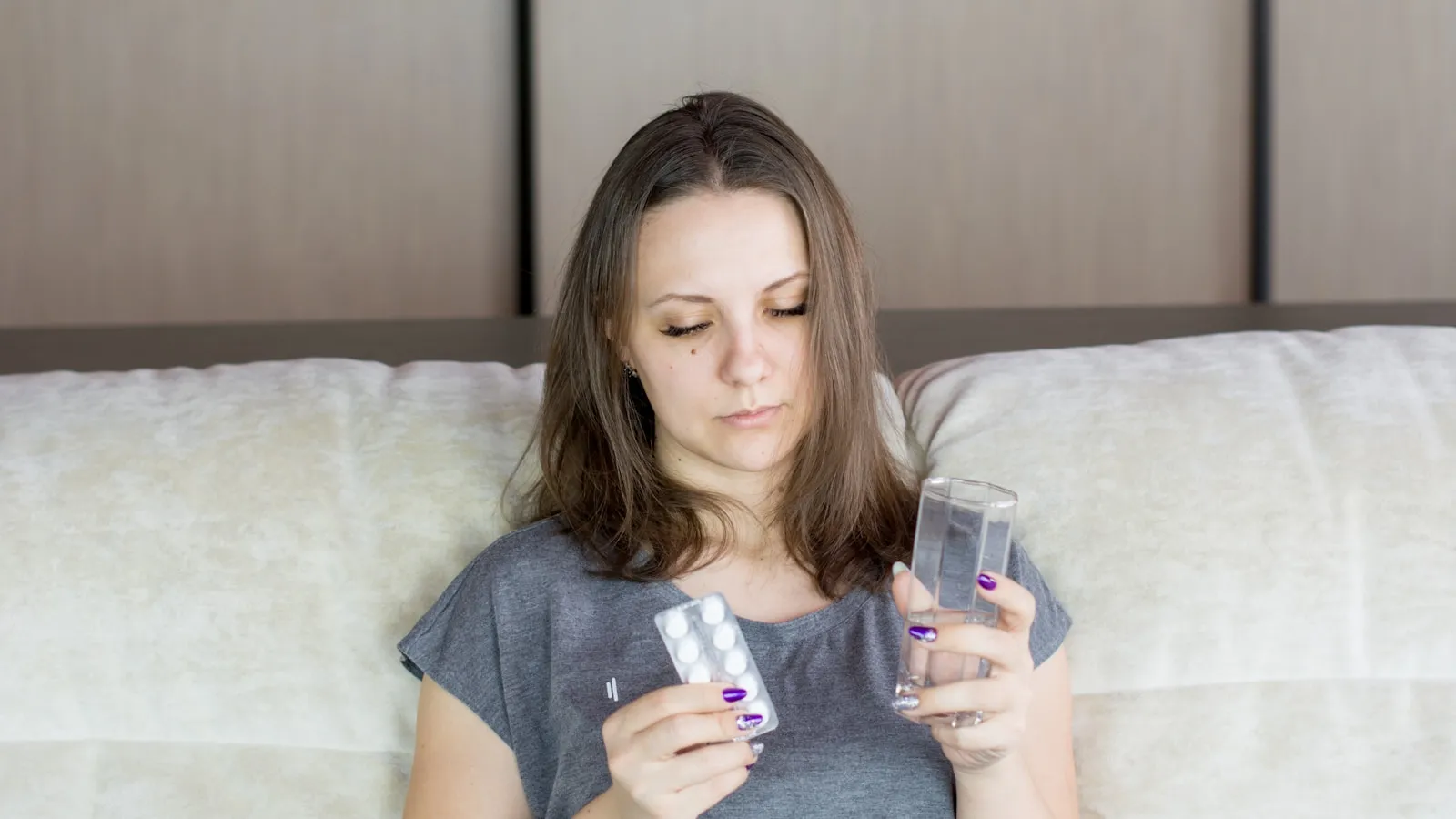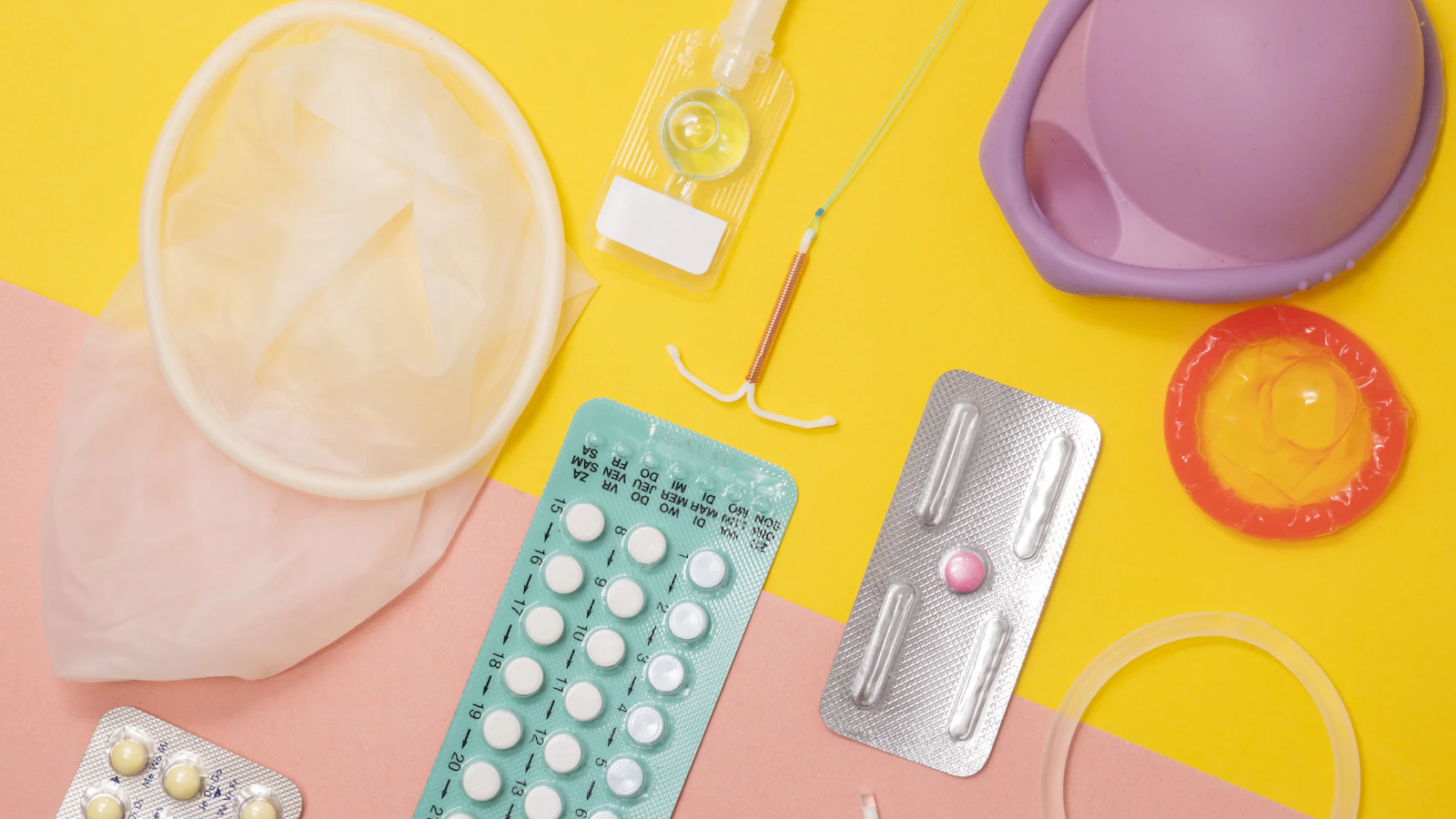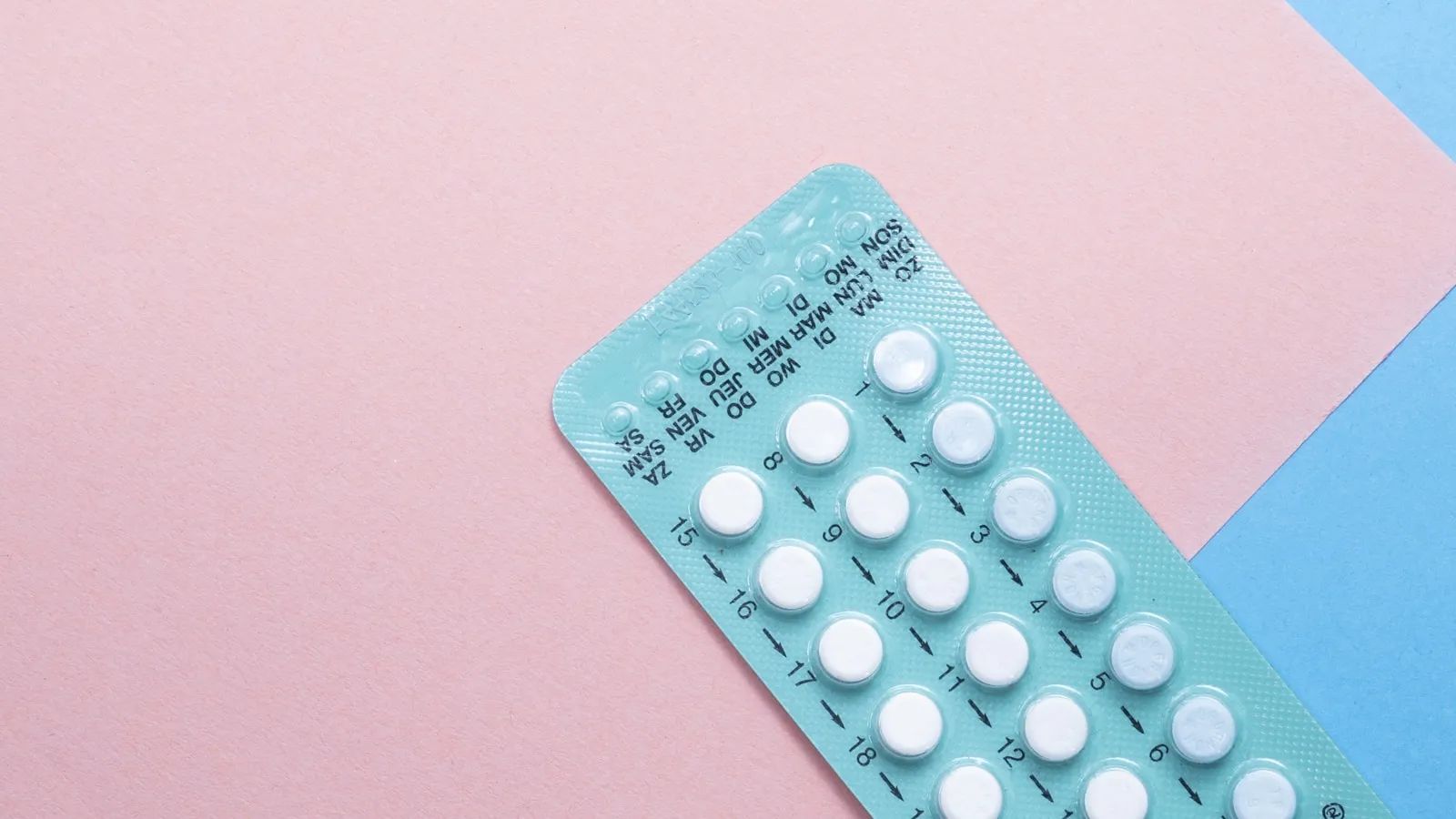
Most mini pill side effects come down to a bleeding pattern you cannot predict. Spotting between periods, a period that disappears, or weeks of light bleeding. That is not a sign something is going wrong. It is the direct consequence of how this type of pill works.
That is also the most honest thing anyone can tell you about it. Nobody can say in advance which group you fall into, and for many women that is the hardest part of the choice.
Which pill is a mini pill?
A mini pill contains a progestogen only, with no oestrogen. In the Netherlands that usually means desogestrel 75 micrograms, sold as Cerazette and many generic versions. More recently a drospirenone mini pill has been added. The combined pill does contain oestrogen, and that is the whole difference.
You take the mini pill continuously, every day, with no break week. There is no built-in withdrawal bleed in the strip. Whatever bleeding you get is what your womb lining does on its own.
Because there is no oestrogen in it, the mini pill often comes up for women who are better off avoiding that hormone. Migraine with aura, breastfeeding, or a raised thrombosis risk, for example. Your GP weighs that up.
What does the mini pill do to your body?
Desogestrel suppresses ovulation in the large majority of users, and also thickens cervical mucus so sperm cannot pass. That double mechanism is newer than many people realise. Older mini pills with levonorgestrel mainly did the second, which made them less forgiving about late doses.
Research in the European Journal of Contraception and Reproductive Health Care in 2015 compared ovarian activity on desogestrel with a newer drospirenone mini pill, and found strong ovulation suppression with both. That suppression is where the reliability comes from.
One practical difference genuinely matters: with desogestrel you have a 12 hour window, according to the Dutch Farmacotherapeutisch Kompas. With the old levonorgestrel mini pill it was 3 hours. So know which one you take, because it decides how late is actually late.
A tablet missed or taken late?
Take the mini pill every day at the same time, with no break week. With desogestrel you have a 12 hour window.
Less than 12 hours late? Take the tablet as soon as you can. Take the next one at your usual time.
More than 12 hours late, and the pill works less well. Still take the missed tablet. Then use a condom for 7 days if you have sex.
Start on the first day of your period and you are protected straight away. Start on day 2 to 5, and use a condom for the first 7 days. Missed a tablet in your first week and had sex in the 7 days before? Then pregnancy is possible, so call your GP or pharmacy.
Vomiting within 3 to 4 hours of taking the pill? Follow the advice for a missed tablet. The same applies to watery diarrhoea.
Watch out for other medicines while you use it. Some make this pill work less well, such as certain epilepsy drugs, rifampicin and St John's wort. Ask your pharmacy whether a new medicine combines safely.
What are the side effects of the mini pill?
By far the most reported side effect is a change in your bleeding pattern. Beyond that, women report tender breasts, headache, acne and mood changes, mostly in the first months. Most complaints ease within three to six months as your body settles into a constant progestogen level.
| What you may notice | When | What it usually is |
|---|---|---|
| Irregular bleeding or spotting | Mainly months 1 to 3 | The best known effect, often temporary |
| Periods stop altogether | From month 3 to 6 | Harmless with consistent use |
| Tender or full breasts | First weeks | Usually settles |
| Headache | First weeks | Raise it if it persists |
| Acne or oilier skin | Months 2 to 6 | Can persist, depends on the progestogen |
| Low or flat mood | Variable | Always discuss this with your doctor |
Picture two women starting desogestrel on the same day. One has no period at all after four months and finds that convenient. The other still has brown spotting every ten days and has had enough. Same pill, same dose, completely different experience. There is more on mood in the pill and mood.
Is the mini pill healthier than the combined pill?
Healthier is the wrong word; better suited is closer. The mini pill contains no oestrogen, and it is the oestrogen in the combined pill that is linked to a slightly raised thrombosis risk. For women whose risk is already higher, the mini pill can be the more logical option. The trade is a less predictable bleeding pattern.
There is another difference that is rarely mentioned and that matters for blood testing. The combined pill raises your SHBG substantially, the protein that binds your testosterone, so your free testosterone falls. The mini pill barely moves it.
Which means: measure your androgens on the combined pill and you are partly measuring the pill. On the mini pill that result stays more readable. The arithmetic is in our article on SHBG in women.
How quickly does fertility return after the mini pill?
Quickly. Desogestrel clears your blood within roughly a day, and ovulation can return within the first weeks after your last tablet. There is no months-long wash-out like the contraceptive injection. If you do not want to conceive, switch to something else straight away.
Your cycle may still need time to become regular. A few unpredictable cycles are normal, especially if you have not had your own rhythm for years.
If your period is still absent after six months, that is the point to have it looked at. This is covered further in coming off the pill.
Testing your hormones on or after the mini pill
A hormone test can help if you have complaints you cannot pin on the pill, or if your cycle stays away after stopping. Values your doctor often looks at are oestradiol, FSH, LH and your thyroid, because thyroid complaints resemble pill side effects surprisingly closely.
The oestradiol test from Lunara measures your oestradiol level, with an assessment by a BIG-registered doctor. It gives your doctor a starting point, not a diagnosis.
For the wider context, see our article on birth control and your hormones.
Frequently asked questions
How long can you use the mini pill?
There is no fixed maximum. Many women use it for years on end. Your GP periodically reviews your complaints and your situation.
Does the mini pill make you gain weight?
A clear weight effect has not been convincingly shown in research. Fluid retention does occur and can shift the scales by a few hundred grams.
What if you take the mini pill late?
With desogestrel the window is 12 hours. If you are later, still take the missed tablet and use extra protection for seven days. When in doubt, check Thuisarts.nl or your pharmacy.
Does the mini pill protect against STIs?
No. Only condoms do that.
The mini pill mainly asks for patience with your bleeding pattern, and gives you a pill without oestrogen in return. If complaints still shape your day after six months, book an appointment rather than sitting it out. There are plenty of other options.
Every blood test result includes a professional assessment from a BIG-registered doctor. For treatment decisions, discuss your results with your GP.
References
- Thuisarts.nl. Using the mini pill. Accessed 2026.
- Farmacotherapeutisch Kompas. Desogestrel. Accessed 2026.
- Duijkers IJ, Heger-Mahn D, Drouin D, Skouby S. A randomised study comparing the effect on ovarian activity of a progestogen-only pill containing desogestrel and a new POP containing drospirenone in a 24/4 regimen. European Journal of Contraception and Reproductive Health Care, 2015. PMID 26073333.
- Kubba A, Gemzell-Danielsson K, Palacios S, Wiegratz I, Grandi G, Colli E, Regidor PA. The drospirenone-only pill: clinical implications in the daily use. European Journal of Contraception and Reproductive Health Care, 2023. PMID 36724207.
See Lunarahealth more often in Google
Add us as a preferred source. Google will then show our articles more often in your search results and in AI overviews. You can turn this off again at any time.
That did not work. Please try again.
Author
Lunarahealth
Dr. Naimi, BIG-registered physician, oversees the medical standards behind our content and assessments. Read our medical policy