Iron deficiency test with ferritin, iron and transferrin
Iron panel: commonly relevant for menstruating women.
Add to your order
No referral needed
Added to your order
Click the button to view your cart
Included Markers
4 markersIron (Serum), Transferrin Saturation, Ferritin, Transferrin
Feeling tired, drained or more out of breath than usual? In women, this is more often linked to iron than you might think. An iron deficiency test can help you find out whether your iron levels are running low, without having to guess at the cause.
Especially if you menstruate, you lose a little iron every month, and that can slowly add up. With this iron panel you look beyond a single value: you get a view of how your body stores and transports iron, so you have a clearer picture of your iron status.
Why this test?
Iron is a building block your body needs to carry oxygen through your blood. When your reserve runs down, it can show up as fatigue, pale skin, feeling cold or trouble concentrating. An iron blood test looks at several values at once, so you do not have to rely on a single number.
A single iron value in your blood fluctuates during the day and says little on its own. By also including your ferritin (your iron store) and how iron is transported, a more nuanced picture emerges that you can review with a doctor.
Who is this test for?
This test can be useful if you have symptoms that might fit with low iron, or if you simply want to know where you stand. Think for example of:
- women with heavy or long-lasting periods
- women with ongoing fatigue or low energy
- those eating a plant-based or vegetarian diet, where iron can be harder to absorb
- women with a wish to conceive or during pregnancy, when the need for iron may rise
Also, if you previously had low iron and want to know how your iron status looks now, such a measurement can be valuable.
What is tested?
This panel measures four values that together can say something about your iron balance:
- Ferritin: the protein that stores iron, often seen as an impression of your iron reserve.
- Iron (Serum): the amount of iron circulating in your blood at that moment.
- Transferrin: the transport protein that moves iron through your body.
- Transferrin Saturation: shows how much of your transferrin is actually loaded with iron.
By placing these values side by side, a broader picture emerges than a single iron value can give.
What can this test tell you?
Together, these values can give an impression of your iron store and how your body is handling iron at that moment. A low ferritin may fit with a reduced reserve, for example, while your transferrin saturation can say something about how available iron is.
Good to know: these results are not a diagnosis. They can offer insight into your iron status, but their meaning depends on your whole situation. A doctor can help you place the values in the right context.
How is the sample collected?
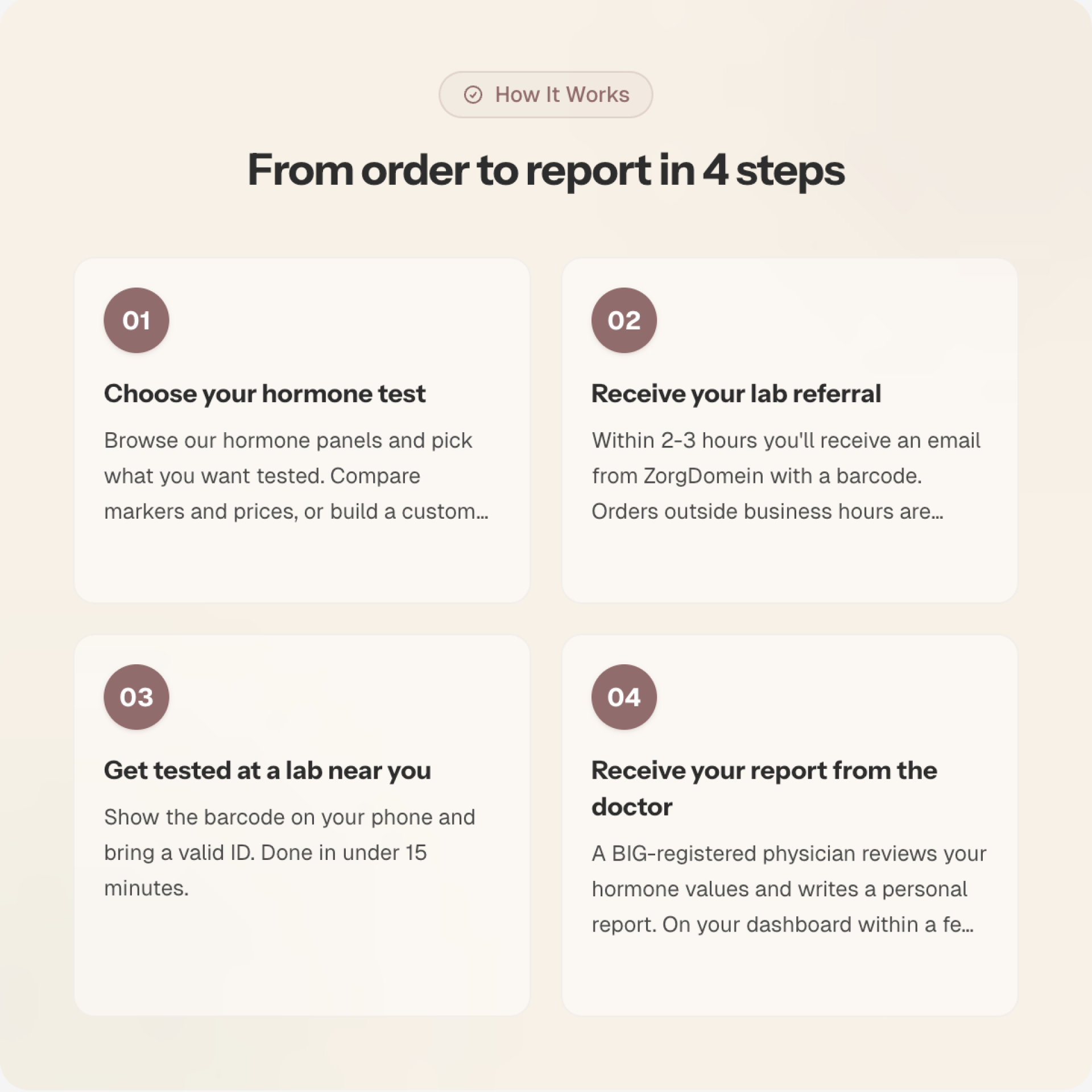
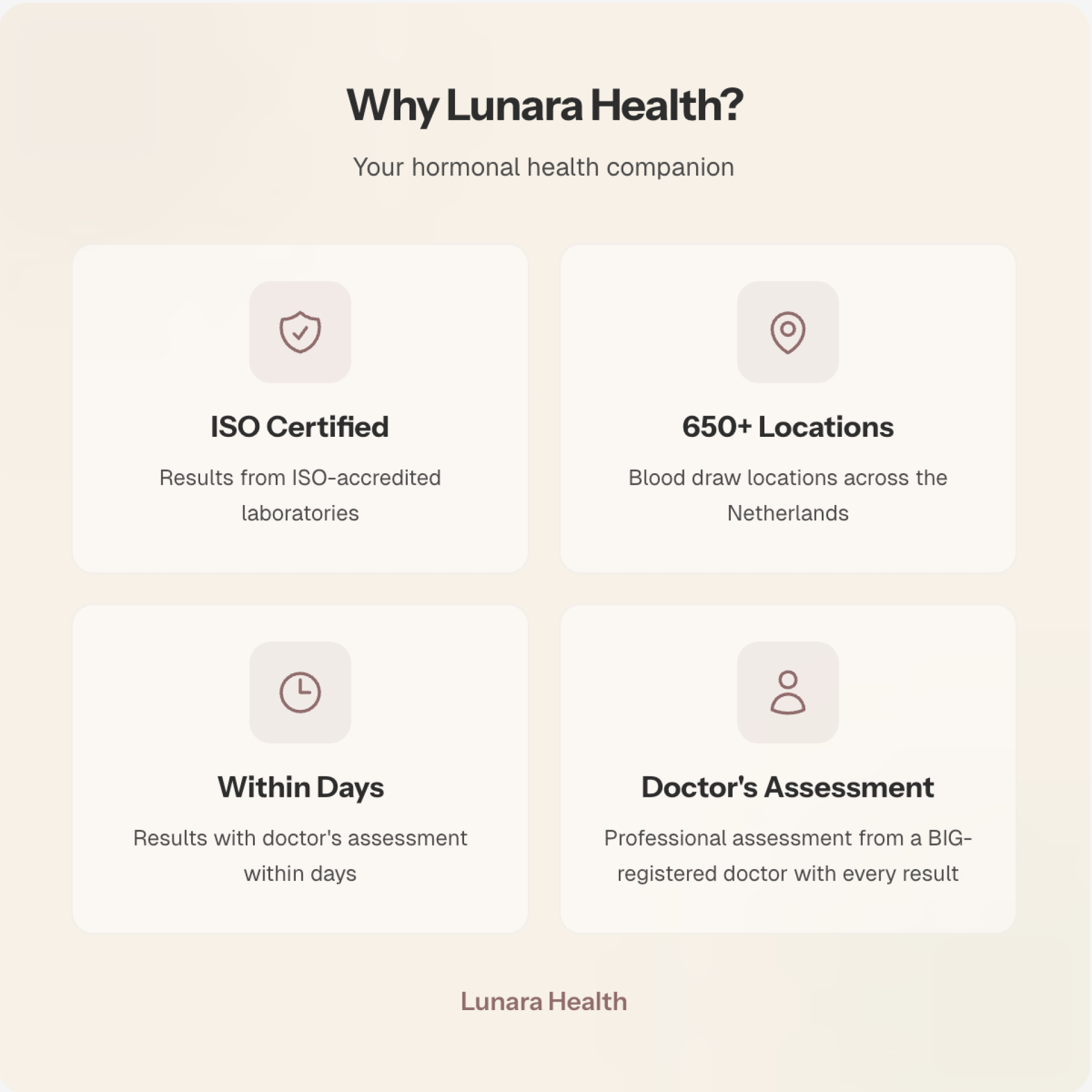
This test requires a small blood draw at a certified lab. In the Netherlands you can choose from 650+ sample points spread across the country.
After ordering, you pick a location near you and schedule a moment that suits you. The draw itself usually takes only a few minutes, and you do not need a referral from your GP.
When is this test useful?
An iron test can be valuable at different moments, for example:
- with fatigue or low energy, when you want to measure your iron level
- after a period of heavy blood loss, such as strong periods
- when switching to a plant-based or vegetarian eating pattern
- when you want to check your iron status during a wish to conceive or pregnancy
Some women choose to measure now and then to stay informed about their values. Whether that makes sense for you is something you can discuss with your GP.
What do the results mean?
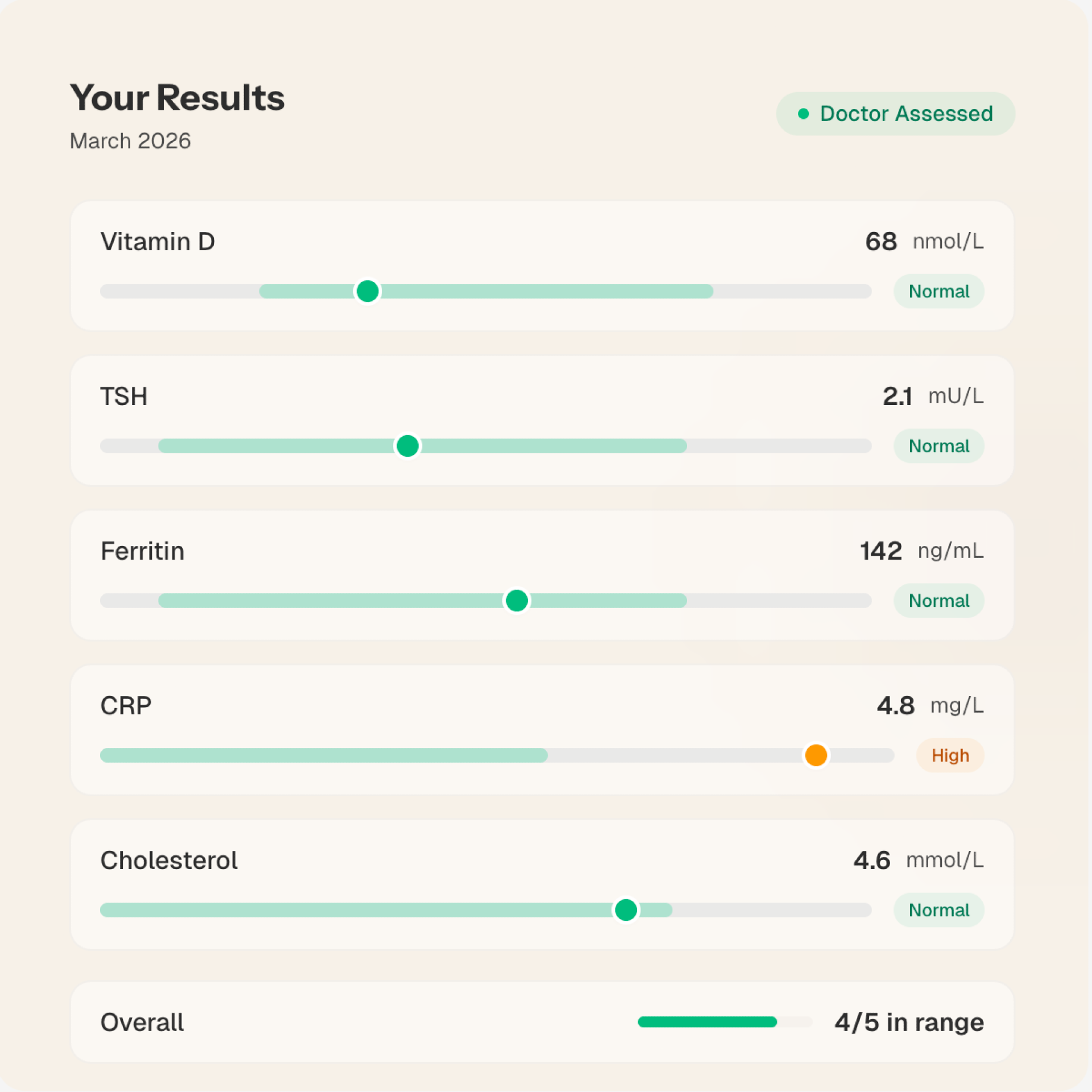
Your result shows each value together with a reference range and a short explanation. What counts as usual can vary slightly by laboratory and depends, among other things, on factors such as your age and situation.
A value below or above the range can mean different things. A low ferritin sometimes fits with a depleted store, while other values can point to how your body transports iron. The whole says more than each value on its own, and the doctor helps you interpret it.
What happens after the results?
Your results are usually in your Lunarahealth account within 2 working days of the blood draw, often the next day. Some markers take longer. Each value is shown clearly with a reference range and an explanation, so you understand what you see.
Every blood test result includes a professional assessment from a BIG-registered doctor. For treatment decisions, discuss your results with your GP.
Frequently Asked Questions
Iron shows how much iron is circulating in your blood at that moment, while ferritin says something about your stored iron reserve. Together they give a more nuanced picture than either one alone.
Fasting is not always needed, but iron is often drawn in the morning because the value is a bit more stable then. It is best to skip a heavy meal just beforehand.
Yes, with heavy or long-lasting blood loss your body can lose more iron over time. That is why an iron panel can be especially informative for menstruating women.
No, you can order this test online without a referral. You choose a sample point yourself and schedule a moment that suits you.
You pay €89,-. The blood draw is already included, so nothing is added.
No, a test you request yourself is not part of the basic Dutch insurance. You pay it yourself, and your deductible (eigen risico) stays untouched.
Count on one business day, a day longer for an order after 17:00 or at the weekend: by then the referral email has arrived, and you cannot go before it does. Some draw sites then take walk-ins and the rest work by appointment. Each location says which.
Your barcode from the ZorgDomein email and a valid ID. Showing the barcode on your phone is fine. Without a BSN you get no barcode; print the referral form from the link in the email instead.
Yes, unless your own doctor said otherwise. Some markers ask for extra preparation, such as no alcohol for 24 hours or no heavy training for 48 hours. You see this on the test and in the instructions after you order.
You show your barcode and your ID at the draw site, and then your blood is taken. Allow about a quarter of an hour.
Yes, a BIG-registered doctor assesses every result and explains your values in your account. If you want treatment, discuss the result with your GP.
In one of the independent, certified laboratories across the Netherlands that Lunarahealth works with. They also run the draw sites, which Lunarahealth does not own. Reference values can differ a little between labs.
No, your test bypasses your GP and does not end up in your medical record. Data goes to a healthcare provider only with your written consent, and it is never sold. Anonymous is not possible: a valid result needs your name, date of birth and ID.
What We Test
| No. | Biomarker | Unit |
|---|---|---|
| 01 | Iron (Serum) | umol/l |
| 02 | Transferrin Saturation | % |
| 03 | Ferritin | ug/l |
| 04 | Transferrin | g/l |
| Your results are usually in your Lunarahealth account within 2 working days of the blood draw. The laboratory states a longer turnaround for Iron (Serum). | ||
Preparation
-
Been ill? Wait a little
RequiredHad a fever, an infection or a vaccination in the past 2 weeks? Wait with the draw until you are fully recovered. These values react to inflammation and would give a distorted picture.
-
Preferably fasting
RecommendedComing fasting gives a slightly cleaner value, but it is not required. If it suits you, eat nothing from 22:00 the evening before and drink only water.
-
Preferably in the morning
RecommendedA morning draw makes this value easiest to compare with its reference range. Plan the draw before 10:00 if you can.
- Water is always fine. Drink as usual beforehand, it makes the draw easier.
- Take your usual medication, unless your own doctor told you otherwise.
Extend this panel
Same draw, no second appointment.
You Might Also Like
Ferritin Test
Measure your ferritin, your body's iron store and a common cause of fatigue. No referral needed.
Anemia
Anemia workup: hemoglobin, iron, transferrin, CBC, and B12.
Tiredness
Investigate some common causes of fatigue: CBC, thyroid, iron, vitamins, glucose, and HbA1c.