HOMA-IR test based on fasting glucose and insulin
Assess insulin resistance, often linked to hormonal balance and PCOS, with your HOMA-IR score.
Add to your order
No referral needed
Added to your order
Click the button to view your cart
Included Markers
3 markersGlucose (Fasting), HOMA-IR, Insulin (Fasting)
Maybe you notice stubborn fatigue, cravings or shifts in your weight, and wonder what your body is trying to tell you. Insulin plays a role in this more often than you might think. A HOMA-IR test can help you get a little more grip on it.
HOMA-IR is a calculation based on your fasting glucose and fasting insulin. Together these values give an impression of how sensitive your body is to insulin, something closely tied to your hormonal balance.
Why this test?
Insulin resistance often develops gradually and without clear signals. A HOMA-IR test looks at the relationship between your fasting glucose and fasting insulin, so you get a picture of how your body handles sugar and insulin.
For women this is especially interesting, because insulin sensitivity is closely woven into your hormonal balance. Think of your cycle, your energy and symptoms that are sometimes linked to PCOS.
Who is this test for?
This insulin resistance test can be interesting if you are curious about how your body handles insulin. For example if you deal with energy dips, find it hard to lose weight, or have questions around PCOS.
Also if insulin resistance runs in your family, or if you simply want a factual starting point, an insulin test can give you a little more insight. You decide whether and when you want this measured.
What is tested?
This test looks at three related values in your blood:
- Glucose (Fasting): your blood sugar level after a period of fasting, a baseline measure of how your body processes sugar.
- Insulin (Fasting): the amount of insulin in your blood while fasting, showing how much effort your body puts into keeping your glucose stable.
- HOMA-IR: a calculated score based on your fasting glucose and insulin that can give an impression of your insulin sensitivity.
Together these three form the basis for your HOMA-IR score.
What can this test tell you?
Your HOMA-IR score can give an impression of how sensitive your body currently is to insulin. A higher score may point to reduced insulin sensitivity, while a lower score can fit with normal sensitivity.
It remains a single snapshot and not a diagnosis. The outcome can help you look, together with a doctor, at what the numbers might mean in your situation.
How is the sample collected?
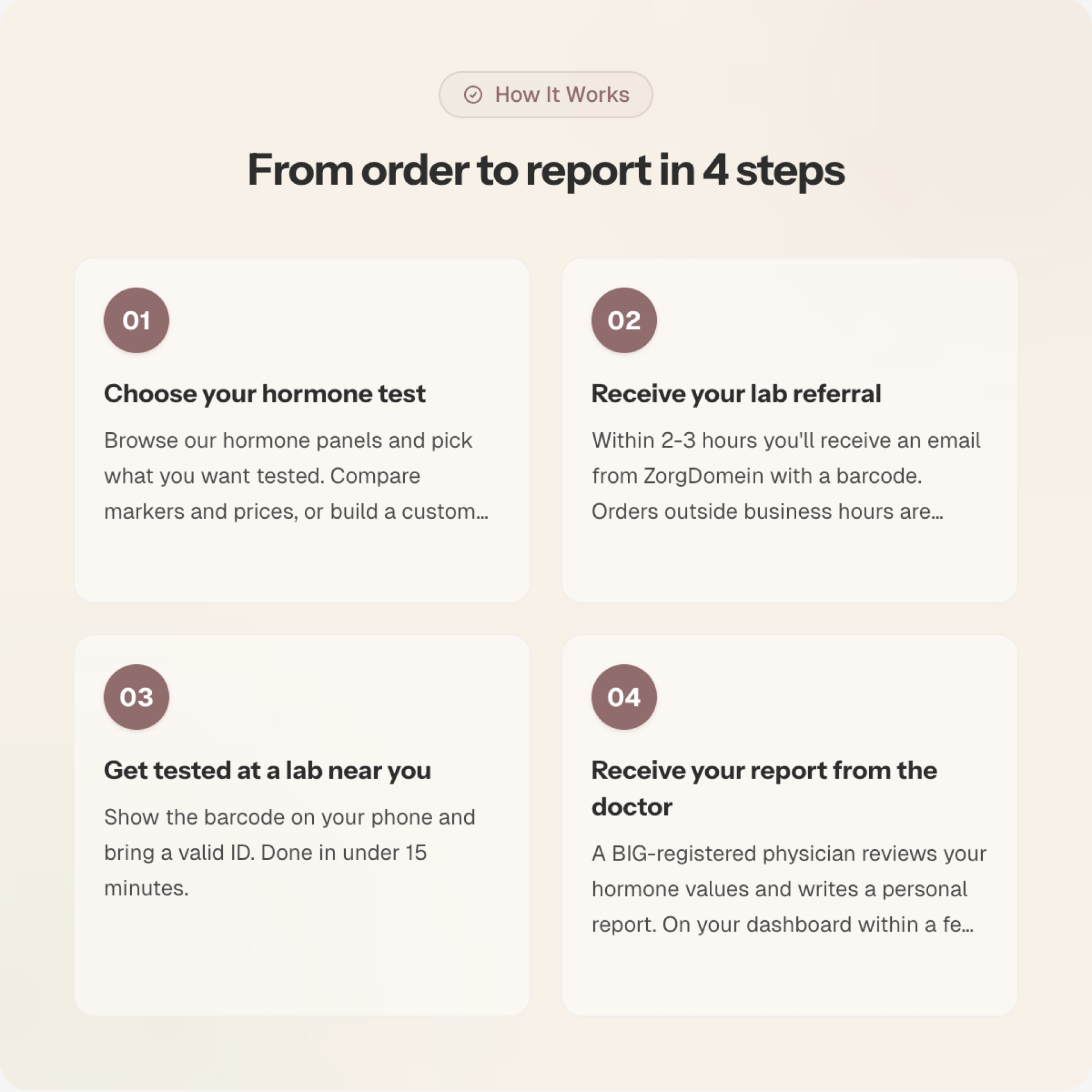
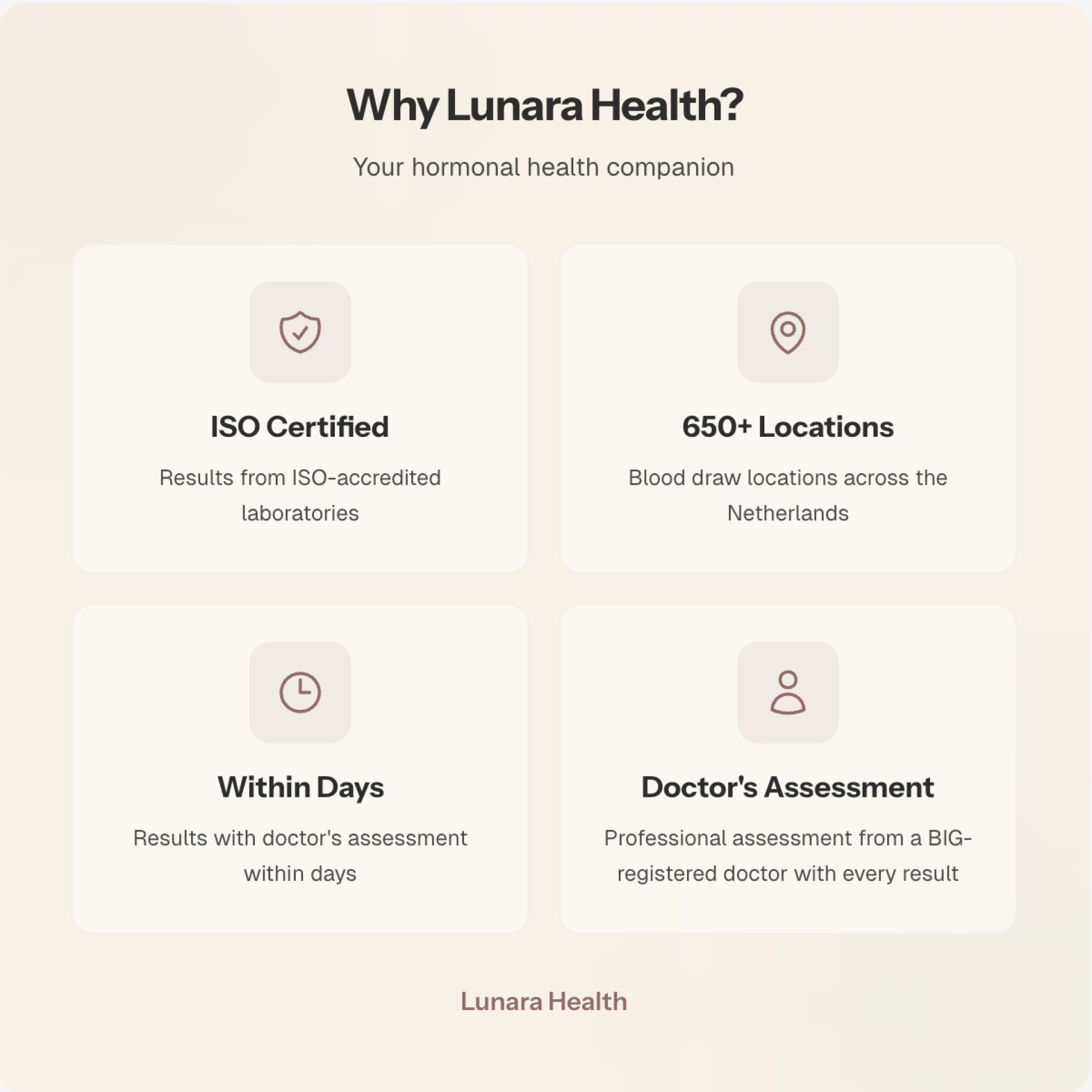
This test requires a small blood draw at a certified lab. In the Netherlands you can choose from 650+ sample points, so there is often one near you.
After ordering, you pick a location and a moment that suits you. The draw usually takes only a few minutes, and you do not need a referral from your GP.
When is this test useful?
Measuring insulin resistance can be valuable at different moments, for example:
- when you have questions around PCOS or other hormonal symptoms
- when losing weight feels hard despite your efforts
- when you deal with cravings, energy dips or fluctuating blood sugar
- when you simply want a factual view of your insulin sensitivity
An insulin blood test like this gives you something tangible to work with.
What do the results mean?
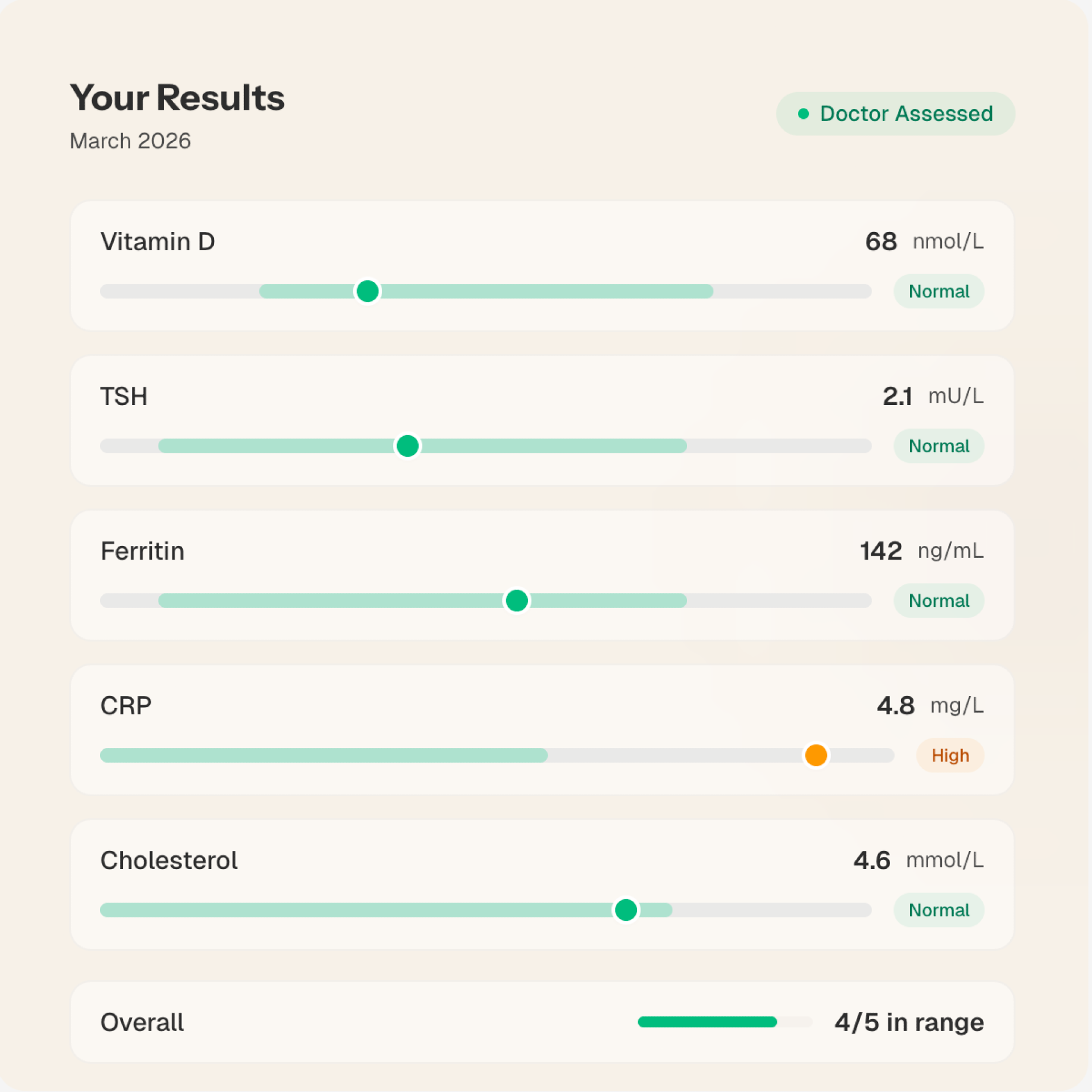
Your result shows your fasting glucose, your fasting insulin and your calculated HOMA-IR score, each with a reference range. What counts as usual can vary slightly by laboratory.
A score within the range usually fits with normal insulin sensitivity, while a higher score may point to more insulin resistance. A doctor helps you place these numbers in the right context.
What happens after the results?
Your result is usually available online within a few working days. Each value is shown clearly with a reference range and an explanation, so you understand what you see.
Every blood test result includes a professional assessment from a BIG-registered doctor. For treatment decisions, discuss your results with your GP.
Frequently Asked Questions
Yes, for a reliable HOMA-IR score you have blood drawn while fasting. Usually you eat nothing for around eight to twelve hours beforehand and drink only water.
HOMA-IR is a calculation based on your fasting glucose and fasting insulin. The score gives an impression of how sensitive your body is to insulin.
Insulin resistance occurs relatively often with PCOS. That is why some women choose to map their insulin sensitivity. A doctor can help you interpret the result.
No, you can order this test online without a referral from your GP. You choose your own sample point and a moment that suits you.
What We Test
| No. | Biomarker | Unit | Turnaround |
|---|---|---|---|
| 01 | Glucose (Fasting) | mmol/l | 1 day |
| 02 | HOMA-IR | Index | — |
| 03 | Insulin (Fasting) | pmol/L | 5 days |
| Your result arrives once the slowest test is finished: 5 days. This is indicative; turnaround varies per laboratory. | |||
Preparation
-
Pause biotin
RequiredDo you take a supplement with biotin (vitamin B8, common in hair, skin and nail supplements)? Stop it 72 hours before the draw. Biotin interferes with the measurement of these values.
-
Come fasting
RequiredFrom 22:00 the evening before, eat and drink nothing except water. That is at least 8 hours. Skip coffee, tea, chewing gum and smoking that morning. Plan the draw before 10:00.
- Water is always fine. Drink as usual beforehand, it makes the draw easier.
- Take your usual medication, unless your own doctor told you otherwise.
Extend this panel
Same draw, no second appointment.
You Might Also Like
Complete Metabolic Panel
Comprehensive metabolic panel: electrolytes, kidney, liver, glucose, HbA1c, and protein.
Lipids
LDL, HDL, and Triglycerides: your cardiovascular risk markers.
Diabetes
Fasting glucose and HbA1c: screen for prediabetes.