HbA1c test: your average blood sugar over 3 months
Fasting glucose and HbA1c: screen for prediabetes.
Add to your order
No referral needed
Added to your order
Click the button to view your cart
Included Markers
2 markersHbA1c (Glycated Hemoglobin), Glucose (Fasting)
Your blood sugar tells part of the story about how your body handles energy. An HbA1c test can give you a calm, factual picture of it, without you having to worry about anything straight away.
This test combines a fasting glucose test with your HbA1c, so you get both a snapshot and a longer-term view of your blood sugar. That gives you a better handle on a topic that can otherwise feel abstract.
Why this test?
Your blood sugar shifts gradually with your lifestyle, your hormones and your age. Around menopause, with PCOS or after a pregnancy, for example, your body can start responding to sugar differently, often without you noticing anything at first.
Prediabetes rarely causes clear symptoms early on. That is exactly why an HbA1c test can be valuable: it makes visible what you cannot feel yourself, so you do not have to guess and can talk to your GP in good time if needed.
Who is this test for?
This test can be useful if you are curious about your blood sugar or about your risk of prediabetes. Think of people with symptoms such as ongoing thirst, frequent tiredness or unexplained weight loss, or those with diabetes in the family.
For women, blood sugar can also connect with hormonal themes. With PCOS or after a pregnancy with raised blood sugar, it can be reassuring to check your values from time to time. You decide when that feels meaningful for you.
What is tested?
This test looks at two values in your blood:
- Glucose (Fasting): your blood sugar at the moment of the draw, after a period of fasting.
- HbA1c (Glycated Hemoglobin): your average blood sugar over roughly the past two to three months.
That way you can see whether a single reading fits your average over recent months.
What can this test tell you?
Your HbA1c and fasting glucose can together give an impression of how your body handles sugar. Values within the reference range usually fit with steady blood sugar.
Raised values can point to prediabetes or diabetes, but a blood test does not establish that on its own. It is a starting point you can explore further with your GP.
How is the sample collected?
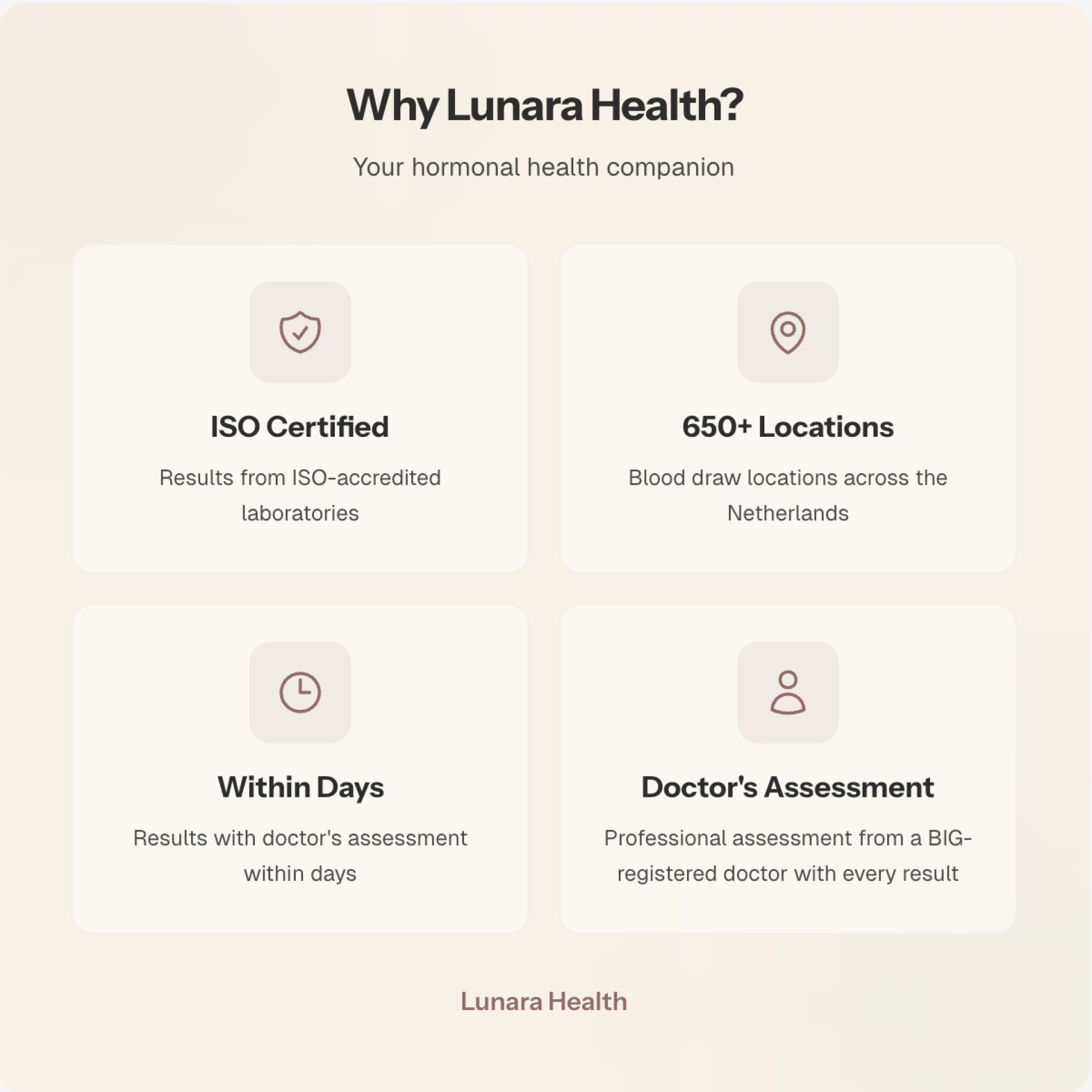
This test requires a small blood draw at a certified lab. In the Netherlands you can choose from 650+ blood draw locations.
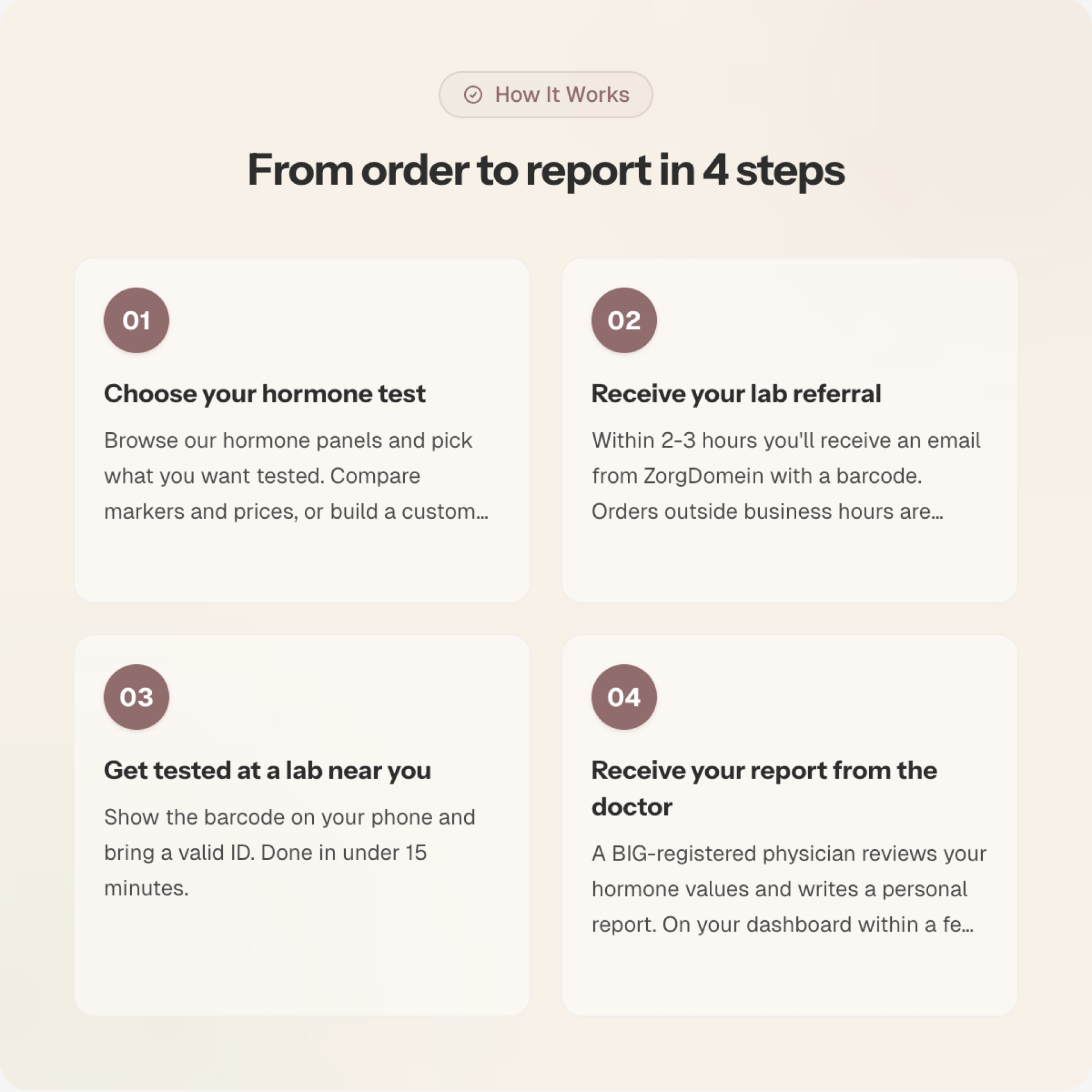
After ordering, you pick a location near you and schedule a moment that suits you. The draw itself usually takes only a few minutes, and you do not need a referral from your GP.
When is this test useful?
An HbA1c test can be valuable at different moments, for example:
- when you have symptoms you connect to your blood sugar
- when diabetes runs in your family and you are curious about your values
- when you want to keep an eye on your blood sugar with PCOS
- when you simply want to know where you stand
Some people choose to test now and then to stay informed. What suits you is up to you.
What do the results mean?
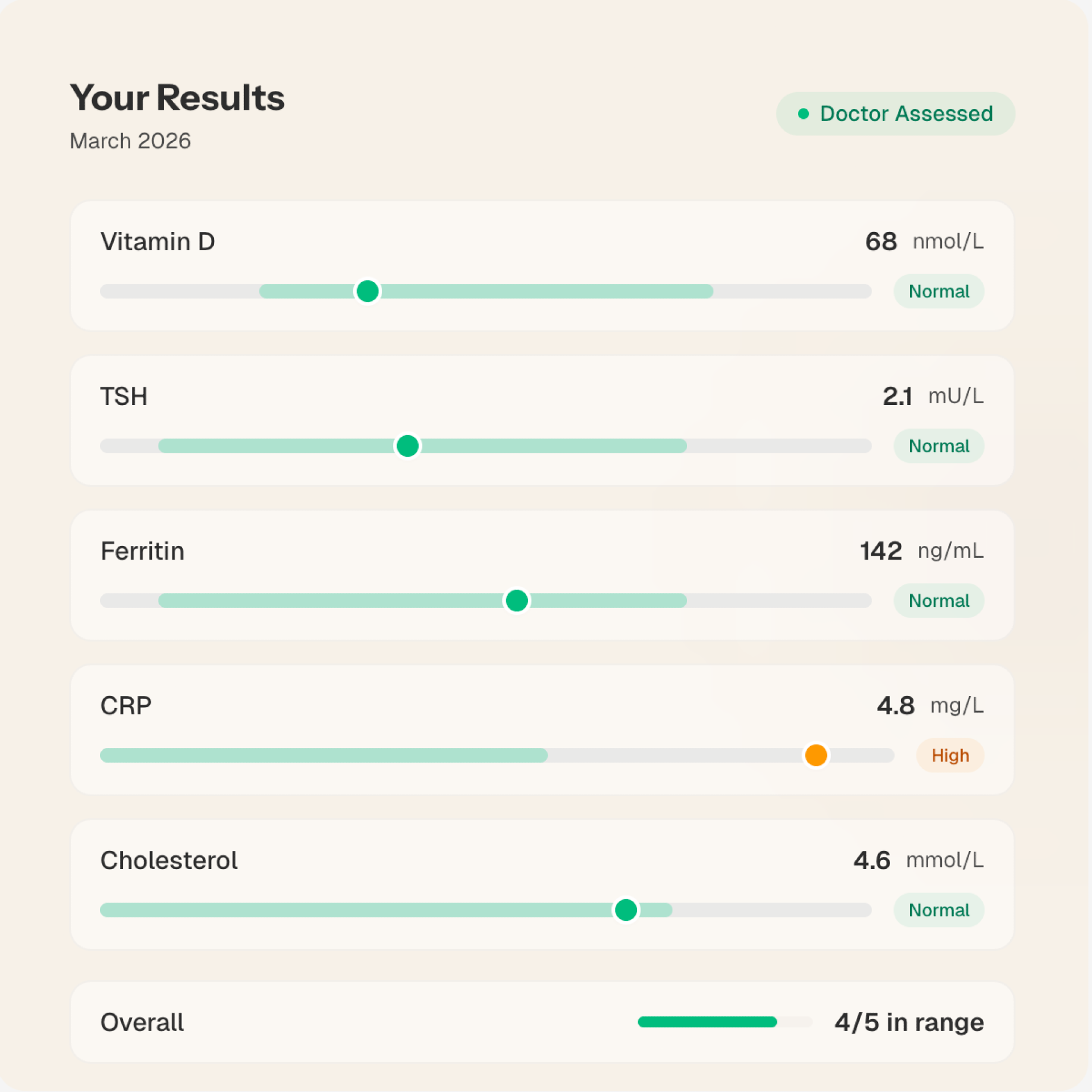
Your result shows your glucose and HbA1c values together with a reference range and a short explanation. What counts as usual can vary slightly by laboratory.
HbA1c reflects an average over a longer period, while glucose shows the situation at that moment. A value above the range can point to raised blood sugar, but on its own says nothing definitive. The doctor helps you place the numbers in the right context.
What happens after the results?
Your results are usually in your Lunarahealth account within 2 working days of the blood draw, often the next day. Some markers take longer. Each value is shown clearly with a reference range and an explanation, so you understand what you see.
Every blood test result includes a professional assessment from a BIG-registered doctor. For treatment decisions, discuss your results with your GP.
Frequently Asked Questions
A glucose test captures the moment: your blood sugar at the time of the draw. HbA1c looks back: your average blood sugar over roughly two to three months. That is why the two complement each other well.
For the fasting glucose test you should not eat for roughly eight to twelve hours beforehand. HbA1c can be measured at any time of day.
A blood test can point to raised blood sugar, but does not make a diagnosis on its own. Your GP can help you decide whether further steps are needed.
No, you can order this test online without a referral from your GP and have blood drawn at 650+ locations across the Netherlands.
You pay €69,-. The blood draw is already included, so nothing is added.
No, a test you request yourself is not part of the basic Dutch insurance. You pay it yourself, and your deductible (eigen risico) stays untouched.
Count on one business day, a day longer for an order after 17:00 or at the weekend: by then the referral email has arrived, and you cannot go before it does. Some draw sites then take walk-ins and the rest work by appointment. Each location says which.
Your barcode from the ZorgDomein email and a valid ID. Showing the barcode on your phone is fine. Without a BSN you get no barcode; print the referral form from the link in the email instead.
Yes, unless your own doctor said otherwise. Some markers ask for extra preparation, such as no alcohol for 24 hours or no heavy training for 48 hours. You see this on the test and in the instructions after you order.
You show your barcode and your ID at the draw site, and then your blood is taken. Allow about a quarter of an hour.
Yes, a BIG-registered doctor assesses every result and explains your values in your account. If you want treatment, discuss the result with your GP.
In one of the independent, certified laboratories across the Netherlands that Lunarahealth works with. They also run the draw sites, which Lunarahealth does not own. Reference values can differ a little between labs.
No, your test bypasses your GP and does not end up in your medical record. Data goes to a healthcare provider only with your written consent, and it is never sold. Anonymous is not possible: a valid result needs your name, date of birth and ID.
What We Test
| No. | Biomarker | Unit |
|---|---|---|
| 01 | HbA1c (Glycated Hemoglobin) | mmol/mol |
| 02 | Glucose (Fasting) | mmol/l |
| Your results are usually in your Lunarahealth account within 2 working days of the blood draw. | ||
Preparation
-
Come fasting
RequiredFrom 22:00 the evening before, eat and drink nothing except water. That is at least 8 hours. Skip coffee, tea, chewing gum and smoking that morning. Plan the draw before 10:00.
- Water is always fine. Drink as usual beforehand, it makes the draw easier.
- Take your usual medication, unless your own doctor told you otherwise.
Extend this panel
Same draw, no second appointment.
You Might Also Like
Complete Metabolic Panel
Comprehensive metabolic panel: electrolytes, kidney, liver, glucose, HbA1c, and protein.
Insulin Resistance (HOMA-IR)
Assess insulin resistance, often linked to hormonal balance and PCOS, with your HOMA-IR score.
Lipids
LDL, HDL, and Triglycerides: your cardiovascular risk markers.