Progesterone test: measure your progesterone level
A progesterone test measures your progesterone level in the luteal phase, around day 21 of your cycle. No referral needed.
Add to your order
No referral needed
Added to your order
Click the button to view your cart
Included Markers
1 markersProgesterone
A progesterone test measures how much progesterone is in your blood. This hormone rises after ovulation, in the second half of your cycle. You order the test online and need no referral.
After ovulation the corpus luteum produces progesterone. That is why your level peaks in the luteal phase. Progesterone helps prepare the lining of your womb. A doctor registered in the Dutch BIG register then assesses your result.
Why take a progesterone test?
A progesterone test puts a concrete number in your hands. That helps with cycle problems, or when you are unsure whether you ovulate. It saves you guessing at vague symptoms.
The result is one piece of the puzzle around your cycle and your fertility. Want to read about the hormone itself first? Visit our page on progesterone.
Who is this test for?
This test suits women with an irregular cycle. It also helps when you doubt whether ovulation happens at all. Sometimes you simply want to know where your hormonal balance stands.
Women trying to conceive often look at progesterone. The hormone can support an early pregnancy. The test does not replace care from your GP. It does feed that conversation with real figures.
What is measured?
We look at one specific value in your blood:
- Progesterone: the hormone your corpus luteum makes after ovulation, and which rises during the luteal phase.
You get your value back with its matching reference range. That puts your result in context straight away. Want more hormones measured? See the hormone test for women.
What can a progesterone test tell you?
Your progesterone level gives an indication of whether ovulation took place. A low value sometimes suggests it did not. Other factors play a part too.
Many questions surround progesterone and pregnancy. The hormone prepares the lining of your womb and can support an early pregnancy. Remember that the result is a snapshot, not a diagnosis.
Want to know specifically whether you ovulated? See the ovulation confirmation.
How is the sample taken?
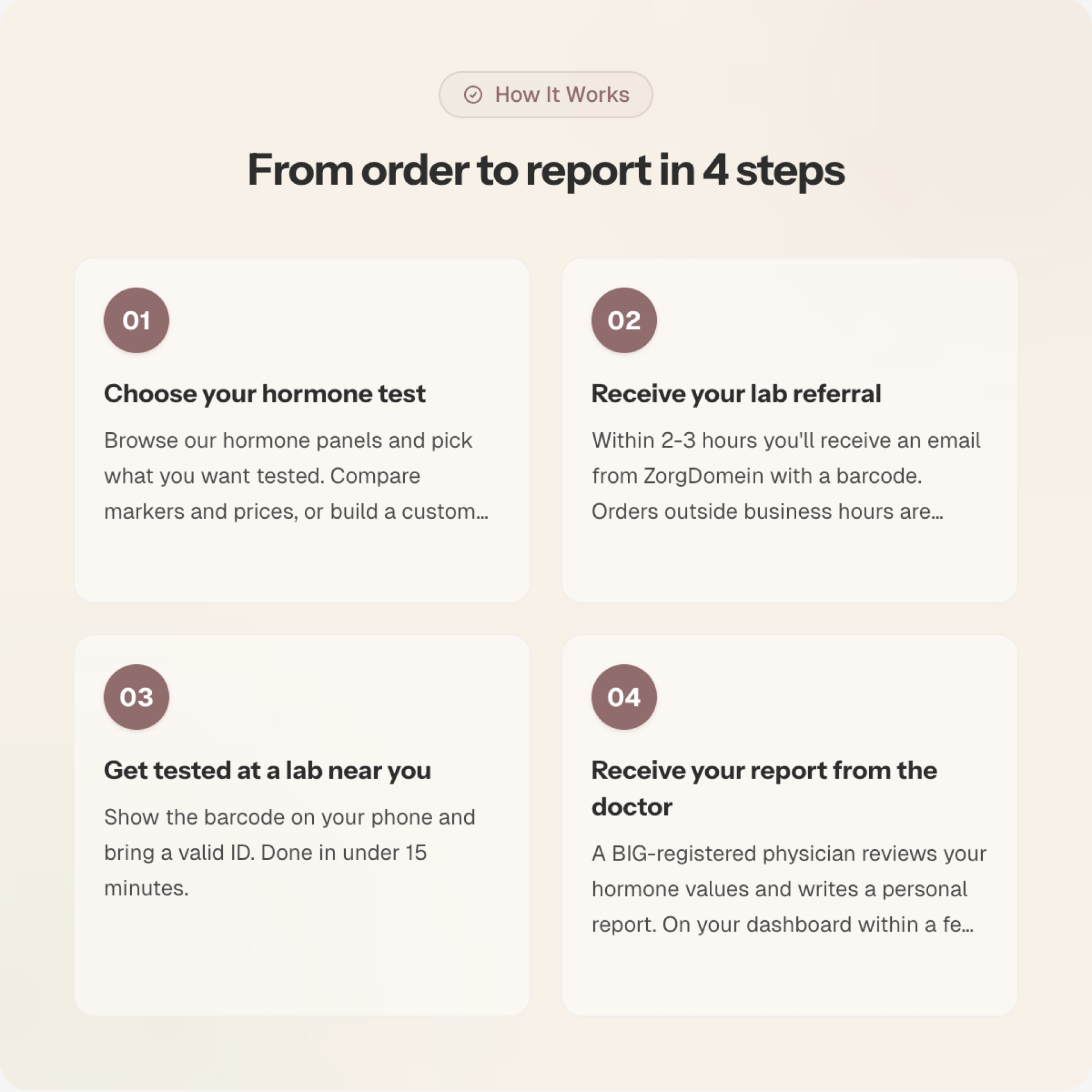
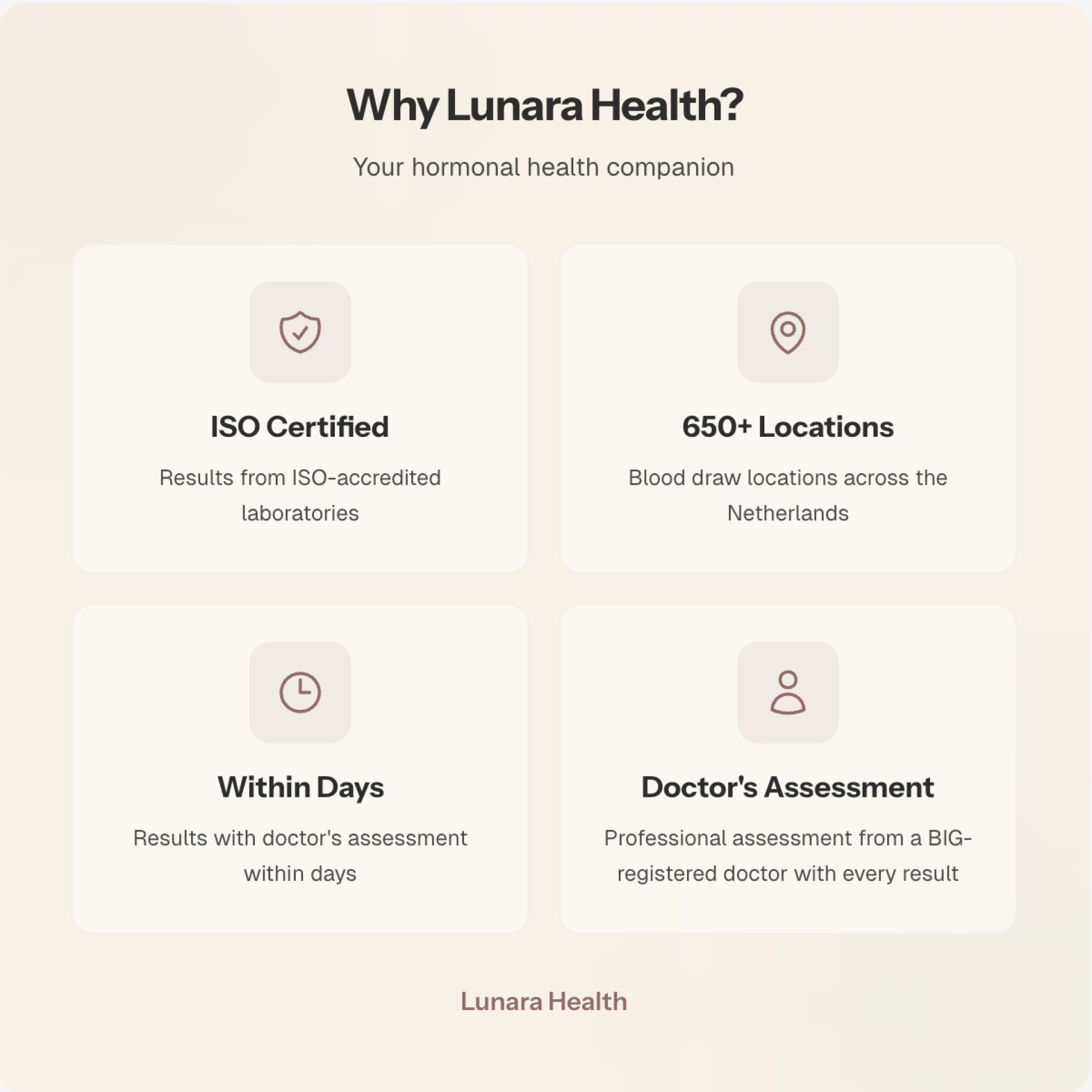
This test needs a small blood draw. After ordering you pick your own collection point. In the Netherlands you can visit 650+ certified locations, often close to home.
You need no referral from your GP for this. The draw itself usually takes a few minutes. Your blood then goes to a certified laboratory.
When should you take a progesterone test?
Progesterone is best measured in the mid-luteal phase. That is roughly around day 21 of a 28-day cycle. Your level is usually at its highest then.
That timing is deliberate, because seven days after ovulation the value says the most. Early in your cycle progesterone is low. A measurement on day 2 to 5 therefore says little about this hormone.
Do you have a longer cycle? Then the right moment shifts with it.
What does the result mean?
Your result comes with a reference range and a short explanation. What counts as normal depends on the laboratory and your age. Above all, the day in your cycle weighs heavily.
So do not compare your value with someone else's. A BIG-registered doctor assesses your result and places it in context. For what it means in your situation, that judgement leads.
What happens after the result?
Your results are usually in your Lunarahealth account within 2 working days of the blood draw, often the next day. Some markers take longer. You view it safely and clearly in your account. That lets you read it calmly and take it to a follow-up.
Do you recognise symptoms such as an irregular cycle, spotting or PMS? Then discuss your result with a healthcare professional. Every result carries an assessment by a BIG-registered doctor. Always discuss treatment decisions with your GP.
Frequently asked questions
You order the progesterone test online and then pick your own collection point. In the Netherlands you can visit 650+ certified locations. You need no referral from your GP.
Progesterone is usually measured in the mid-luteal phase, around day 21 of a 28-day cycle. With an irregular cycle that moment shifts. Your GP can help you think it through.
Symptoms women often mention are an irregular cycle, spotting and PMS-like complaints. These are not specific and have many possible causes. A blood value makes the picture more concrete, but is not a diagnosis.
That depends strongly on the day in your cycle. Early in your cycle progesterone is low, and after ovulation it rises. Your result therefore comes with the reference range that matches your measurement, plus a doctor's assessment.
You usually do not need to fast for a progesterone measurement. The right moment in your cycle matters more than fasting.
No, you need no referral from your GP. You order the test online and then pick a collection point near you.
You pay €69,-. The blood draw is already included, so nothing is added.
No, a test you request yourself is not part of the basic Dutch insurance. You pay it yourself, and your deductible (eigen risico) stays untouched.
Count on one business day, a day longer for an order after 17:00 or at the weekend: by then the referral email has arrived, and you cannot go before it does. Some draw sites then take walk-ins and the rest work by appointment. Each location says which.
Your barcode from the ZorgDomein email and a valid ID. Showing the barcode on your phone is fine. Without a BSN you get no barcode; print the referral form from the link in the email instead.
Yes, unless your own doctor said otherwise. Some markers ask for extra preparation, such as no alcohol for 24 hours or no heavy training for 48 hours. You see this on the test and in the instructions after you order.
You show your barcode and your ID at the draw site, and then your blood is taken. Allow about a quarter of an hour.
Yes, a BIG-registered doctor assesses every result and explains your values in your account. If you want treatment, discuss the result with your GP.
In one of the independent, certified laboratories across the Netherlands that Lunarahealth works with. They also run the draw sites, which Lunarahealth does not own. Reference values can differ a little between labs.
No, your test bypasses your GP and does not end up in your medical record. Data goes to a healthcare provider only with your written consent, and it is never sold. Anonymous is not possible: a valid result needs your name, date of birth and ID.
What We Test
| No. | Biomarker | Unit |
|---|---|---|
| 01 | Progesterone | nmol/l |
| Your results are usually in your Lunarahealth account within 2 working days of the blood draw. | ||
Preparation
-
Do you have a cycle? Pick the right day
RequiredIf you have a menstrual cycle, have the draw 7 days before your next expected period; if that cycle is irregular, repeat weekly until your period starts. Without a cycle, any day works.
- Water is always fine. Drink as usual beforehand, it makes the draw easier.
- Take your usual medication, unless your own doctor told you otherwise.
Extend this panel
Same draw, no second appointment.
You Might Also Like
PCOS Screening
Screening covering key markers associated with PCOS.
Hormones Women
A hormone test for women measures FSH, LH, estradiol, progesterone and prolactin. Together these five values make a hormonal imbalance visible.
Menopause Check
FSH and estradiol when early menopause is suspected, plus TSH and free T4 for your thyroid.