Extended blood test as a broad health checkup
Our broadest panel: CBC, thyroid, vitamins, lipids, liver, kidney, and HbA1c.
Add to your order
No referral needed
Added to your order
Click the button to view your cart
Included Markers
15 markersHbA1c (Glycated Hemoglobin), TSH (Thyroid Stimulating Hormone), Triglycerides, Creatinine, eGFR (Estimated Glomerular Filtration Rate), Free T4 (Thyroxine), LDL Cholesterol, Liver Function Test (LFT), Vitamin B12, Vitamin D (25-OH), Free T3 (Triiodothyronine), Ferritin, HDL Cholesterol, Basic Blood Count, LDL/HDL Ratio
Sometimes you just want a broad look at how your body is doing, without anything necessarily being wrong. An extended blood test gives you that wider overview: it shows several systems at once, from your blood count to your thyroid, vitamins, lipids, liver and kidneys.
This extended health checkup is our most comprehensive panel, made for women who want to know where they stand with a bit more insight. Instead of a single number, you get a coherent view of fourteen markers that together can say a lot about your everyday health.
Why this test?
Your body works as a whole, and complaints or questions rarely stand on their own. An extended blood test therefore looks at several systems at the same time, so you can spot connections you might miss with a single test.
Some people also call this a complete blood test or a large blood panel. Whatever you call it, the idea is the same. In one draw you measure a broad set of markers and gain a starting point for questions about your health.
Who is this test for?
This extended health checkup can be useful when you want a wider view of your health, for example around a new life stage, with ongoing tiredness or simply out of curiosity.
As a health checkup for women, it fits many situations: you want to know how your vitamins are doing, you are curious about your thyroid, or you want to map your blood fats and sugar values. You do not need a referral from your GP for this.
What is tested?
This panel measures fourteen markers across different systems in your body:
- Complete Blood Count (CBC): a broad view of your red and white blood cells and your platelets.
- TSH (Thyroid Stimulating Hormone): can say something about your thyroid function.
- Free T4: a thyroid hormone assessed together with TSH.
- Free T3: the active form of your thyroid hormone.
- Vitamin D (25-OH): involved in your bones, muscles and immune system.
- Vitamin B12: important for your energy and nervous system.
- Ferritin: gives an impression of your iron stores.
- HDL Cholesterol: the favourable cholesterol.
- LDL Cholesterol: often called the less favourable cholesterol.
- Triglycerides: a type of fat in your blood.
- HbA1c: reflects your average blood sugar over the past two to three months.
- Liver Function Test (LFT): a set of values that can say something about your liver.
- Creatinine: a waste product that says something about your kidneys.
- eGFR: an estimated measure of how well your kidneys filter.
What can this test tell you?
Because this test looks at several systems at once, the results can help you recognise patterns. An unusual value in your blood count, thyroid or vitamins may, for instance, relate to complaints you have been carrying for a while.
Think of signals that could fit with tiredness, a disrupted metabolism or a shortage of certain nutrients. The test can make such clues visible, but on its own it does not make a diagnosis. Above all, it offers insight and starting points to discuss further.
How is the sample collected?
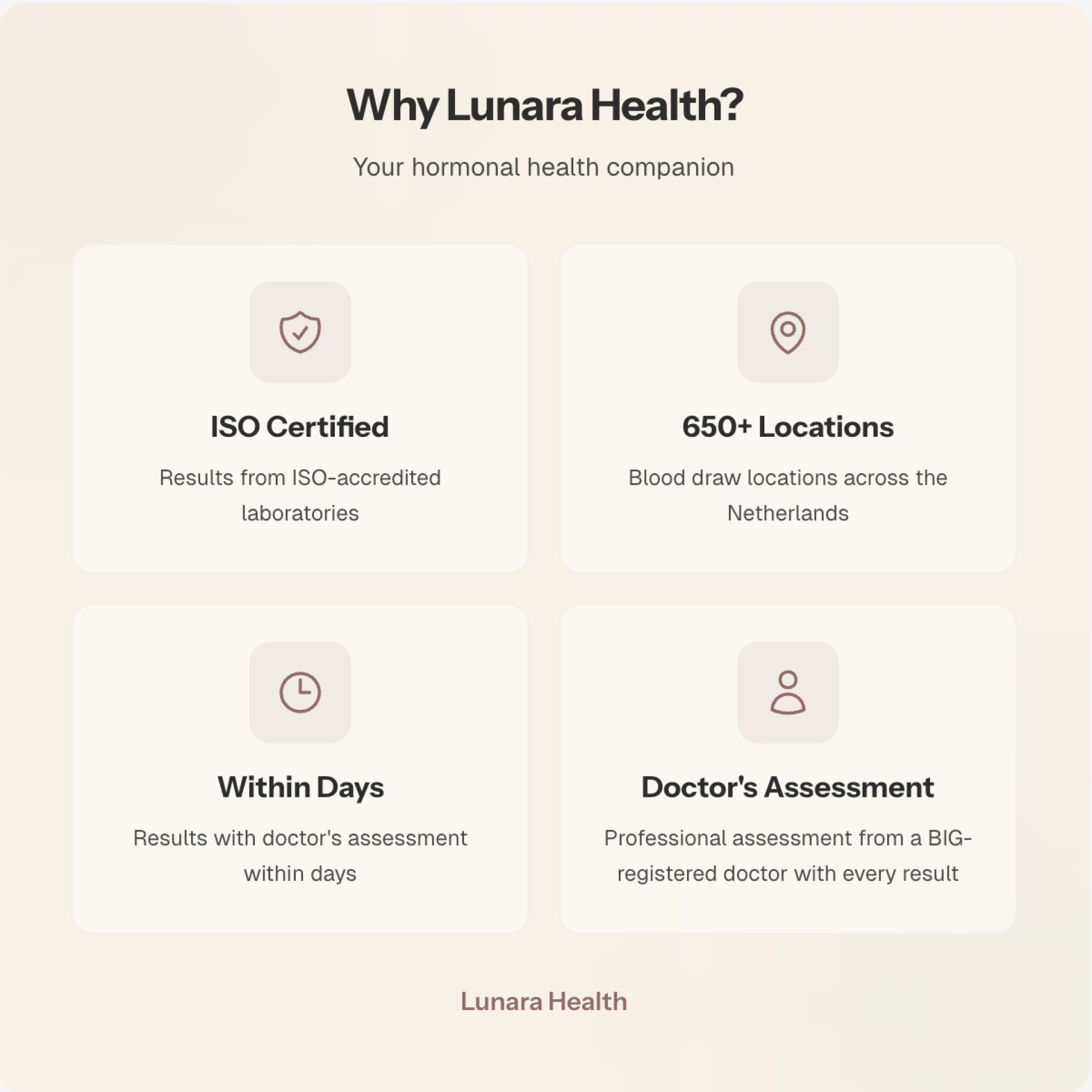
This panel needs one blood draw at a certified lab. In the Netherlands you can choose from 650+ sample locations, so there is a good chance there is one near you.
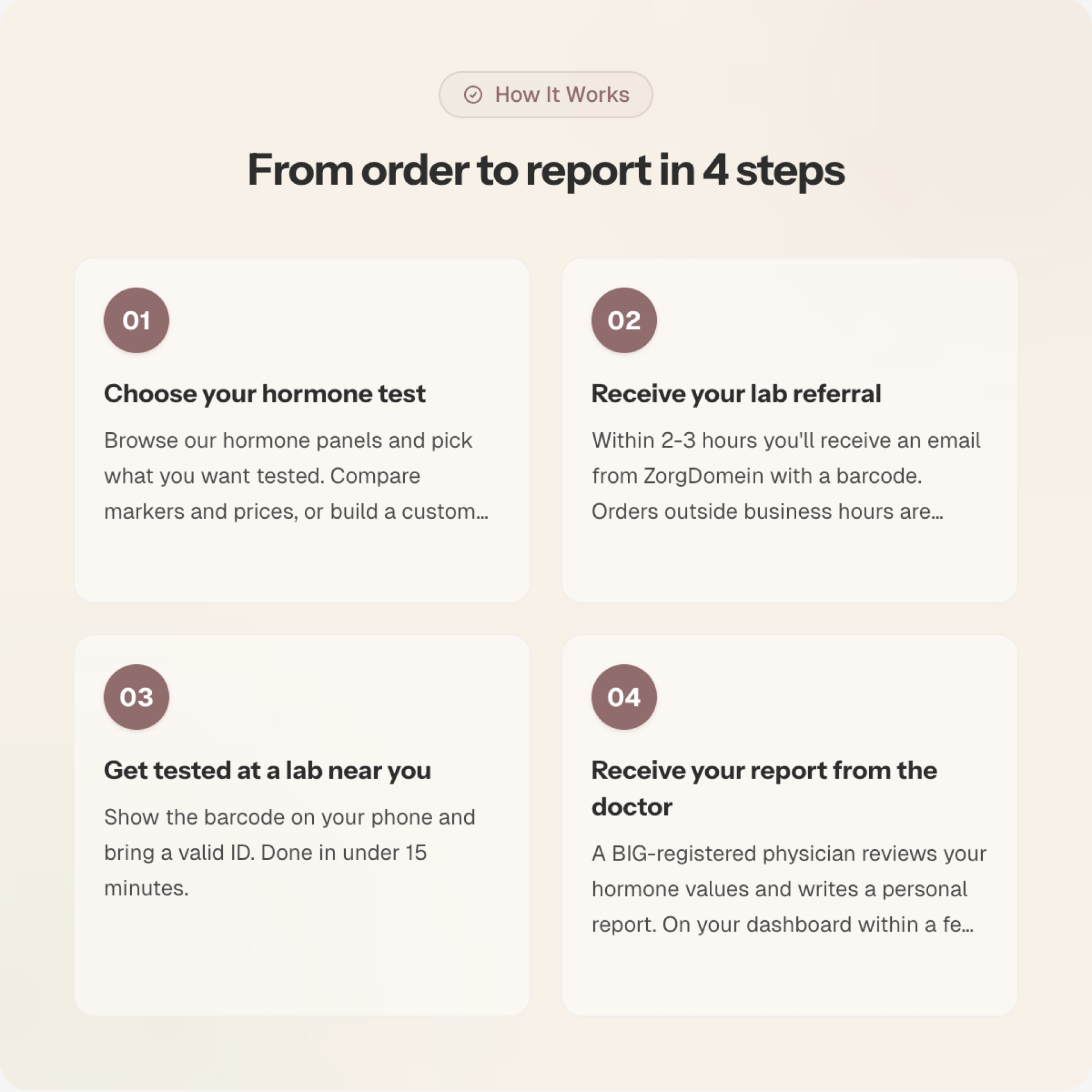
After ordering, you pick a location and a moment that suits you. The draw usually takes only a few minutes and you do not need a referral for it.
When is this test useful?
An extended blood test can be valuable at different moments, for example:
- when you want a broad overview of your general health
- with vague complaints such as fatigue, when you are not sure where to look
- around a new life stage or a change in your lifestyle
- when you want to track how certain values develop over time
When a test suits you is entirely up to you. Your GP can help you with that if you wish.
What do the results mean?
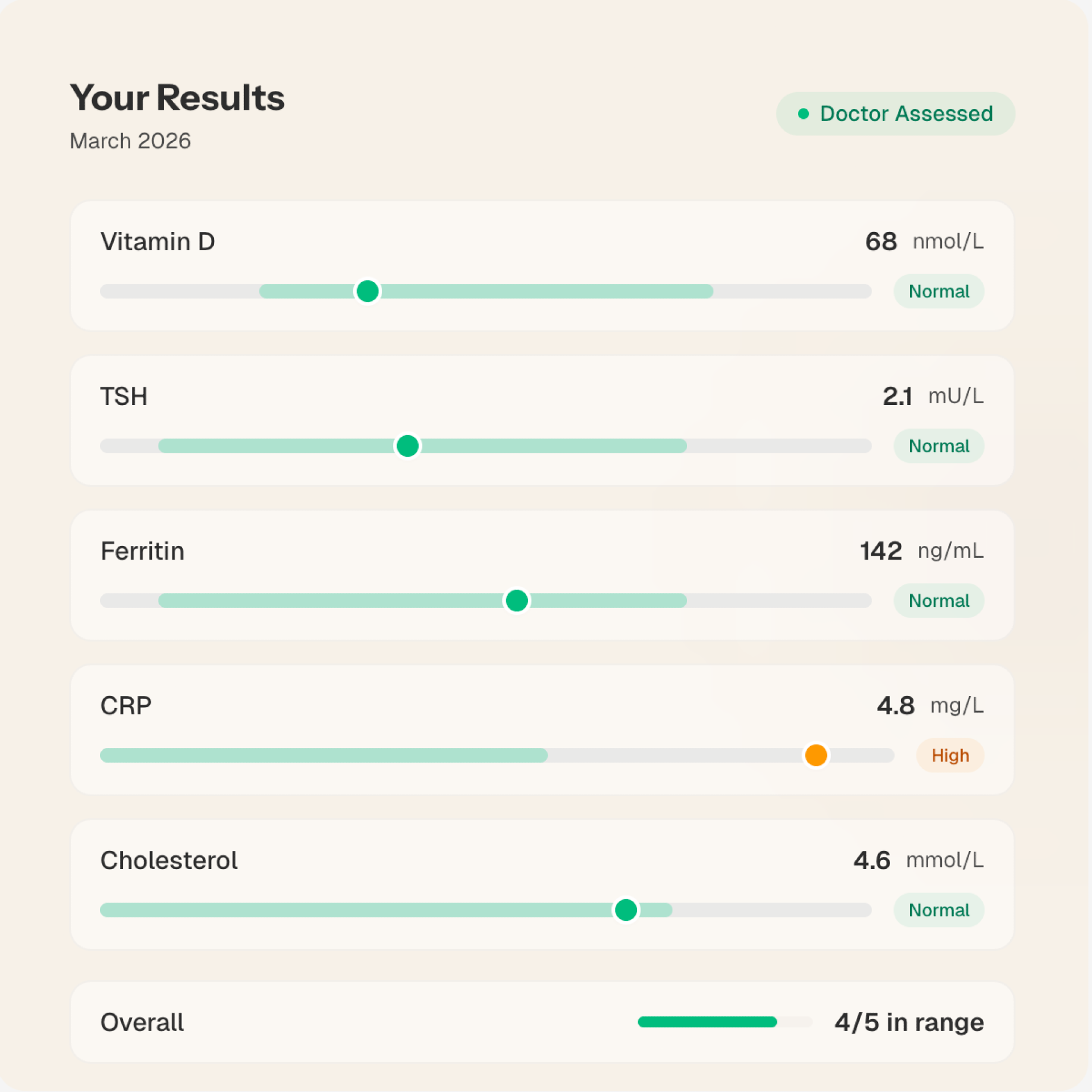
Your result shows your own value per marker, together with a reference range and a short explanation. In one overview you can see which values fall within the usual range and which differ a little.
A value outside the range does not automatically mean something is wrong; it can also fit with your situation, your lifestyle or the moment of the draw. The BIG-registered doctor helps you place your values in the right context.
What happens after the results?
Your results are usually in your Lunarahealth account within 2 working days of the blood draw, often the next day. Some markers take longer. Each value is shown clearly with a reference range and an explanation, so you can read back what you see at your own pace.
Every blood test result includes a professional assessment from a BIG-registered doctor. For treatment decisions, discuss your results with your GP.
Frequently Asked Questions
This panel measures fourteen markers across your blood count, thyroid, vitamins (D and B12), iron, blood fats, long-term blood sugar and your liver and kidney values, giving you a broad overview in one draw.
No, you do not need a referral from your GP. You order the test online and simply pick a sample location near you.
For this panel you usually do not need to fast, because it does not include a fasting glucose. Drinking enough water on the day itself often helps with the draw.
Your results are usually online within 2 working days of the blood draw, with a reference range and explanation per value, plus an assessment from a BIG-registered doctor.
People often use terms like complete or large blood test for a broad panel like this one. No single test covers every aspect of your health, but this panel does look at many systems at once.
You pay €259,-. The blood draw is already included, so nothing is added.
No, a test you request yourself is not part of the basic Dutch insurance. You pay it yourself, and your deductible (eigen risico) stays untouched.
Count on one business day, a day longer for an order after 17:00 or at the weekend: by then the referral email has arrived, and you cannot go before it does. Some draw sites then take walk-ins and the rest work by appointment. Each location says which.
Your barcode from the ZorgDomein email and a valid ID. Showing the barcode on your phone is fine. Without a BSN you get no barcode; print the referral form from the link in the email instead.
Yes, unless your own doctor said otherwise. Some markers ask for extra preparation, such as no alcohol for 24 hours or no heavy training for 48 hours. You see this on the test and in the instructions after you order.
You show your barcode and your ID at the draw site, and then your blood is taken. Allow about a quarter of an hour.
Yes, a BIG-registered doctor assesses every result and explains your values in your account. If you want treatment, discuss the result with your GP.
In one of the independent, certified laboratories across the Netherlands that Lunarahealth works with. They also run the draw sites, which Lunarahealth does not own. Reference values can differ a little between labs.
No, your test bypasses your GP and does not end up in your medical record. Data goes to a healthcare provider only with your written consent, and it is never sold. Anonymous is not possible: a valid result needs your name, date of birth and ID.
What We Test
| No. | Biomarker | Unit |
|---|---|---|
| 01 | HbA1c (Glycated Hemoglobin) | mmol/mol |
| 02 | TSH (Thyroid Stimulating Hormone) | mu/l |
| 03 | Triglycerides | mmol/l |
| 04 | Creatinine | umol/l |
| 05 | eGFR (Estimated Glomerular Filtration Rate) | ml/min/1,73m² |
| 06 | Free T4 (Thyroxine) | pmol/l |
| 07 | LDL Cholesterol | mmol/l |
| 08 | Liver Function Test (LFT) | — |
| 09 | Vitamin B12 | pmol/l |
| 10 | Vitamin D (25-OH) | nmol/l |
| 11 | Free T3 (Triiodothyronine) | pmol/l |
| 12 | Ferritin | ug/l |
| 13 | HDL Cholesterol | mmol/l |
| 14 | Basic Blood Count | — |
| 15 | LDL/HDL Ratio | ratio |
| Your results are usually in your Lunarahealth account within 2 working days of the blood draw. The laboratory states a longer turnaround for Free T3 (Triiodothyronine), Free T4 (Thyroxine), Liver Function Test (LFT), Vitamin B12 and Vitamin D (25-OH). | ||
Preparation
-
Been ill? Wait a little
RequiredHad a fever, an infection or a vaccination in the past 2 weeks? Wait with the draw until you are fully recovered. These values react to inflammation and would give a distorted picture.
-
Pause biotin
RequiredDo you take a supplement with biotin (vitamin B8, common in hair, skin and nail supplements)? Stop it 72 hours before the draw. Biotin interferes with the measurement of these values.
-
Better no hard training beforehand
RecommendedHard exercise in the 48 hours before can raise this value temporarily. Plan the draw on a rest day if you can.
-
No alcohol beforehand
RequiredDrink no alcohol in the 24 hours before the draw.
-
Preferably fasting
RecommendedComing fasting gives a slightly cleaner value, but it is not required. If it suits you, eat nothing from 22:00 the evening before and drink only water.
-
Timing worth knowing
Good to knowIf you repeat this test, pick the same time of day each time so the results compare.
-
On levothyroxine? Worth knowing
Good to knowTell the staff at the draw when you took your tablet; for most values the timing makes no difference.
- Water is always fine. Drink as usual beforehand, it makes the draw easier.
- Take your usual medication, unless your own doctor told you otherwise.
Extend this panel
Same draw, no second appointment.
You Might Also Like
Liver Function
Liver Function Test (LFT).
Kidney Function
Creatinine, eGFR, and BUN: key kidney markers.
Basic Health Checkup
Key health markers: CBC, lipids, and Vitamin D.