Natural contraception means preventing pregnancy without hormones or procedures, by predicting your fertile days and not having unprotected sex on them. Reliability ranges from under 1 to over 20 pregnancies per 100 women per year, and that entire difference sits in which method you choose and how strictly you follow it.
That spread is the most honest thing you can say about it.
I see two camps that both exaggerate: the camp that dismisses every natural method as russian roulette, and the camp that sells an app as if it were the pill. The numbers below show neither caricature holds.
What is natural contraception?
Natural contraception is an umbrella term for methods that map your fertile window, using your calendar, your temperature, your cervical mucus or a combination. On fertile days you abstain, or use a condom. No hormones are involved, and for many women that's precisely the appeal.
Your fertile window spans about six days per cycle: the five days before ovulation plus the day itself. The entire art is identifying those days reliably, and the methods differ enormously there.
Which natural methods exist?
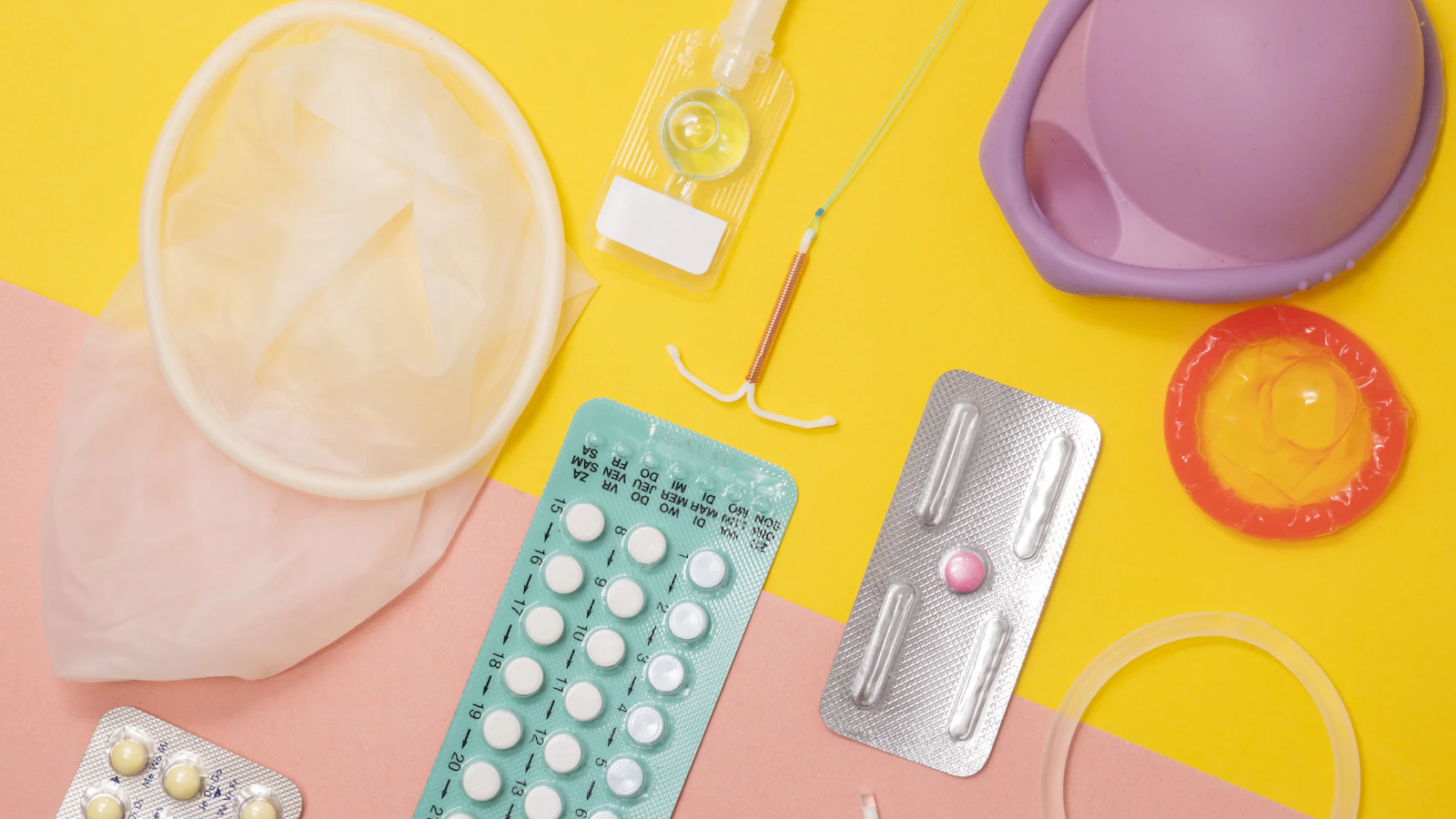
Four families. The calendar method calculates from cycle data alone. The temperature method measures your morning temperature, which rises slightly after ovulation. The symptothermal method, with Sensiplan as its best-known protocol, combines temperature with mucus observation. And cycle apps like Natural Cycles automate the temperature method with an algorithm.
| Method | Perfect use (per 100 women per year) | Typical use |
|---|---|---|
| Symptothermal (Sensiplan) | about 0.4 | about 2 |
| Cycle app (Natural Cycles) | about 1 | about 7 |
| Temperature method alone | a few | clearly higher |
| Calendar method | about 5 | up to 24 |
The Sensiplan numbers come from a German study of 900 women and 17,638 cycles (PMID 17314078), the app numbers from research by Natural Cycles' own makers (PMID 28882680), the rest from Trussell's American review (PMID 21477680).
How reliable is natural contraception?
Well-executed symptothermal practice reaches numbers close to the pill: under 1 pregnancy per 100 women per year with perfect use. But the gap between perfect and typical use is wider for natural methods than for any other method. One sloppy week counts immediately here.
Take a woman whose cycle swings between 26 and 34 days, with a baby waking her three times a night, making her morning temperature unreliable. For her, the exact same method that works fine for her friend with a clockwork cycle suddenly becomes a gamble.
Reliability here isn't a property of the method alone. It's method times situation times discipline.
Who does natural contraception suit?
It fits best for women with a fairly regular cycle, a stable daily rhythm, the willingness to measure every day and a partner who participates. And, not unimportantly: couples for whom an unexpected pregnancy would be a setback, not a disaster.
It fits less well with night shifts, breastfeeding, an irregular cycle or having just stopped the pill, because your signals are still unreliable then. If you want hormone-free without daily measuring, the copper IUD is the logical comparison: copper IUD experiences. All methods side by side are in types of contraception.
Thuisarts discusses the natural methods neutrally and is a good starting point for the conversation with your GP about what fits your situation.
What are you actually measuring, hormonally?
This is the part app marketing skips. Your morning temperature rises a few tenths of a degree after ovulation because of progesterone, the hormone that comes up after ovulation. A temperature rise therefore confirms afterwards that ovulation happened; it predicts nothing. LH strips catch the surge that announces ovulation about a day in advance.
Anyone wanting to read their cycle really needs hormone literacy. With the women's hormone blood test you can have values like progesterone and LH actually measured, assessed by a BIG-registered doctor. The broader story about contraception and your values is in birth control and your hormones.
Frequently asked questions
Is a cycle app reliable as contraception?
Natural Cycles reached about 7 pregnancies per 100 women per year in typical use in its own research. More reliable than the calendar method, less reliable than an IUD or the pill. The app is as good as the measurements you feed it.
Does the temperature method work on its own?
As a single signal temperature is limited: it only confirms ovulation after the fact. That's why serious protocols like Sensiplan always combine temperature with mucus observation.
Can you combine natural contraception with condoms?
Yes, many couples use condoms on fertile days. Reliability then depends on both methods together and on how consistently you apply them.
References
- Frank-Herrmann P, et al. The effectiveness of a fertility awareness based method to avoid pregnancy. Hum Reprod. 2007;22(5):1310-9. PMID 17314078.
- Berglund Scherwitzl E, et al. Perfect-use and typical-use Pearl Index of a contraceptive mobile app. Contraception. 2017;96(6):420-425. PMID 28882680.
- Trussell J. Contraceptive failure in the United States. Contraception. 2011;83(5):397-404. PMID 21477680.
- Thuisarts.nl, natural contraception information. Dutch College of General Practitioners (NHG).
Every blood test result includes a professional assessment from a BIG-registered doctor. For treatment decisions, discuss your results with your GP.
See Lunarahealth more often in Google
Add us as a preferred source. Google will then show our articles more often in your search results and in AI overviews. You can turn this off again at any time.
That did not work. Please try again.
Author
Lunarahealth
Dr. Naimi, BIG-registered physician, oversees the medical standards behind our content and assessments. Read our medical policy