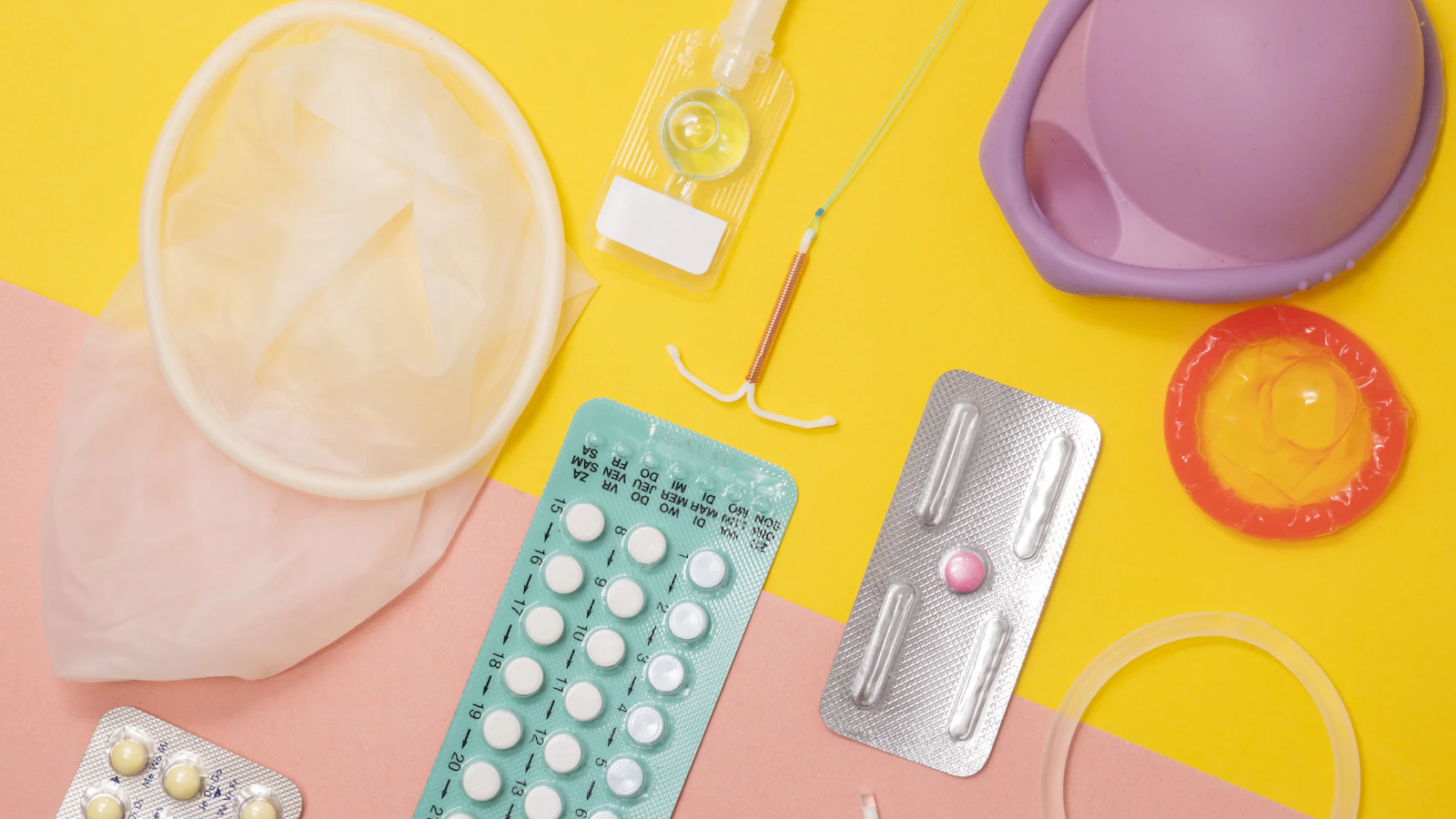
There are roughly twelve types of contraception available in the Netherlands, spread across three families: methods with two hormones, methods with a progestogen only, and hormone-free methods. The reliability gap between them is bigger than the leaflets suggest, and it almost never comes from the product itself.
It comes from forgetting.
What strikes me about most overviews: they list, but they don't compare. So below you'll find every type side by side, with real-world numbers, plus something you won't read elsewhere: what each method does to your blood values.
What types of contraception are there?
Three main groups. Combined methods with estrogen and progestogen: the pill, the patch and the ring. Progestogen-only methods: the mini pill, the implant, the injection and the hormonal IUD. And hormone-free methods: the copper IUD, condoms, natural methods and sterilisation. Each group has its own side-effect profile.
| Method | Hormones | Pregnancies per 100 women per year (typical use) | Upkeep |
|---|---|---|---|
| Pill (combined) | Two | about 9 | Every day |
| Patch | Two | about 9 | Every week |
| Ring | Two | about 9 | Every month |
| Mini pill | One | about 9 | Every day, same time |
| Injection | One | about 6 | Every 12 weeks |
| Implant (Implanon) | One | under 1 | Every 3 years |
| Hormonal IUD | One, local | under 1 | Every 5 to 8 years |
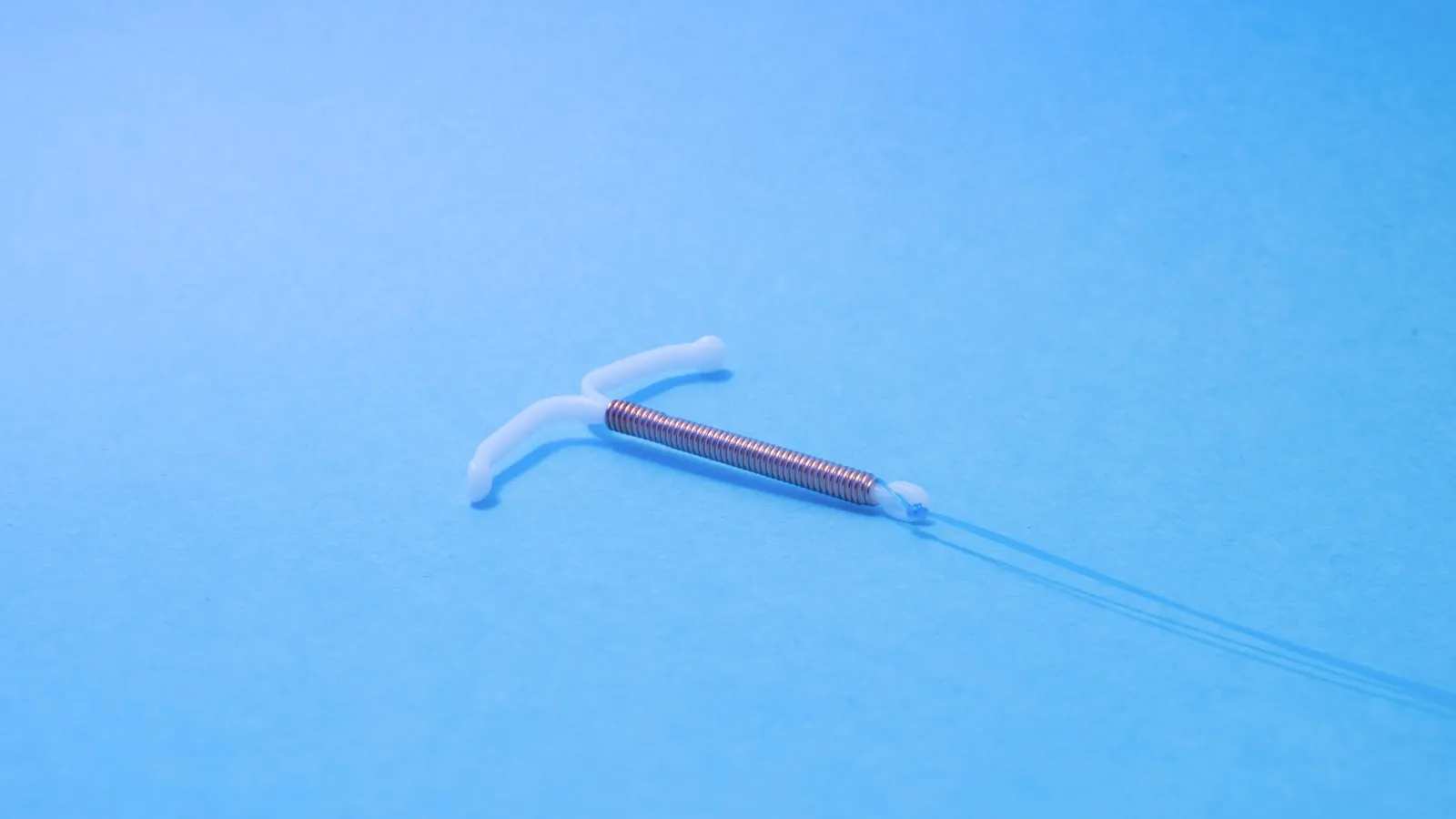
| Copper IUD | None | about 1 | Every 5 to 10 years |
| Condom | None | about 18 | Every time |
| Natural methods | None | varies widely, up to 24 | Daily tracking |
| Sterilisation | None | under 1 | Once |
Those numbers come from Trussell's American review (PMID 21477680) and describe typical use: real life, with forgotten pills and postponed injection appointments. With perfect use the pill performs far better, around 0.3. That gap between perfect and typical is exactly why the IUD and the implant score so well in practice: there's nothing to forget.
What is the best contraception?
It doesn't exist. What does exist is the method that fits your situation best, and that question is far more concrete: how bad is a forgotten day for you, do you want hormones or not, and do you want children in the future? Answer those three and you're usually left with two or three serious options.
Take two friends, both 29. One works irregular night shifts and forgets her pill about twice a month: for her, every daily method is effectively off the table already. The other has taken the pill like clockwork for eight years and is happy with it. Same age, completely different outcome.
I think the forgetting question is the most honest first filter. Not because discipline is a virtue, but because the numbers above show the difference between 9 and under 1 pregnancy per 100 women sits almost entirely there.
What is the best hormone-free contraception?
The copper IUD is the most reliable reversible hormone-free method, at about 1 pregnancy per 100 women per year. The condom is the only method that also protects against STIs, but scores clearly lower at 18 per 100. Sterilisation is hormone-free and permanent. Natural methods can be reliable, but only with very consistent use.
How the copper IUD feels in the first year is covered in copper IUD experiences. The considerations around a permanent choice are in female sterilisation, and the tracking methods in natural contraception.
Which contraception suits me?
Three questions get you a long way. One: can and do you want to think about contraception every day? If not, look at the IUD, implant, ring or patch. Two: are you sensitive to hormones, or do you want to keep your own cycle? Then the copper IUD and natural methods are the candidates. Three: is your family complete? Then sterilisation belongs in the conversation.
For depth per group: all eight pills are compared in birth control pill types, and the four IUDs in which IUD is best.
Thuisarts also offers a neutral decision aid you can walk through with your GP. That conversation isn't a formality: your GP knows your history, which matters with migraine, family thrombosis or future family plans.
Can you buy contraception without a prescription?
Condoms and pregnancy tests are freely available, and the morning-after pill is sold at pharmacies and drugstores. For the pill, ring, patch, injection, implant and both IUDs you need a doctor's prescription in the Netherlands. That's not bureaucracy: the doctor checks whether a method is medically right for you.
What does contraception do to your blood values?
More than most women realise, and this is the part missing from every decision aid. Methods containing estrogen make your liver produce more SHBG, the protein that binds testosterone. Test your hormones while using the pill, ring or patch and you're partly measuring your contraception instead of your own baseline.
Hormone-free methods like the copper IUD leave your values alone, and the hormonal IUD works mostly locally. If you want to know where your cycle stands hormonally, you can have a number of values measured with the women's hormone blood test, assessed by a BIG-registered doctor. The full story is in our overview of birth control and your hormones.
Frequently asked questions
How many types of contraception are there?
About twelve methods, in three families: with two hormones (pill, patch, ring), with one hormone (mini pill, implant, injection, hormonal IUD) and without hormones (copper IUD, condom, natural methods, sterilisation).
What is the most reliable contraception?
In typical use the implant, both IUDs and sterilisation score highest, with under 1 pregnancy per 100 women per year. Mostly because there's nothing to forget daily.
Which contraception has the fewest side effects?
That genuinely differs per person. Hormone-free methods cause no hormonal side effects, but the copper IUD can make periods heavier. Discuss your sensitivities with your GP.
References
- Trussell J. Contraceptive failure in the United States. Contraception. 2011;83(5):397-404. PMID 21477680.
- Lidegaard Ø, et al. Risk of venous thromboembolism from use of oral contraceptives containing different progestogens and oestrogen doses. BMJ. 2011;343:d6423. PMID 22027398.
- van den Heuvel MW, et al. Comparison of ethinylestradiol pharmacokinetics in three hormonal contraceptive formulations. Contraception. 2005;72(3):168-74. PMID 16102549.
- Thuisarts.nl, contraception information and decision aid. Dutch College of General Practitioners (NHG).
Every blood test result includes a professional assessment from a BIG-registered doctor. For treatment decisions, discuss your results with your GP.
See Lunarahealth more often in Google
Add us as a preferred source. Google will then show our articles more often in your search results and in AI overviews. You can turn this off again at any time.
That did not work. Please try again.
Author
Lunarahealth
Dr. Naimi, BIG-registered physician, oversees the medical standards behind our content and assessments. Read our medical policy