A follicle is a fluid-filled sac in your ovary holding a single egg cell. The sac feeds and protects the egg, and each cycle a select group of them grows towards ovulation. Usually exactly one reaches the finish line.
Anyone who has started a fertility programme suddenly hears the word everywhere: follicle scan, follicle growth, antral follicles.
So here's the whole story in plain language, from sleeping sac to ovulation, including what you can measure along the way.
What exactly is a follicle?
Every egg in your ovaries comes wrapped in such a sac. The vast majority of follicles are primordial: tiny, dormant, on standby. A portion wakes up, grows, and fills with fluid and hormones that nourish the egg.
So the sac isn't the egg itself, but her dressing room, kitchen and bodyguard in one.
The wall of a growing follicle also produces oestradiol, the hormone that builds your uterine lining. And the small follicles together make AMH, the blood value that reflects your egg reserve.
How does a follicle grow?
From sleeping sac to ovulation takes months, but the visible part plays out in the first two weeks of your cycle. Driven by FSH from your brain, a group of follicles grows; around day 8 your body selects one dominant follicle, which keeps growing until it bursts at around 2 centimetres: ovulation.
| Stage | Size (roughly) | What happens |
|---|---|---|
| Primordial follicle | 0.03 to 0.05 millimetres | Dormant, in stock since birth |
| Antral follicle | 2 to 10 millimetres | Visible on ultrasound, produces AMH |
| Dominant follicle | 10 to 20 millimetres | Wins the selection, produces lots of oestradiol |
| Mature (Graafian) follicle | Roughly 18 to 25 millimetres | Bursts open: ovulation |
| Corpus luteum | Remnant of the follicle | Produces progesterone after ovulation |
In the final days before ovulation the dominant follicle grows about 1 to 2 millimetres a day. That's why follicle scans in a treatment cycle follow each other so quickly.
How large does a follicle need to be for ovulation?
Around 18 to 25 millimetres, a follicle is mature enough to burst. Below a centimetre, ovulation usually doesn't happen; well past 25 millimetres it's more likely becoming a cyst than a candidate. The exact moment differs per woman and per cycle.
If you want a grip on your timing at home, you can estimate your fertile days with our ovulation calculator. And whether ovulation truly happened is betrayed by progesterone in your blood about a week later; how that works is covered in confirming ovulation with a blood test.
What are antral follicles?
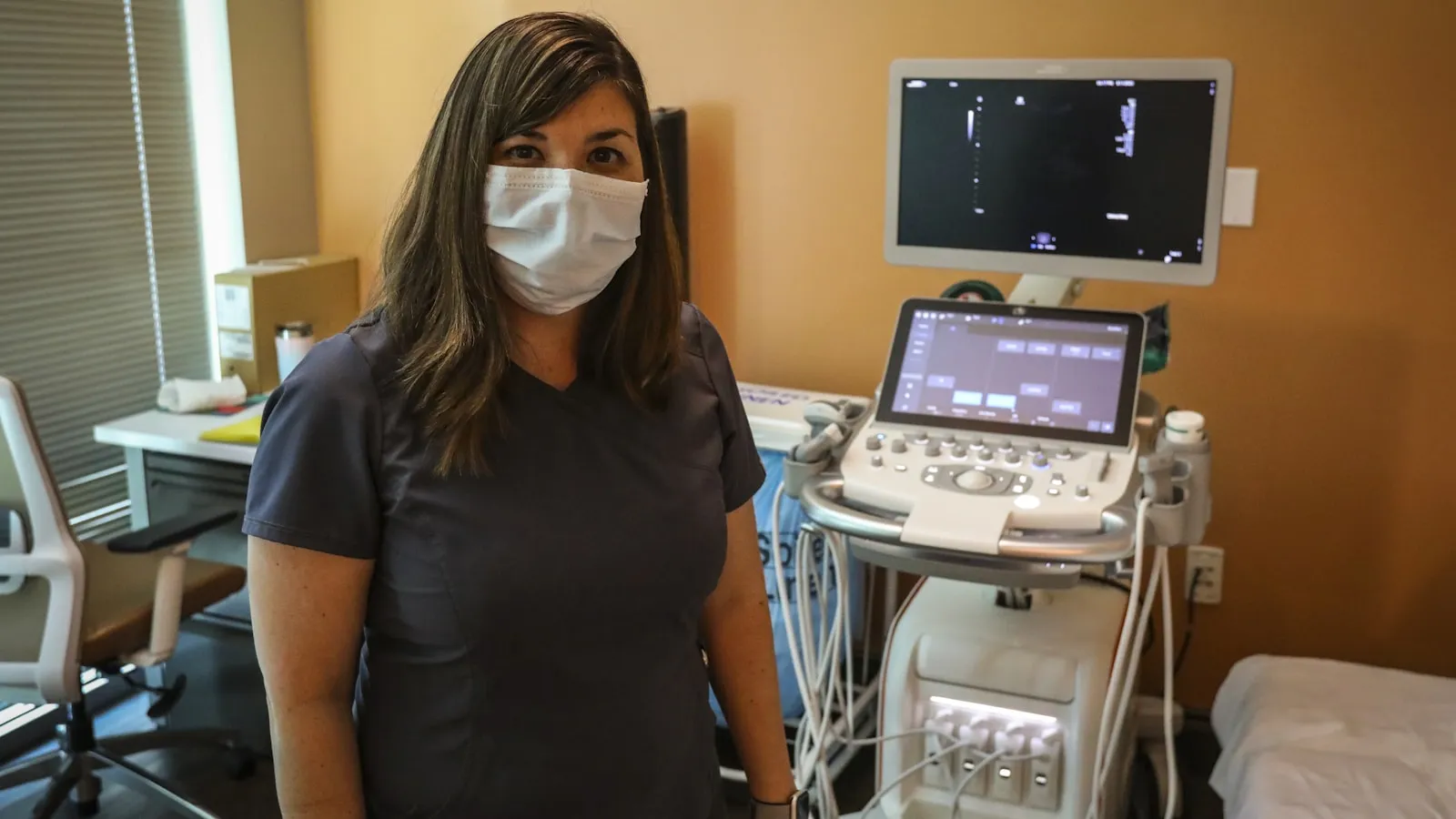
Antral follicles are the sacs of 2 to 10 millimetres that can be counted on an ultrasound, usually at the start of your cycle. That number is the antral follicle count (AFC) and serves as a gauge of your egg reserve: the more visible sacs, the larger the supply behind them.
Those same sacs jointly produce the hormone AMH. Blood value and ultrasound therefore measure the same reservoir by two routes, and usually move neatly in step (PMID 22579227).
The practical difference: an AFC needs an ultrasound and a trained counter, an AMH test needs one tube of blood, on any day of your cycle. What that value does and doesn't say is in our overview of AMH and your egg reserve.
Follicles in PCOS and in IVF
With PCOS, strikingly many small follicles queue up at once, often visible as a "string of pearls" on the ultrasound. The AMH value comes out correspondingly high; since the 2023 international guideline, that measurement may even replace the ultrasound in diagnosing adults (PMID 37580037).
In IVF, the goal is the opposite: maturing as many follicles as possible at once with FSH injections. Take Femke, 36, who had nine follicles above 15 millimetres at her first retrieval: an outcome her doctor had roughly estimated in advance from her AMH of 2.1 micrograms per litre.
What such a programme looks like from A to Z is covered in what is IVF.
Can you measure follicles yourself?
No, counting and measuring remains ultrasound work at a doctor's office. What you can do yourself: map the hormonal side. An AMH measurement estimates the reserve behind the follicles, and progesterone after ovulation shows that a follicle finished its job.
My sober closing advice: dig into your follicles once a concrete question is on the table, such as a pregnancy that isn't happening or a treatment programme ahead. Until then, those thousands of sacs prefer to do their work unseen.
Every blood test result includes a professional assessment from a BIG-registered doctor. For treatment decisions, discuss your results with your GP or your gynaecologist.
References
- Wallace WH, Kelsey TW. Human ovarian reserve from conception to the menopause. PLoS One, 2010. PMID 20111701.
- La Marca A, Spada E, Grisendi V, et al. Normal serum anti-Müllerian hormone levels in the general female population. Eur J Obstet Gynecol Reprod Biol, 2012. PMID 22579227.
- Teede HJ, Tay CT, Laven JJE, et al. Recommendations from the 2023 International Evidence-based Guideline for the Assessment and Management of Polycystic Ovary Syndrome. Hum Reprod, 2023. PMID 37580037.
- Thuisarts.nl. Wij willen graag zwanger worden.
See Lunarahealth more often in Google
Add us as a preferred source. Google will then show our articles more often in your search results and in AI overviews. You can turn this off again at any time.
That did not work. Please try again.
Author
Lunarahealth
Dr. Naimi, BIG-registered physician, oversees the medical standards behind our content and assessments. Read our medical policy


