I regularly get the question of whether the pill can change your mood. It is an understandable worry, because mood and hormones sit close together. At the same time, the answer is less simple than you might hope.
The honest summary is that the research is mixed. Most women notice no clear change in their mood, some feel more stable and some feel more down. In this article you will read what the science does and does not show, which women may be more sensitive and what you can do if you feel less well on the pill.
Can the pill affect your mood?
Yes, it can in some women. The pill contains hormones that also play a role in your brain, so an effect on your mood is biologically conceivable. Still, the majority of women notice no clear change, and experiences vary widely.
Important to know: feeling down on the pill does not automatically mean the pill is the cause. Mood has many causes at once, such as sleep, stress, relationships and the seasons. The pill is sometimes a factor, but rarely the only one.
According to Thuisarts.nl and the Dutch College of General Practitioners, a low mood is listed as a possible side effect of hormonal contraception. That means it occurs in some women, not that it happens to everyone.
What does the research say about the pill and low mood?
The research is mixed and is still being actively debated among scientists. Large studies show that most women experience no change in mood on the pill. Some studies find a small link with low mood in certain groups, others do not find that link.
A much-discussed Danish register study saw a slightly higher use of antidepressants among users of hormonal contraception. Such a link does not prove cause, however, and the absolute difference was small.
There are also studies in which the pill actually stabilises mood, for example in women with strong premenstrual complaints. In short, there is no single clear picture. That is why it is not correct to say that the pill causes depression.
Which women may be more sensitive?
Some women appear more sensitive to mood effects of the pill than others. Think of women who have been down or depressed before, or who previously had complaints with hormonal fluctuations. In younger users, such as teenagers, a few studies also suggest a slightly stronger link.
This does not mean the pill is unsuitable for these women. It mainly means it is wise to follow your mood a little more consciously in the first months.
If you know you are sensitive to hormonal fluctuations, feel free to discuss that with your GP. Together you can look at which form of contraception suits you best.
What to do if you feel more down on the pill?
If you notice that you feel more down since you started the pill, that is a signal to take seriously. Do not simply stop halfway through a strip, because that can make your cycle unsettled and reduce protection against pregnancy. Discuss your complaints with your GP instead.
It can help to track for a few weeks how you feel and when. That way you can see whether there really is a pattern linked to the pill, or whether other things play a part.
The table below gives an overview of possible mood complaints, what you can do yourself and when getting in touch is wise. See it as a tool for a conversation, not as a diagnosis.
| Possible complaint | What you can do yourself | When to get in touch |
|---|---|---|
| Mild low mood or irritability, shortly after starting | Track your mood for a few weeks and note sleep, exercise and stress | If it has not eased after two to three months |
| Persistent low mood or little pleasure | Talk about it with someone you trust and note when it occurs | Make an appointment with your GP |
| Less energy, poor sleep, little appetite | Consider whether there are other causes too, such as stress or season | Discuss the complaints with your GP |
| Low or dark thoughts, thoughts about death | Do not carry it alone | Contact your GP or the out-of-hours GP service straight away |
You do not have to wait until complaints are severe to seek help. If you are in doubt, just get in touch.
When to contact your GP?
Contact your GP if a low mood lasts longer than two to three weeks, or if you can no longer do your daily things well. Also if you are unsure whether the pill suits you, a conversation is useful. Your GP can think along with you about a different pill or a different form of contraception.
If you have dark thoughts or thoughts of harming yourself, do not wait. Contact your GP or the out-of-hours GP service straight away.
Outside office hours you can call a suicide-prevention helpline. You do not have to carry this alone, there is always someone who will think along with you.
Testing your own hormones
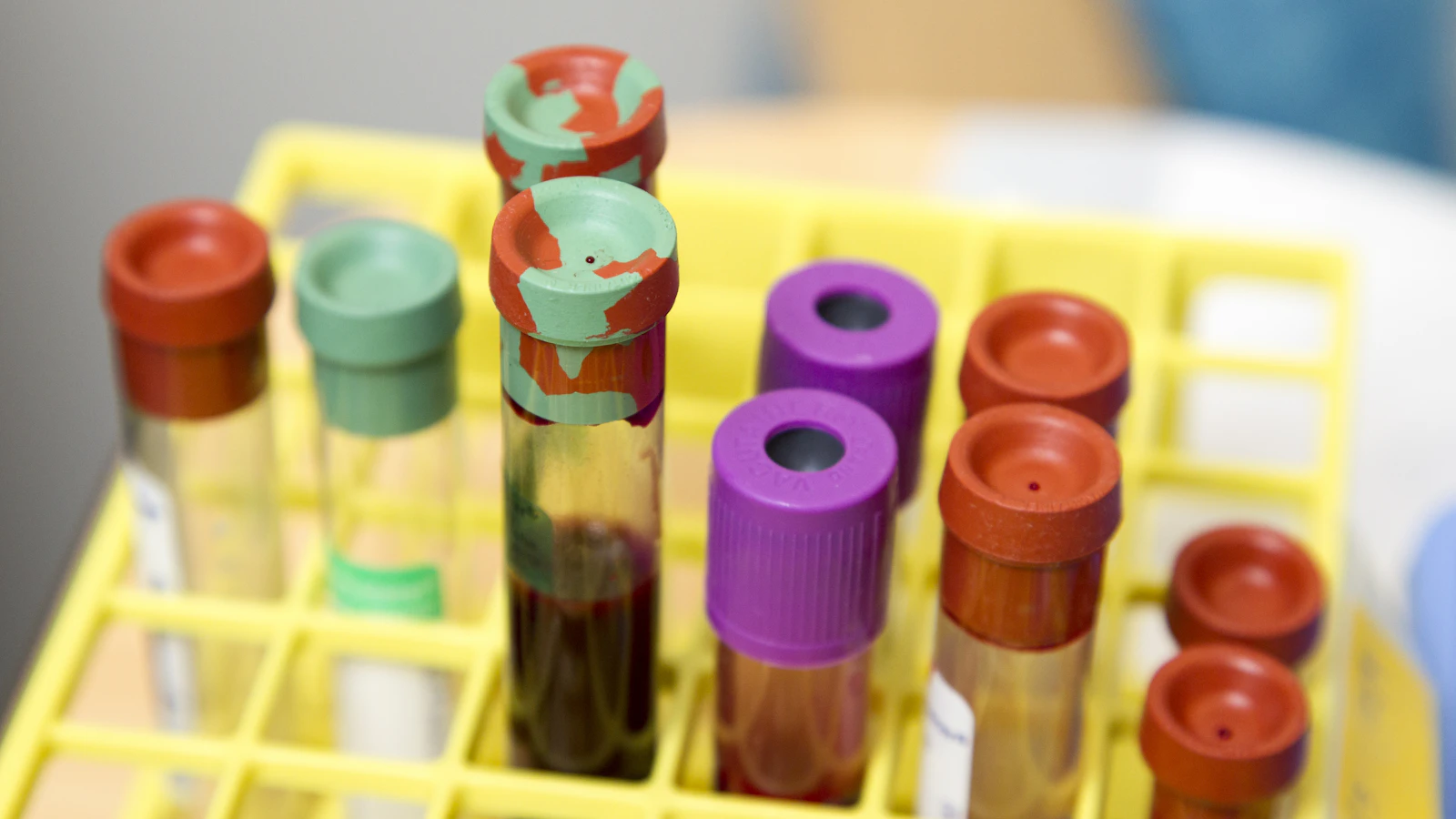
A blood test can map your hormones, but it is important to know what such a test does and does not do. A hormone test does not diagnose depression and does not measure your mood. Depression and low mood are assessed on the basis of your complaints and a conversation, not on the basis of a blood value.
It can be useful to map values like estradiol and progesterone if you are curious about your hormonal balance. Keep in mind that the pill suppresses your own hormone values, so during pill use the result means something different than without the pill.
At Lunara you can have a hormone test for women done without a referral. If you want more background, read our overview on birth control and your hormones, and the articles on the pill and side effects and hormonal imbalance.
Frequently asked questions
Does the pill cause depression?
No, you cannot state it like that. The research is mixed: most women notice no change, some feel more down. There is no evidence that the pill causes depression in everyone. Discuss persistent complaints with your GP.
Can I switch from one pill to another for mood complaints?
Sometimes a different composition helps, but you decide that together with your GP. Do not simply stop on your own, because that can disrupt your cycle and reduce protection.
How long does it take before the pill affects your mood?
If there is an effect, women usually notice it in the first few months. Track your mood a little more consciously during that period, so you can recognise a pattern.
Does a blood test measure whether the pill affects my mood?
No. A blood test maps hormones, but does not measure mood and does not diagnose depression. Complaints are assessed in a conversation with your GP.
References
- Thuisarts.nl. I want to use the contraceptive pill. Dutch College of General Practitioners.
- Dutch College of General Practitioners (NHG). NHG Guideline Contraception.
- Farmacotherapeutisch Kompas. Hormonal contraceptives. National Health Care Institute of the Netherlands.
Every blood test result through Lunara includes a professional assessment by a BIG-registered doctor. A blood test does not diagnose depression or low mood and does not replace a medical consultation. For treatment decisions and persistent complaints, discuss your situation with your GP.
Author