About 26 percent of women in the menopause transition meet the criteria for insomnia (PMID 29445307). And with partial sleep loss, people eat an average of 385 kcal per day more, with no rise in what they burn (PMID 27804960). Sleep is the most under-sold lever in this whole conversation.
This article is not about the causes of poor sleep. Those sit in our article on poor sleep in menopause. This one is about the line between your night and your appetite, and about where that line stops.
Do you really sleep worse in menopause?
Yes, and not only because you are getting older. Sleep problems are linked to your menopausal stage and to the change in FSH and oestradiol, over and above the effect of age (PMID 29445307). Hot flushes cause measurable awakenings. Roughly one in four women meets the criteria for insomnia.
There is a stubborn idea that it is only the hot flushes. It is not true. In SWAN, sleep disturbance rose across the transition, including in women without hot flushes (PMID 28944165).
So if you lie awake at three in the morning with no flush at all, that is neither a mystery nor your imagination.
Night sweats and heavy fatigue are often reported as two separate complaints. They belong to the same pattern. Your night gets broken up, and your day starts in deficit.
The honest caveat you rarely read
Measure sleep objectively in a sleep lab and the picture changes. Matthews found that sleep duration and wake time after falling asleep did not differ by transition group (PMID 34081126). What women report is worse than what the equipment records.
That does not mean you are imagining it. It means something else, and something recognisable. What changed is the felt quality of your sleep, and the arousal underneath it.
Seven hours on paper can feel like four hours in your body.
We say this on purpose. An article that only shows you the number that suits it best has not earned your trust.
What sleep loss does to your appetite
Too little sleep raises your energy intake without changing what you burn. A meta-analysis of partial sleep deprivation found an average of 385 kcal per day more intake (95% CI 252 to 517), with no change in energy expenditure (PMID 27804960). So you eat more and you burn the same.
Important: that research was not done in women going through menopause. It looked at adults in general. We do not assume the number maps one to one onto you.
What it does show is the direction. Poor sleep pushes your intake up, not your expenditure down.
The hormone study almost everyone cites wrongly
The same leptin and ghrelin study turns up in menopause article after menopause article. Short sleep lowered leptin by 18 percent, raised ghrelin by 28 percent and raised hunger by 24 percent (PMID 15583226). Leptin damps your appetite, ghrelin switches it on.
That study was done in twelve healthy young men.
It is still presented as if it says something about a 52 year old woman in the transition. It does not. We cite it because the finding is real, but always with the population attached.
The chain, link by link
Below is where the evidence is solid and where it stops. Every single link has been studied. The joined-up claim, "poor sleep in menopause makes you heavier", has not been.
| Link in the chain | What the research shows | Status |
|---|---|---|
| Menopause leads to worse sleep. | 26 percent meet the criteria for insomnia, linked to menopausal stage and to FSH and oestradiol, over and above age (PMID 29445307). | Evidenced. |
| Poor sleep raises intake by about 385 kcal per day. | Meta-analysis of partial sleep deprivation, with no change in energy expenditure (PMID 27804960). | Evidenced, but not in menopausal women. |
| Short sleep lowers leptin and raises ghrelin. | Leptin 18 percent lower, ghrelin 28 percent higher, hunger 24 percent higher (PMID 15583226). | Evidenced in twelve healthy young men. |
| Poor sleep in menopause causes weight gain. | No study has shown this in this group of women. | Not shown. Plausible mechanism only. |
So there is no study proving that poor sleep during the menopause transition causes weight gain in that population. It is a plausible mechanism, not a finding.
We would rather put that in than leave it out. Then you can weigh for yourself how much it counts.
What you can actually do with this
You cannot steer every night, but you can do three things. Protect the window in which you sleep. Treat the symptoms that wake you. And do not let a bad night become a written-off day of eating.
Protect the sleep window
Get up at roughly the same time every day, even after a rough night. Keep the bedroom cool and dark. Thuisarts.nl has a level-headed page on poor sleep, with advice on fixed times and on what to do when you lie awake.
Start there. Not with a supplement.
Treat what wakes you
If hot flushes and night sweats cut your night into pieces, that is a reason to discuss hormone therapy with your GP. Many women skip that step because they fear weight gain. That fear is not supported, and you can read why in does hormone therapy cause weight gain.
It is your call, and there are reasons to say no. Just do not let weight be the reason.
Do not let the next day derail
The day after a short night, hunger feels different. Do not decide in the moment. Set your food for that day out in advance, so the choice is already made when you are tired.
A hard day is a day. It is not a pattern, and it is not a failure on your part.
What a blood test does and does not do here
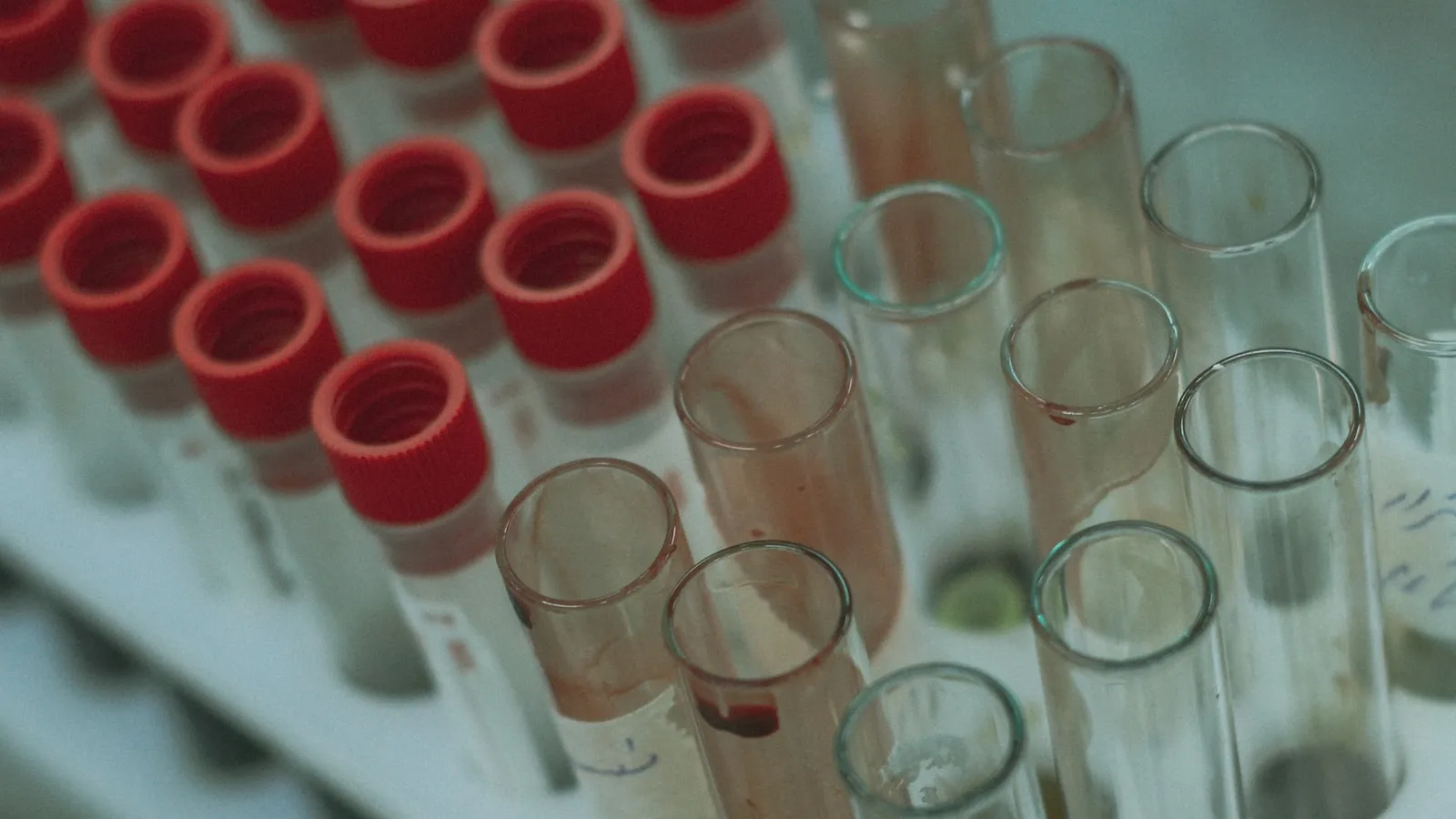
A blood test does not show why you sleep badly. It does not tell you why the scale has stopped moving either. What it does show is what the redistribution of fat in menopause is doing to your health, and whether that is moving.
That is the honest reason to measure. Your glucose, your lipids and your inflammation marker together, with a second reading later to see the direction. The complete metabolic panel puts those values in one draw.
For the full picture on weight in menopause, read weight loss in menopause: what works and what does not. If you are wondering why fat moves to your middle, that sits in menopause belly.
Your next step
Pick a fixed wake-up time tonight for the next seven days and hold it, even after a bad night. Score each day from 1 to 10 for how rested you feel.
If after a week night sweats or hot flushes show up in your worst nights, book an appointment with your GP and bring that list.
When this article is not for you
Weight loss is not a healthy goal for everyone. Do not follow this article if you have or have had an eating disorder, are pregnant or breastfeeding, are underweight, use insulin, or have had bariatric surgery. Speak to your GP first.
If thoughts about food or your body start to take over, talk to your GP or contact an eating disorder helpline. That is not weakness. That is sense.
References
- Baker FC et al. Sleep and sleep disorders in the menopausal transition. PMID 29445307
- Kravitz HM et al. Sleep disturbance during the menopausal transition (SWAN). PMID 28944165
- Matthews KA et al. Objectively measured sleep across the menopause transition. PMID 34081126
- Al Khatib HK et al. The effects of partial sleep deprivation on energy balance. PMID 27804960
- Spiegel K et al. Short sleep in twelve healthy young men: leptin, ghrelin and hunger. PMID 15583226
- Thuisarts.nl, poor sleep.
Author
Lunarahealth
Related Tests
Related Posts

Early menopause: 11 symptoms you can recognise
Does hormone therapy cause weight gain? What the research says