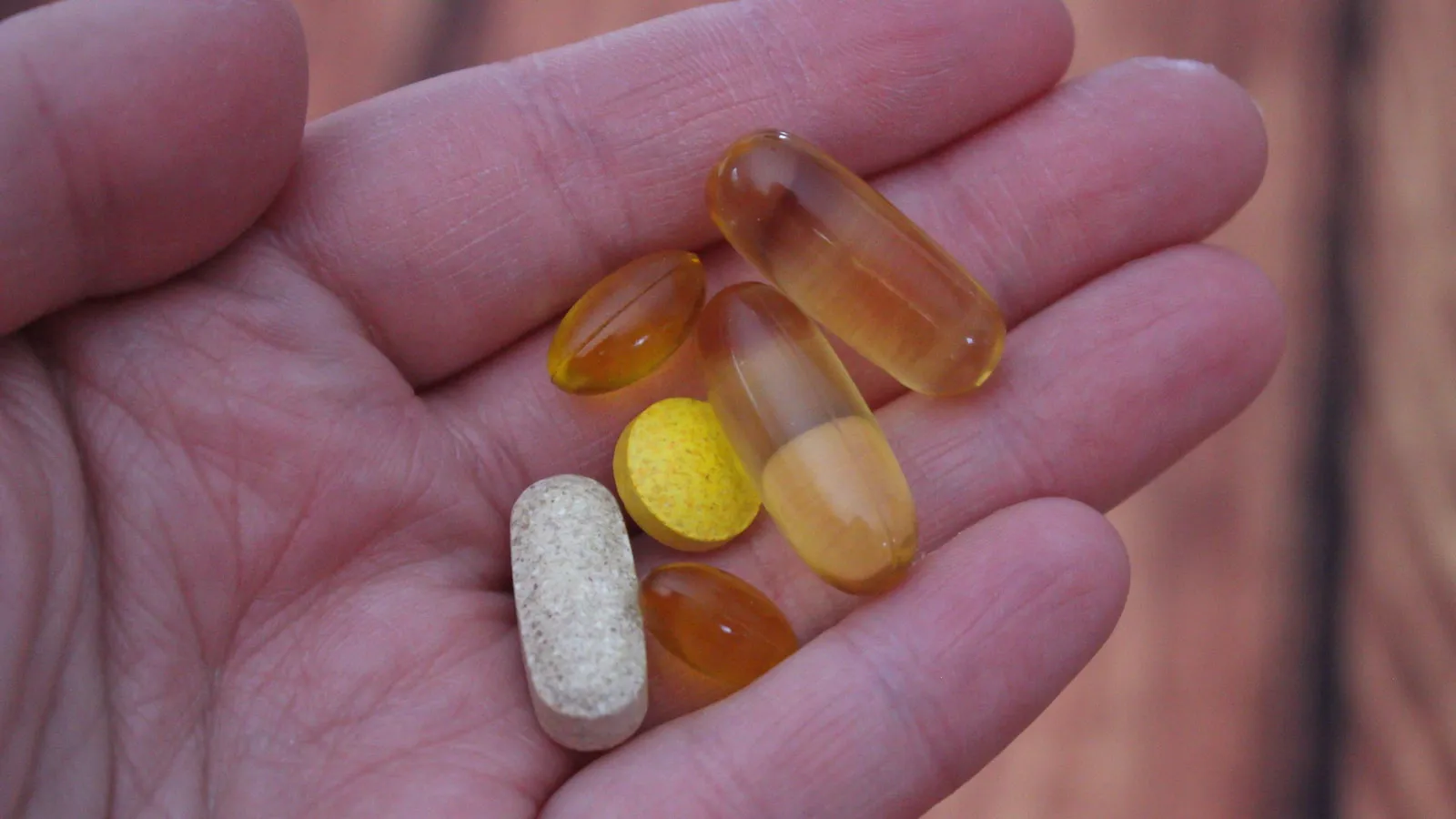
A slight trip on the kerb, a hand to catch yourself, and yet a broken wrist. For many women such a fracture is the first sign that their bones have weakened. That is the silent nature of bone loss: you do not feel it coming.
This is the overview article of our postmenopause series. My conviction: bone health deserves attention before something breaks, not after. It is precisely in the years around menopause that you can do the most about it. Below you read why bone loss accelerates after menopause, which risk factors play in, which values give insight and what you can do yourself.
Why does bone loss accelerate after menopause?
Bone loss accelerates after menopause mainly because estrogen falls sharply. Estrogen helps keep your bones up to par by slowing bone breakdown. When that brake falls away, breakdown outpaces build-up, and your bone density drops.
Your bone is not dead material, but alive. It is continually broken down and rebuilt throughout your life. Before menopause, breakdown and build-up keep each other reasonably balanced. After menopause that balance shifts, and net bone loss can continue at an accelerated pace for a number of years. After that it usually levels off somewhat.
What exactly is osteoporosis?
Osteoporosis, or bone loss, means your bones become more porous and weaker, so they break more easily. It is not a disease with direct symptoms, but a creeping process. It often only comes to light with a fracture after a small fall.
There is an intermediate step called osteopenia, a milder decrease in bone density. Not everyone with osteopenia develops osteoporosis, but it can be an early signal. Osteoporosis is not diagnosed with a blood test, but with a bone density scan (a DEXA scan) via your GP or specialist. Blood values say something about your risk and about factors that affect bone, not about bone density itself.
Which risk factors play in?
The risk of bone loss depends on more than menopause alone. Some factors are fixed, such as your age and heredity. Others you can partly influence, such as movement, nutrition and smoking.
| Risk factor | Type | What you can do |
|---|---|---|
| Early menopause (before 45) | Cannot be changed | Discuss extra monitoring with your GP |
| Fracture or osteoporosis in the family | Cannot be changed | Report this to your GP for risk assessment |
| Low body weight or slight build | Partly influenceable | Eat enough, build strength |
| Smoking and heavy alcohol use | Influenceable | Stop smoking, moderate alcohol |
| Little loading of the bones | Influenceable | Walking, stairs, strength training |
| Long-term corticosteroids | Medically determined | Discuss bone protection with your doctor |
If you recognise several of these points, it is worth discussing your risk with your GP. The Dutch GP guideline on fracture prevention (NHG) describes how doctors in the Netherlands weigh that risk and when a bone density scan is needed.
Which blood values give insight?
A blood test does not establish osteoporosis, but it does show whether the building blocks for your bone are in order. Vitamin D and calcium play a role here in particular. A deficiency can encourage bone breakdown.
| Value | What it shows | Why it matters |
|---|---|---|
| Vitamin D (25-OH) | Your vitamin D stores | Vitamin D helps absorb calcium from food |
| Calcium | The calcium level in your blood | Calcium is an important building block of bone |
Low vitamin D is common in the Netherlands, certainly in winter. The RIVM monitors the vitamin D status of the Dutch population and sees that a portion of adults sits below the recommended value. Because vitamin D is needed to absorb calcium well, a deficiency can indirectly burden bone. The Health Council of the Netherlands (Gezondheidsraad) therefore advises women aged 50 and over to take extra vitamin D daily.
Want these values measured? The Menopause Check includes your vitamin D and calcium, along with the hormones that play around menopause. You then discuss an abnormal result with your GP.
What do your vitamin D values say?
You usually get a vitamin D result in nanomoles per litre (nmol/L). The Gezondheidsraad uses around 30 nmol/L as a lower limit for adults up to 70, and 50 nmol/L for those who are older or belong to a risk group. A value below that can point to a deficiency, but what a healthy value is for you depends on your age, your skin colour and the season. The breakdown below is an aid, not a diagnosis: discuss an abnormal result with your GP.
| Vitamin D (25-OH) | What it can broadly mean | Possible next step |
|---|---|---|
| Below 30 nmol/L | Possible deficiency | Discuss supplementation with your GP |
| 30 to 50 nmol/L | Low-normal, depending on age | Watch intake, certainly from age 50 |
| 50 nmol/L or higher | Usually sufficient | Maintain via food, sun and advice |
A normal calcium and vitamin D result does not automatically mean your bones are strong: it says something about the building blocks, not about bone density itself. Conversely, a low vitamin D on its own does not mean osteoporosis. It is one piece of a larger picture, alongside your age, your risk factors and possibly a DEXA scan.
What can you do yourself for your bones?
Bone loss partly comes with menopause, but you have influence over a good part of your risk. Movement and nutrition are the first steps. They do not replace treatment, but they do support your bones.
- Move regularly with loading, such as walking, stairs or strength training
- Get enough calcium through food, for example dairy or fortified alternatives, as the Dutch Nutrition Centre (Voedingscentrum) advises
- Extra vitamin D, certainly from age 50 and in winter, on the advice of the Gezondheidsraad
- Stop smoking and be moderate with alcohol
Good nutrition and movement lower your risk, but give no guarantee. With an increased risk or after a fracture, medication may be needed. What suits you is something you decide together with your GP.
Which movement helps your bones most?
Not all movement has the same effect on your bones. Your bones strengthen through loading, meaning through exercises where you carry your own body weight or extra resistance. Swimming and cycling are great for your fitness and joints, but give relatively little bone load. The following forms help your bones most:
- Weight-bearing exercises: walking, climbing stairs, hiking and jogging. You carry your own weight and put pressure on your bones with every step.
- Strength training: with free weights, resistance bands or on machines. Muscle strength supports your bones and reduces the risk of falling.
- Balance exercises: yoga, tai chi or simply standing on one leg. Better balance means less chance of a fall, and therefore less chance of a fracture.
The Dutch GP guideline on fracture prevention (NHG) and Thuisarts.nl name exercise as one of the concrete steps to support bone health. You do not need to start with intensive strength training straight away: regular walking and climbing stairs is already a good start. Build up step by step, ideally in consultation with your GP or a physiotherapist if you have a recovery period or limitations.
Calcium and vitamin D in daily life
Many women immediately think of supplements when it comes to bones, but it starts with your food. The Dutch Nutrition Centre (Voedingscentrum) assumes around 1000 to 1200 milligrams of calcium per day for adult women, depending on your age. You usually get that from three to four portions of dairy or fortified plant-based alternatives, topped up with green vegetables, nuts and legumes.
Vitamin D is different. You mainly make it under the influence of sunlight on your skin, and in the Dutch winter that is insufficient. The Health Council of the Netherlands (Gezondheidsraad) therefore advises women aged 50 and over to take 10 micrograms of vitamin D as a daily supplement, and sometimes more with little sunlight or darker skin. The RIVM sees in population research that a portion of adults sit below the recommended vitamin D status, certainly in the winter months.
A few practical points:
- Calcium from food is preferable to high doses of supplements; discuss supplementation with your GP or pharmacist
- Take vitamin D year-round, not only in winter, if you belong to the advised group
- Too much calcium via supplements is not automatically better; more is not inherently better here
Bones and heart: two sides of the same story
The loss of estrogen does not only affect your bones. The same falling estrogen also changes your cholesterol and blood vessels after menopause, gradually raising your cardiovascular risk. That makes the years after menopause a natural moment to look more broadly at your health, not just at one organ.
The Dutch Heart Foundation (Hartstichting) points out that after menopause women catch up in cardiovascular risk compared with men. So it pays to see bone health and heart health in connection. Read our article on cholesterol and heart health after menopause for the other side of this story.
Why a first fracture deserves extra attention
A fracture after a small fall is more than bad luck: it can be a first sign that your bones have weakened. After such a fracture, the risk of another fracture is higher. That is why the Dutch GP guideline on fracture prevention (NHG) advises mapping your risk after a fracture above a certain age, sometimes with a bone density scan.
The frustrating part is that osteoporosis gives no symptoms until that first fracture. There is no pain, no warning, no moment when your body raises the alarm. That makes it tempting to only pay attention once something goes wrong. My plea is the opposite: use the years around and after menopause to know where you stand, precisely because that is when you can still steer the most.
A blood test does not establish osteoporosis, but it does give you a first, well-founded picture of your vitamin D and calcium. Combined with your risk profile, which you draw up together with your GP, that forms a logical starting point. If you have several risk factors, an early menopause or a previous fracture, a conversation with your GP about a possible DEXA scan is worthwhile.
How Lunara fits in
The value of a blood test is not in the number alone, but in what you do with it. With Lunara you have your blood drawn without a referral, on a morning that suits you, at a location nearby. You get your result digitally, with an assessment per value from a BIG-registered doctor. For your bone health that means: you not only know whether your vitamin D is low, but also whether that calls for action in your situation, and which next step makes sense.
What Lunara does not do is make a diagnosis or treat. That belongs with your GP or specialist, with the right context and possibly a DEXA scan. So see your result as a well-informed starting point for that conversation, not as an end station.
Want the broader picture of what changes after menopause first? Read our article on what happens after menopause. For the full picture of menopause itself there is our pillar on perimenopause, symptoms and solutions.
Testing bones via Lunara: how it works
You do not need a referral from your GP for these blood values. You order online, schedule an appointment at a draw location near you and have blood taken in the morning. You receive your result digitally, usually within a few working days.
Each result gets context from a BIG-registered doctor, per value. So you not only know what your vitamin D or calcium is, but also what that can mean in your situation. For bone density itself, a DEXA scan via your GP or specialist remains necessary.
Frequently asked questions
Can you establish bone loss with a blood test?
No. Osteoporosis is established with a bone density scan (DEXA scan), not with blood. A blood test does show whether building blocks such as vitamin D and calcium are in order, which says something about your risk.
How much bone density do you lose after menopause?
That varies per person. In the first years after menopause the loss can be relatively fast, after which it usually levels off somewhat. Your risk depends on more factors than menopause alone.
When is a bone density scan worthwhile?
That depends on your risk profile. If you have several risk factors or a previous fracture, your GP may consider a scan. The Dutch GP guideline on fracture prevention helps doctors make that judgement.
Widuj Lunarahealth częściej w Google
Dodaj nas jako preferowane źródło. Google będzie wtedy częściej pokazywać nasze artykuły w Twoich wynikach wyszukiwania i w przeglądach AI. Możesz to w każdej chwili wyłączyć.
Nie udało się. Spróbuj ponownie.
Autor
Lunarahealth
Dr. Naimi, lekarz wpisany do holenderskiego rejestru BIG, nadzoruje standardy medyczne naszych treści i ocen. Przeczytaj naszą politykę medyczną
Powiązane badania
Powiązane artykuły

Spotting in the perimenopause: normal or get it checked?

Menopause or pregnant? How to tell the difference