Your LH level is one of the few hormone values that can vary tenfold within a single month. In the first half of your cycle it often sits around 2 to 7 IU/l, around ovulation it can shoot to 20 to 80 IU/l, and two days later it is low again. Same woman, same health, a completely different number.
That is why I consider LH one of the most misread values on a lab report. Without the cycle day beside it, the figure is nearly meaningless.
Below is what the value means per phase, what a high or low result can explain, and where the best known online rule of thumb about LH goes wrong.
What is LH and what does it do?
LH stands for luteinising hormone and is made in your pituitary. Together with FSH it drives your ovaries. FSH matures a follicle, and a sharp surge in LH is the starting signal for ovulation itself.
After ovulation the emptied follicle becomes the corpus luteum, which makes progesterone. LH keeps that corpus luteum running in its first days.
No LH surge means no ovulation, and no ovulation means no progesterone rise in the second half of your cycle.
What are normal LH levels per cycle phase?
There is no single normal number for LH. The value belongs to the phase you are in, and that phase decides whether a result is ordinary or notable. The orders of magnitude below apply to adult women. Always ask your own laboratory for its reference ranges, because they differ by method.
| Phase | When | Order of magnitude | Why the number sits there |
|---|---|---|---|
| Follicular | Day 2 to 5 | 2 to 7 IU/l | Resting phase, oestradiol still low |
| Around ovulation | Day 12 to 16 in a 28 day cycle | 20 to 80 IU/l | A 24 to 48 hour surge triggered by high oestradiol |
| Luteal | About 7 days after ovulation | 1 to 12 IU/l | Progesterone dials the drive back down |
| After menopause | Not applicable | Clearly raised | No feedback left from the ovary |
The third column is exactly why a standalone LH result is so awkward. A value of 25 IU/l is entirely normal on day 13 and notable on day 3.
Why does LH on a random day say so little?
Because your pituitary releases LH in pulses, not in a steady stream. In the follicular phase those pulses arrive roughly every 60 to 90 minutes. Two tubes of blood drawn an hour apart from the same woman can therefore differ noticeably.
The phase sits on top of that. Draw blood during the surge by chance and your LH looks extreme while nothing is wrong.
Take two women who both come back with an LH of 12 IU/l. One was drawn on day 12 and is heading into her surge. The other was drawn on day 3 and also has an FSH of 4 IU/l. For the first, 12 is a snapshot; for the second, the balance between LH and FSH is the notable part. Same number, different story.
This is why hormone profiles in women are nearly always drawn on day 2 to 5. LH, FSH and oestradiol then sit in their resting phase and can be compared with each other. More in hormone testing in women.
Ovulation test or blood draw: what measures what?
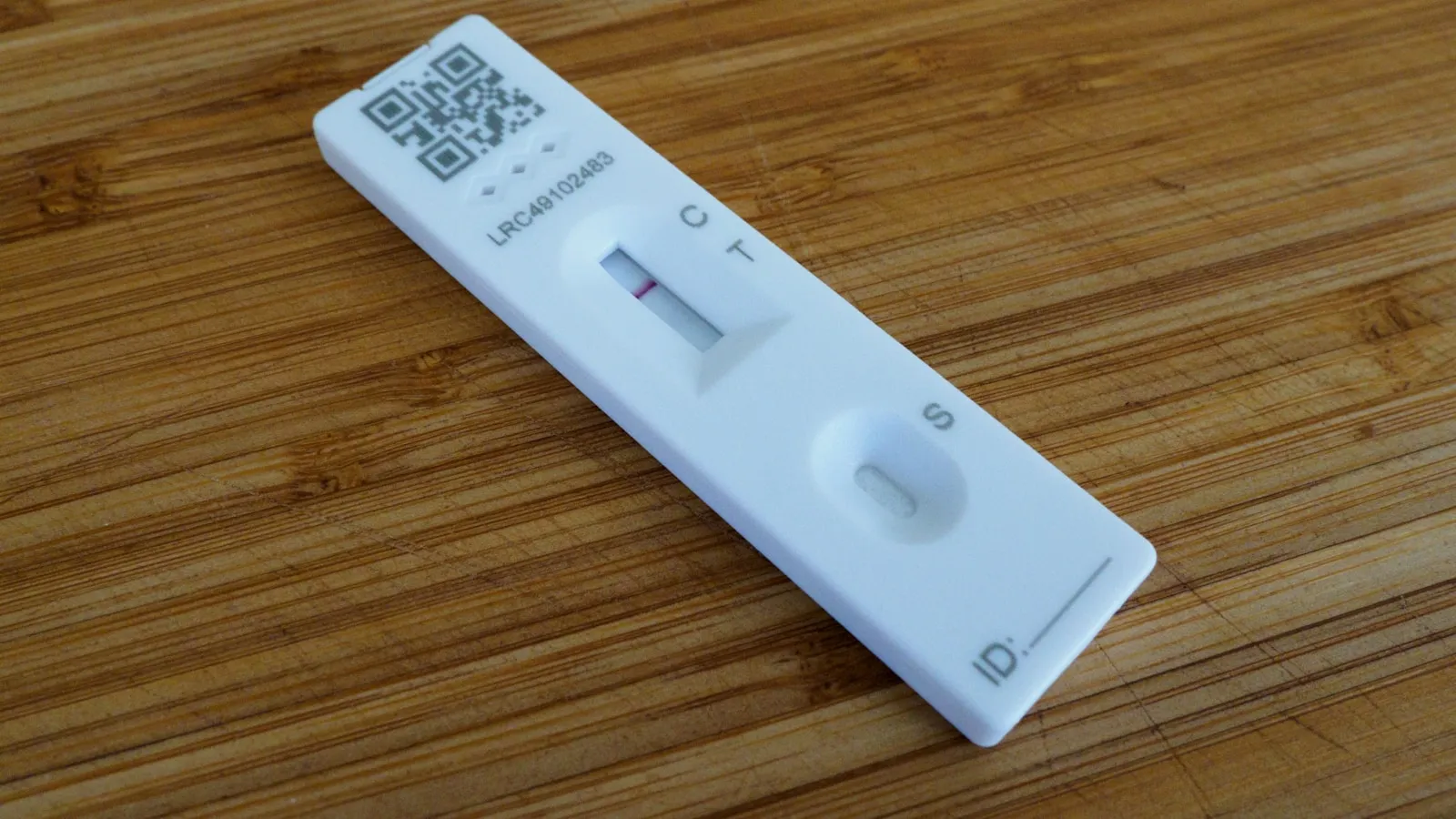
A pharmacy ovulation test measures LH in your urine and tells you whether the surge has started. A blood draw measures LH in serum at that one moment. So they answer different questions: the urine test looks for a turning point, the blood draw gives an absolute value.
Research comparing both against an ultrasound-confirmed ovulation showed that the urinary surge predicts ovulation reasonably well, but does not prove an egg was actually released (PMID 26018113).
That difference is not academic. An LH surge without ovulation happens, and then the progesterone rise afterwards fails to appear. If you want to know whether ovulation really occurred, progesterone about seven days later is the better value. How that works is in confirming ovulation.
What can a high LH level mean?
Outside the surge, a raised LH can fit several situations. The most common is simply that blood was drawn around ovulation. After that come PCOS, where LH is raised relative to FSH in a subset of women, and an ovary responding less well.
In women under 40 with a high LH and a high FSH together, primary ovarian insufficiency may be involved. FSH is then the leading value, and the international guideline describes the confirmation that fits (PMID 39652037).
After menopause both LH and FSH stay permanently raised. That is an expected finding, not an abnormality.
What can a low LH level mean?
A low LH together with a low oestradiol points toward the pituitary or hypothalamus rather than the ovary. In younger women the most common reason is a sustained energy shortfall from heavy training, low intake, or both.
A markedly raised prolactin also pushes LH down, see high prolactin. If you use hormonal contraception, a low LH is expected: that is precisely how most methods work.
If your period is absent alongside it, amenorrhoea is the wider frame.
Does the LH to FSH ratio hold up in PCOS?
Not as a standalone test. The rule that an LH two or three times higher than FSH points to PCOS appears on many pages and holds as an observation, not as a criterion. A substantial share of women with PCOS have a normal ratio, so a normal result rules nothing out.
The 2023 international guideline accordingly does not list LH or the LH to FSH ratio as a diagnostic criterion for PCOS (PMID 37580861). Research into the added value of the ratio alongside AMH reached the same limitation (PMID 30636332).
What does count in PCOS is the combination of a long or absent cycle, signs of androgen excess, and the ultrasound picture. Which values fit is in PCOS testing.
I mention this explicitly because women with a ratio of 1.8 sometimes conclude they just miss having PCOS. It does not work that way, in either direction.
When is testing LH worthwhile?
LH is rarely requested on its own. The value only gains meaning beside FSH, oestradiol and your cycle day. That combination is generally used for an absent or strongly irregular cycle, for difficulty conceiving, or when early menopause is suspected.
With a running cycle, draw on day 2 to 5 and note which day it was. If you are not menstruating there is no day to wait for and it can be done at any point.
The explanation of the value itself is on LH, and its counterpart on FSH testing. If you want to know whether ovulation really happened, ovulation confirmation fits alongside it.
Discuss an abnormal result with your GP. Thuisarts and the NHG information describe the follow-up that fits, and it nearly always depends on your cycle and your symptoms rather than the number alone.
References
- Roos J, Johnson S, Weddell S, et al. Monitoring the menstrual cycle: comparison of urinary and serum reproductive hormones referenced to true ovulation. Eur J Contracept Reprod Health Care. 2015;20(6):438-450. PMID 26018113.
- Teede HJ, Tay CT, Laven JJE, et al. Recommendations from the 2023 international evidence-based guideline for the assessment and management of polycystic ovary syndrome. Eur J Endocrinol. 2023;189(2):G43-G64. PMID 37580861.
- Le MT, Le VNS, Le DD, et al. Exploration of the role of anti-Mullerian hormone and LH/FSH ratio in diagnosis of polycystic ovary syndrome. Clin Endocrinol (Oxf). 2019;90(4):579-585. PMID 30636332.
- ESHRE, ASRM, CREWHIRL and IMS Guideline Group on POI. Evidence-based guideline: Premature Ovarian Insufficiency. Fertil Steril. 2025. PMID 39652037.
- Thuisarts. I want to know whether I am ovulating. Available via thuisarts.nl.
Every blood test result at Lunara includes a professional assessment by a BIG-registered doctor. For treatment decisions, discuss your results with your GP.
Autor