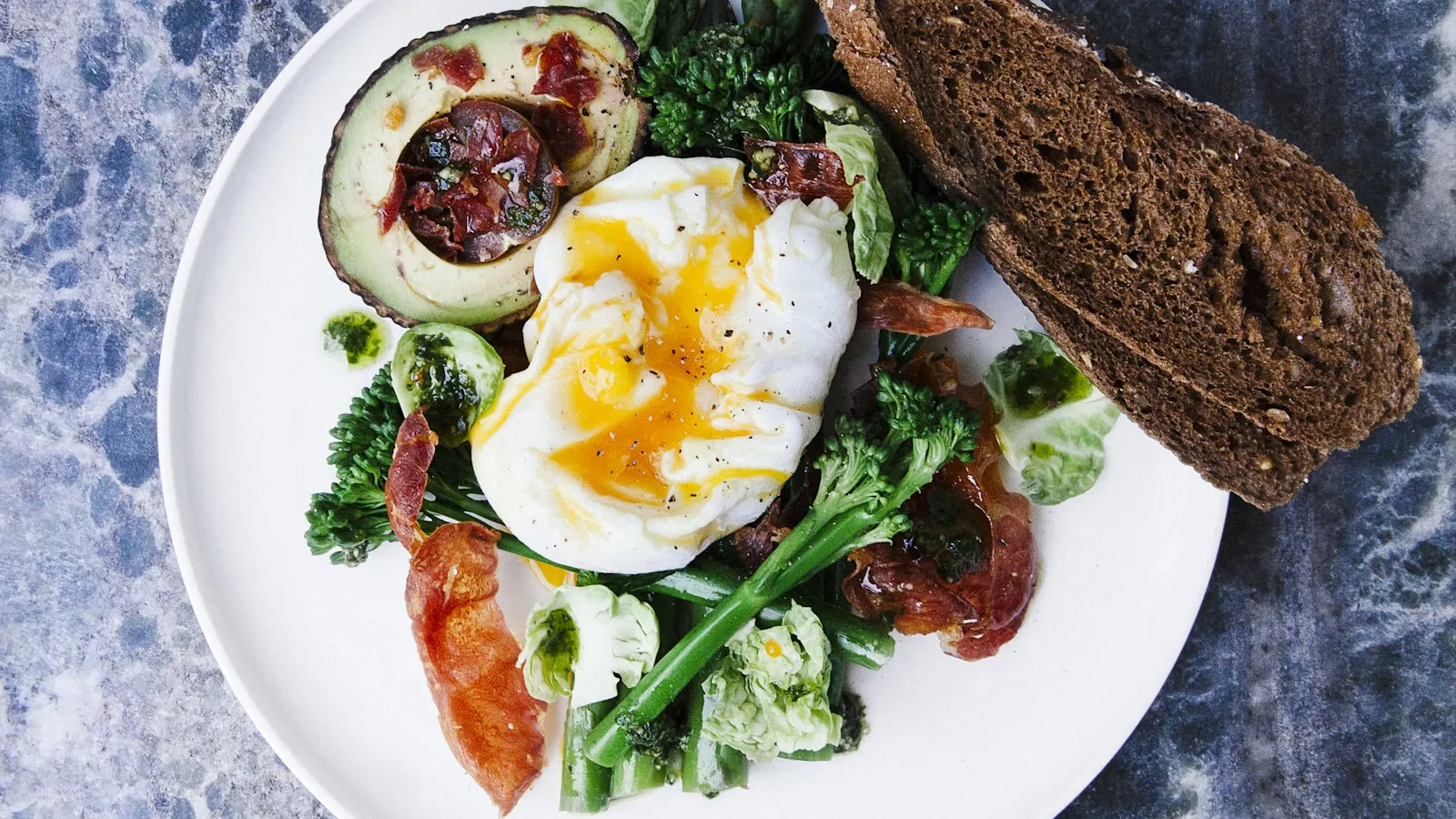
Nutrition for PCOS is mainly about keeping your blood sugar steady. PCOS affects about 1 in 10 women of reproductive age, and for many, insulin resistance plays a role. Whole foods with enough fibre, protein and healthy fats can help stabilise that blood sugar.
What stands out to me in practice: advice about nutrition for PCOS often jumps straight to strict low-carb eating. My take is calmer. You do not have to cut carbs, but you do want to choose them more wisely. Below you read which nutrition principles may help and what you can have tested.
Which foods suit PCOS?
With PCOS, foods that keep your blood sugar steady fit well: plenty of vegetables, whole grains, legumes, protein and oily fish. A PCOS diet is not a strict regime, but a pattern of whole foods with enough fibre. Research suggests such a pattern may support your insulin sensitivity and hormone balance.
No single food resolves PCOS. It is the whole of your meals that can make a difference. The Voedingscentrum recommends a base of vegetables, fruit, whole grain products, legumes and healthy fats, which fits well with what can help in PCOS.
Regularity often helps too. Three meals with enough protein and fibre keep your blood sugar more even than many small snacks with fast sugars.
Want to understand how food and hormones connect? Read our overview on nutrition and your hormone balance. There you see how the same principles also matter for other hormones.
| Nutrition principle | Why it matters in PCOS | Example |
|---|---|---|
| Lower the glycaemic load | Can flatten spikes in your blood sugar and insulin | Whole grain pasta instead of white pasta |
| Enough fibre | Slows the uptake of sugar and helps you feel full | Legumes, oats, vegetables |
| Sufficient protein | Keeps you satisfied longer and helps balance a meal | Eggs, fish, quark, tofu |
| Oily fish and omega-3 | May contribute to a more favourable inflammation profile | Salmon, mackerel, herring |
| Limit processed sugars | Fewer fast sugars can prevent strong blood sugar spikes | Swap soft drinks and sweets for fruit |
Insulin resistance and your food
Insulin resistance means your cells respond less well to insulin, so your body makes more of it. In PCOS this is common, and it can raise the production of male hormones. Foods that keep your blood sugar steady may limit that extra insulin production.
High insulin levels can push the ovaries toward more androgens, such as testosterone. That is one reason insulin resistance sits so central in PCOS. Want to know more about this mechanism? Read PCOS and insulin resistance.
Adjusting your food is no guarantee. Still, research suggests that weight and insulin sensitivity are linked. A Cochrane review on lifestyle in PCOS found that lifestyle changes may improve the free androgen index and weight (Lim et al., 2019).
Small, doable changes are easier to keep up than a strict diet.
Glycaemic load and carbohydrates
Glycaemic load says something about how strongly a portion of food raises your blood sugar. Carbohydrates with a low glycaemic load, such as whole grains and legumes, give a more gradual course. In PCOS that can be pleasant, because it may help prevent sharp spikes in insulin.
So you do not have to avoid carbohydrates. It is about the type and the portion. Whole grain bread, brown rice, oats and legumes contain fibre that slows the uptake of sugar.
Combining helps too. If you add protein or healthy fats to a carbohydrate source, the uptake is often slower and you stay full longer.
A meta-analysis of studies on a low glycaemic index diet in PCOS suggests it may be favourable for the clinical and hormonal profile (Saadati et al., 2021). The effects differ per person, so see it as a direction, not a recipe.
What can you have tested with PCOS?
In PCOS, certain blood values can give a picture of your hormones and your sugar balance. Think of testosterone, SHBG, LH, FSH and fasting glucose or insulin. A blood test gives separate data points, not a diagnosis, but it can help you choose a direction together with your GP.
PCOS is not established with a single test. Doctors look at a combination of symptoms, an ultrasound and blood values. Want to understand how that diagnosis works? Read understanding PCOS.
If you notice that your cycle is irregular or that your symptoms increase, discuss that with your GP. A result is a starting point for that conversation, not an end point.
Seeing PCOS through Lunara
You can have the hormones that play a role in PCOS looked at without a referral. The PCOS Screening brings the relevant values together in one draw, so you get a picture of your situation together with a doctor. You receive your result digitally, with context from a BIG-registered doctor.
Such a test does not replace guidance, but it can make your questions more concrete. What you then do with food, you tune to your own values and to advice from your GP.
Frequently asked questions
Do I have to cut carbohydrates entirely with PCOS?
No. Research suggests that the type of carbohydrate mainly counts. Carbohydrates with a low glycaemic load, such as whole grain products and legumes, fit fine. Strict cutting is usually not needed and hard to keep up.
Does losing weight help with PCOS?
In women with overweight, some weight loss may improve insulin sensitivity and the cycle. It does not have to be much. Discuss a suitable approach with your GP or a dietitian.
References
- Lim SS, et al. Lifestyle changes in women with polycystic ovary syndrome. Cochrane Database of Systematic Reviews. 2019. PMID: 30921477.
- Saadati N, et al. The effect of low glycemic index diet on the reproductive and clinical profile in women with polycystic ovarian syndrome: a systematic review and meta-analysis. Heliyon. 2021. PMID: 34820542.
- Voedingscentrum. Schijf van Vijf and whole foods. Available via voedingscentrum.nl.
- NHG and Thuisarts.nl. PCOS (polycystic ovary syndrome). Dutch College of General Practitioners. Available via thuisarts.nl.
Every blood test result through Lunara includes a professional assessment by a BIG-registered doctor. For treatment decisions, discuss your results with your GP.
شاهد Lunarahealth أكثر في Google
أضِفنا كمصدر مُفضّل. سيعرض Google حينها مقالاتنا بشكل أكثر تكرارًا في نتائج بحثك وفي ملخّصات الذكاء الاصطناعي. يمكنك إيقاف ذلك في أي وقت.
لم تنجح العملية. حاول مرة أخرى.
الكاتب
Lunarahealth
Dr. Naimi، طبيب مسجل في سجل BIG الهولندي، يشرف على المعايير الطبية لمحتوانا وتقييماتنا. اقرأ سياستنا الطبية
فحوصات ذات صلة
مقالات ذات صلة
Iron rich foods: 14 sources and how much iron they provide

Supplements for hormone balance: what works and what to test first