NuvaRing experiences come back to the same advantage strikingly often: a calmer, more predictable bleeding pattern than women were used to on the pill. There is real pharmacology behind that. The ring releases about 15 micrograms of ethinylestradiol a day, the lowest daily oestrogen dose of any combined method.
That you get the same effect with less hormone is the one genuinely interesting thing about this method. And almost no article explains it.
How does NuvaRing work?
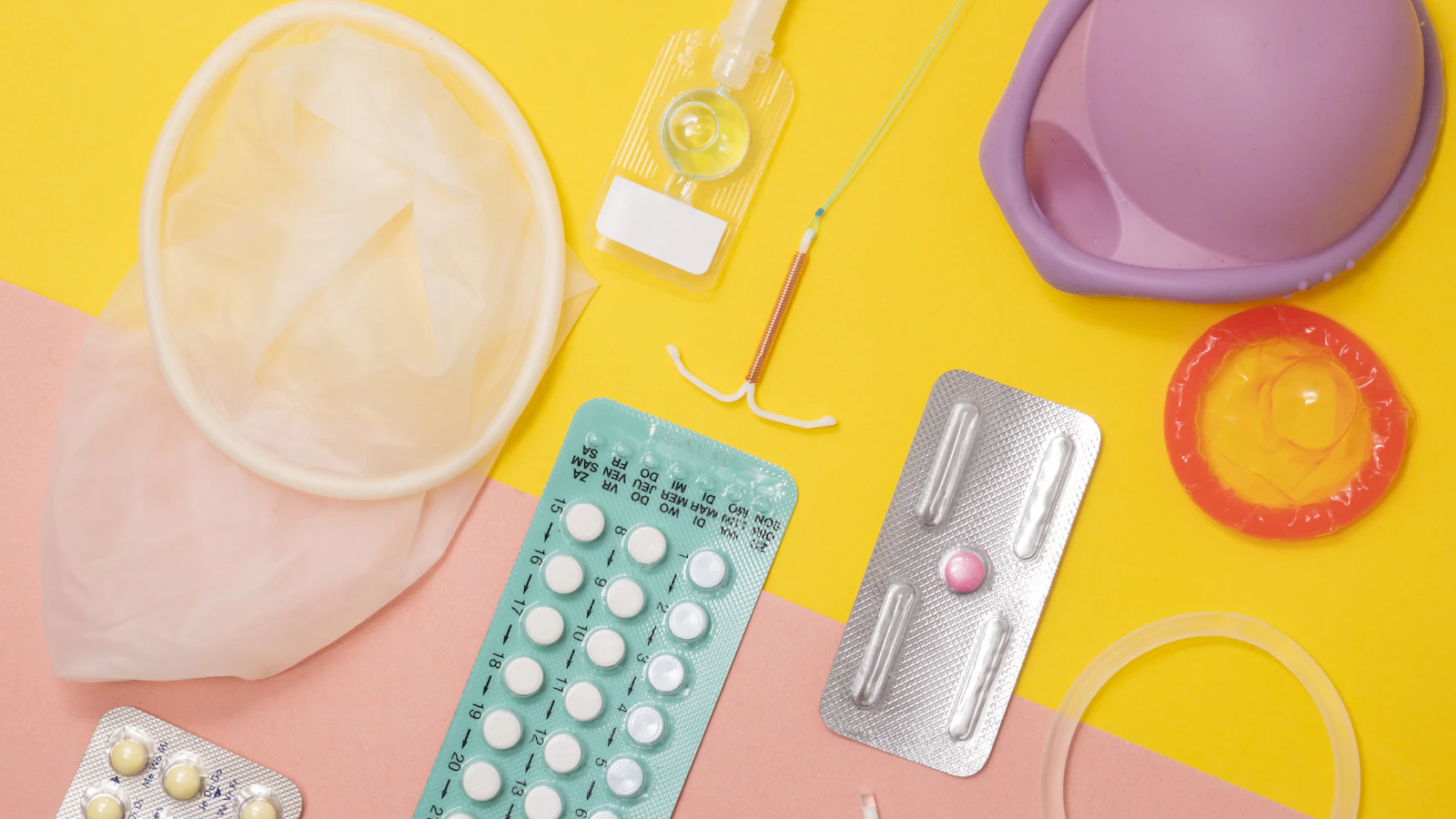
NuvaRing is a flexible plastic ring about 5 centimetres across that you insert yourself. It continuously releases etonogestrel and ethinylestradiol, which switch off ovulation. You leave it in for three weeks, take it out for a week for a withdrawal bleed, then insert a new one.
Placement is not fussy. The ring does not need to sit in a particular spot to work, and when it is in properly you usually cannot feel it.
Why that low dose works: the hormones are absorbed through your vaginal wall and do not pass through your liver first. A review in Therapeutics and Clinical Risk Management in 2008 described how this produces stable blood levels at a lower daily dose than a tablet requires.
NuvaRing experiences: what women report
The most mentioned plus is convenience: one action a month instead of 28. Beyond that women report fewer breakthrough bleeds than on the pill, and less nausea, which fits the hormone bypassing your stomach and liver.
Research on the ring describes good cycle control, and a randomised comparison with a combined pill over one year showed comparable efficacy and safety. That is what shows up in real-world experiences.
The complaints women mention are fairly consistent: more vaginal discharge, occasional irritation, and awareness of the ring during certain movements. Some partners feel it during sex.
| Commonly mentioned advantage | Commonly mentioned drawback |
|---|---|
| One action a month | More vaginal discharge |
| Predictable bleeding pattern | Sometimes noticeable during sex |
| Less nausea than with tablets | You have to insert it yourself |
| Low daily oestrogen dose | Can slip out unintentionally |
| Quickly reversible | Limited shelf life outside the fridge |
Picture two women switching from the same 30 microgram ethinylestradiol pill to the 15 microgram ring. One notices less nausea within two cycles and is relieved. The other finds insertion unpleasant and is back on the pill after those same two cycles. The same halving of the dose, and the reason for stopping has nothing to do with hormones.
How long can NuvaRing stay out?
Up to three hours, and your protection stays intact. That covers taking it out during sex, or it slipping out by accident. Rinse it with lukewarm water and put it back. Longer than three hours and the extra rules in your leaflet or on Thuisarts.nl apply.
What goes wrong more often is the week after. The ring stays in for three weeks and comes out for exactly one; if that break runs past seven days, protection drops.
So set a reminder for two fixed days a month. In practice that is the only thing you need to remember.
What are the drawbacks of NuvaRing?
The main drawback is that the ring belongs to the same class as the combined pill. A lower daily oestrogen dose does not automatically mean a lower thrombosis risk; the two do not track each other. For thrombosis risk what counts most is that it is a combined method. Your own factors weigh in too: smoking, weight and family history.
That is a point I want to be honest about, because a low dose is easily read as reassurance. Discuss your risk factors with your GP before choosing any combined method.
Signals to act on the same day: a painful swollen calf, sudden breathlessness, chest pain, or severe headache with neurological symptoms. If you would rather avoid oestrogen altogether, the mini pill and the copper IUD are the usual alternatives.
NuvaRing and your blood values
The ring also contains ethinylestradiol, and that makes your liver produce more SHBG. Your free testosterone falls as a result, just as on a combined pill. For contraception that makes no difference, but for interpreting a hormone result it does.
Concretely: measure your androgens while using the ring and you are partly measuring the method. The same trap applies to the Yasmin pill, and the arithmetic is explained in SHBG in women.
If you stop the ring because you want to conceive, ovulation usually returns within a few weeks. The fertility test from Lunara measures a number of hormone values, with an assessment by a BIG-registered doctor. The wider picture is in birth control and your hormones.
Frequently asked questions
How quickly does ovulation return after stopping NuvaRing?
Quickly. The hormones clear your blood within days and ovulation can happen in the first cycle after your last ring. If you do not want to conceive, arrange something else straight away.
How long do NuvaRing side effects last?
Most complaints are clearest in the first two to three cycles and then ease. If they persist past three months, discuss it with your GP.
Can the ring sit too deep?
No. There is no too deep; the ring cannot pass your cervix. It also does not need a fixed position to work.
What does NuvaRing cost?
Reimbursed from basic insurance up to age 21. After that you pay yourself or through supplementary insurance, per monthly ring.
NuvaRing suits women who want a combined method without a daily tablet, and who do not mind inserting it. You only know that last part after a cycle or two. If you have doubts about your thrombosis risk, put that question to your GP first.
Every blood test result includes a professional assessment from a BIG-registered doctor. For treatment decisions, discuss your results with your GP.
References
- Thuisarts.nl. Using the contraceptive ring. Accessed 2026.
- Farmacotherapeutisch Kompas. Etonogestrel with ethinylestradiol, vaginal ring. Accessed 2026.
- Roumen FJ. Review of the combined contraceptive vaginal ring, NuvaRing. Therapeutics and Clinical Risk Management, 2008. PMID 18728840.
- Kerns J, Darney P. Vaginal ring contraception. Contraception, 2011. PMID 21237335.
- Fan GS, Ren M, Di W, Su P, Chang Q, Wu S, et al. Efficacy and safety of the contraceptive vaginal ring (NuvaRing) compared with a combined oral contraceptive: a 1-year randomised trial. European Journal of Contraception and Reproductive Health Care, 2016. PMID 27339759.
شاهد Lunarahealth أكثر في Google
أضِفنا كمصدر مُفضّل. سيعرض Google حينها مقالاتنا بشكل أكثر تكرارًا في نتائج بحثك وفي ملخّصات الذكاء الاصطناعي. يمكنك إيقاف ذلك في أي وقت.
لم تنجح العملية. حاول مرة أخرى.
الكاتب
Lunarahealth
Dr. Naimi، طبيب مسجل في سجل BIG الهولندي، يشرف على المعايير الطبية لمحتوانا وتقييماتنا. اقرأ سياستنا الطبية