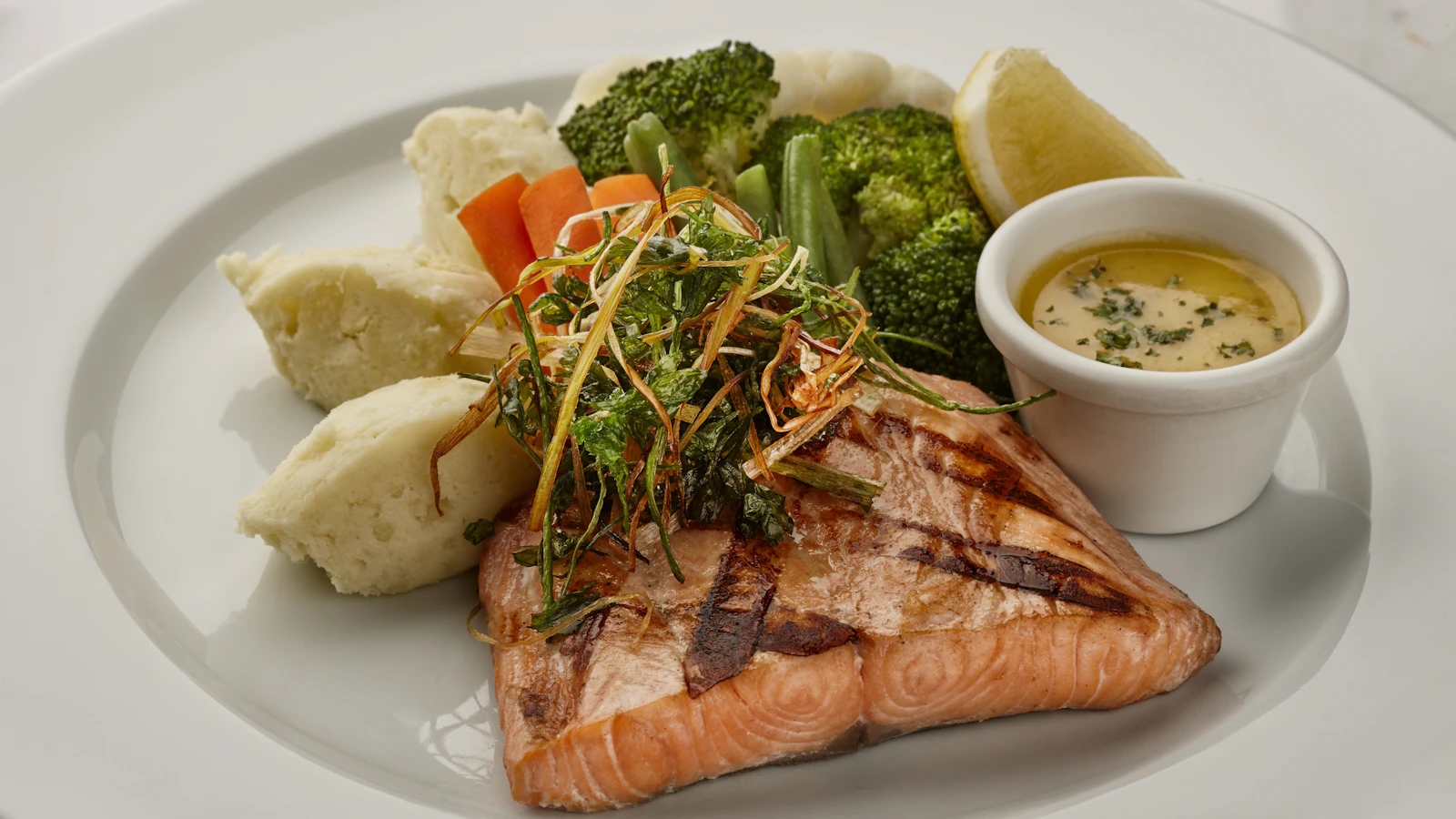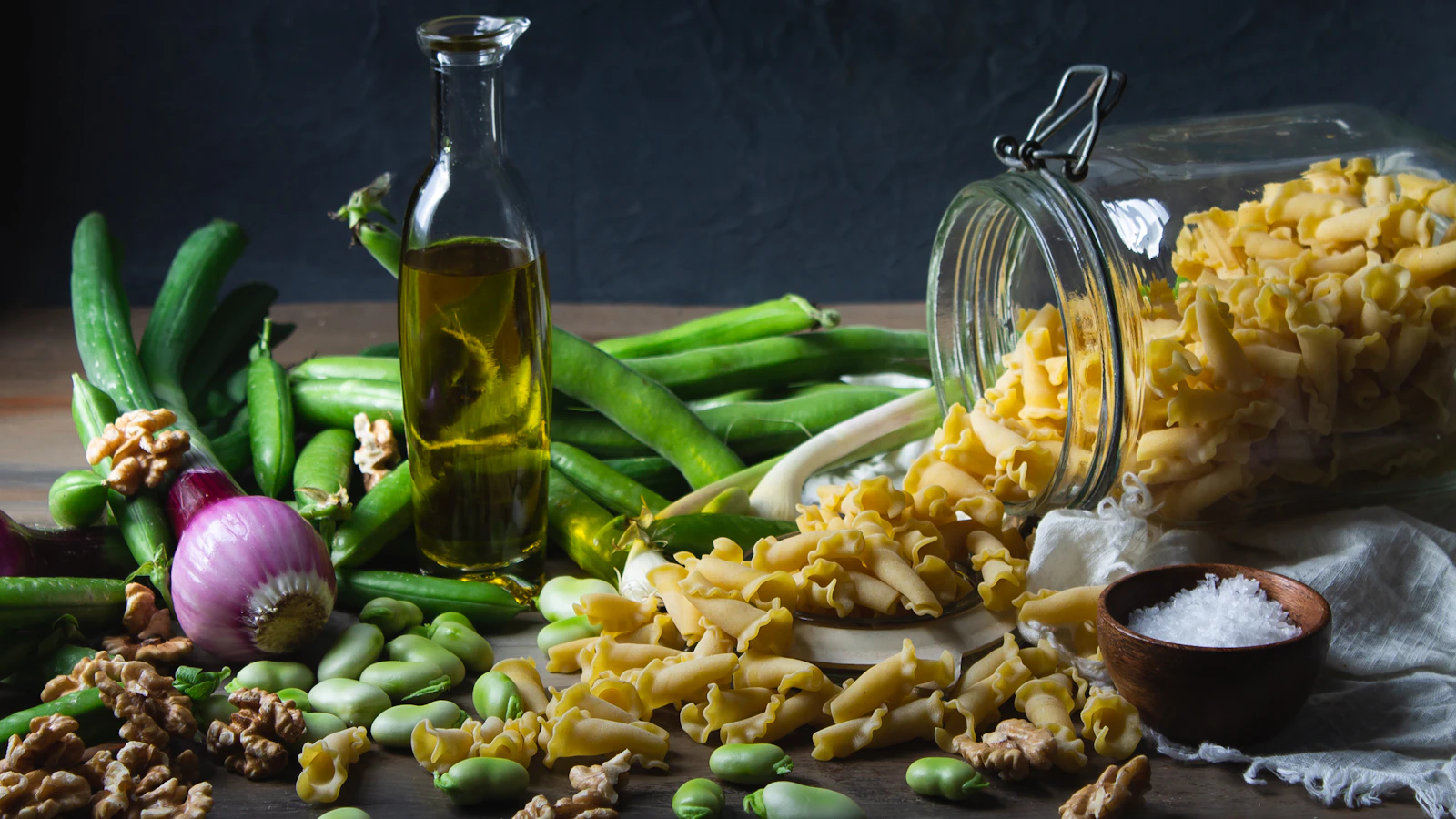
Lowering cholesterol with food starts with one choice: swapping saturated fat for unsaturated fat. That single swap does more than any superfood. On top of that, soluble fibre, such as in oats and legumes, helps lower your LDL cholesterol.
I notice a lot of confusion around this topic. One list says "no eggs", another says "butter is back". My take is calmer: look at the pattern, not at single heroes or villains. Below you will read which foods do the most according to research, and why a few smart swaps matter more than strict cutting. For the full picture, read our overview on lowering cholesterol for women.
What do you eat to lower your cholesterol?
The core is simple: less saturated fat, more unsaturated fat and more soluble fibre. In practice that means more oats, legumes, nuts, vegetables, fruit and plant oils, and less fatty meat, full-fat dairy and pastry. It is about replacing, not just leaving out.
The Dutch nutrition centre (Voedingscentrum) sums it up as "replace saturated fat with unsaturated fat". That shift lowers your LDL, while strict fat-free eating can backfire. The table below lists the main food choices.
| Food choice | What it roughly does |
|---|---|
| Oats and barley (beta-glucan) | can lower LDL through soluble fibre |
| Legumes (beans, lentils) | fibre that helps bind cholesterol |
| Unsalted nuts | unsaturated fat instead of saturated |
| Oily fish (omega-3) | favourable for the fat profile |
| Plant oil (olive, sunflower) | replaces saturated fat from butter |
| Products with plant sterols | can lower LDL by roughly 6 to 12 percent |
Which foods lower LDL cholesterol most?
Two fibres stand out: beta-glucan from oats and the sterols sometimes added to margarine. Oats can lower LDL measurably. In a meta-analysis of 58 studies, about 3.5 grams of beta-glucan a day lowered LDL and non-HDL cholesterol (Ho et al., 2016).
Plant sterols do something similar through a different mechanism: they block cholesterol uptake in your gut. A dose of around 2 to 3 grams a day lowered LDL by an average of six to twelve percent (Ras et al., 2014). That is no miracle cure, but a measurable nudge on top of the rest.
So a bowl of porridge with some nuts and fruit is not a marketing line, but one of the few breakfasts with a genuinely evidenced effect on your LDL. To understand which value you are tracking, read our cholesterol values table.
Which foods are better to limit?
The biggest culprit is saturated fat: it raises your LDL. That sits mainly in fatty meat, sausage, full-fat dairy, butter and much pastry. Added sugars play a role too, mostly for your triglycerides. You do not have to cut anything entirely, but replacing pays off.
Also watch hidden sources. A handful of biscuits with coffee, every day, adds up. And alcohol works mainly on your triglycerides, not so much on your LDL. We cover that blood fat separately in high triglycerides.
How fast does cholesterol drop with food?
Count on weeks to months, not days. Your body adjusts gradually, and the effect of a different eating pattern often only shows in your blood after six to twelve weeks. How much it drops varies strongly per person.
That slow pace is exactly why measuring once says little. A single result after a good or bad week distorts the picture. What counts is the line over a longer time. So give a change time before you draw conclusions.
What strikes me: people often drop out in week two, because they see nothing yet. That is too early. Choose an approach you can sustain for months, not a strict diet for two weeks. Then discuss your results with your GP, so you look at the line together.
What helps besides food?
Food is one lever, but not the only one. Movement works mainly on your HDL, the cholesterol that helps carry the rest away. How to approach that is in raising HDL cholesterol. Together, food and movement do more than each alone.
Little changing despite months of good eating? Then more may be at play, such as a hereditary tendency or a hormonal change. Discuss that with your GP. A lipid profile gives you the numbers to make such a conversation concrete; at Lunara you can take a lipid profile blood test.
Start small and keep it up. Pick one swap this week that you will genuinely sustain, for example porridge instead of a biscuit with your coffee, and measure again in a few months. Then discuss your result with your GP.
Sources
- Ho HVT, Sievenpiper JL, Zurbau A, et al. The effect of oat beta-glucan on LDL-cholesterol, non-HDL-cholesterol and apoB for CVD risk reduction: a systematic review and meta-analysis. Br J Nutr. 2016;116(8):1369-1382. PMID 27724985.
- Ras RT, Geleijnse JM, Trautwein EA. LDL-cholesterol-lowering effect of plant sterols and stanols across different dose ranges: a meta-analysis. Br J Nutr. 2014;112(2):214-219. PMID 24780090.
- Voedingscentrum. What can I eat to lower my cholesterol. Available via voedingscentrum.nl.
- Hartstichting. Lowering high cholesterol with food. Available via hartstichting.nl.
Every blood test result at Lunara includes a professional assessment by a BIG-registered doctor. For treatment decisions, discuss your results with your GP.
Widuj Lunarahealth częściej w Google
Dodaj nas jako preferowane źródło. Google będzie wtedy częściej pokazywać nasze artykuły w Twoich wynikach wyszukiwania i w przeglądach AI. Możesz to w każdej chwili wyłączyć.
Nie udało się. Spróbuj ponownie.
Autor
Lunarahealth
Dr. Naimi, lekarz wpisany do holenderskiego rejestru BIG, nadzoruje standardy medyczne naszych treści i ocen. Przeczytaj naszą politykę medyczną