Iron rich foods give your body the iron it uses to carry oxygen through your blood. Per portion, apple syrup, beef, tahini and cashew nuts sit at the top, followed by legumes, tofu and dark green vegetables. How much iron you actually absorb from them, though, varies a lot per product.
That difference comes down to two forms. Haem iron occurs only in animal products and is absorbed at roughly 25 percent. Non-haem iron is absorbed at 1 to 10 percent and, according to the Netherlands Nutrition Centre, occurs in both plant and animal products.
Below are 14 sources with the iron per realistic portion rather than per 100 grams. You rarely eat 100 grams of sesame paste or nuts in one sitting, after all.
Iron rich foods in a table
The table lists 14 sources, ranked by the iron per portion. The figures come from the Netherlands Nutrition Centre and the Dutch Vegan Society. They are guide values: brand, preparation and packaging make the exact amount fluctuate.
| Food | Portion | Iron per portion | Of which haem iron |
|---|---|---|---|
| Apple syrup | 30 gram | 3.8 mg | 0 mg |
| Beef steak (cooked) | 75 gram | 2.7 mg | 1.7 mg |
| Tahini (sesame paste) | 30 gram | 2.7 mg | 0 mg |
| Dried apricots | 50 gram | 2.0 mg | 0 mg |
| Tofu (cooked) | 75 gram | 1.7 mg | 0 mg |
| Cashew nuts | 25 gram | 1.7 mg | 0 mg |
| Cooked spinach | 70 gram | 1.7 mg | 0 mg |
| Red kidney beans (cooked) | 60 gram | 1.4 mg | 0 mg |
| Boiled egg | 50 gram | 1.2 mg | 0 mg |
| Salted herring | 75 gram | 1.1 mg | 0.4 mg |
| Cooked kale | 85 gram | 0.9 mg | 0 mg |
| Wholegrain pasta (cooked) | 45 gram | 0.8 mg | 0 mg |
| Wholegrain bread | 35 gram | 0.7 mg | 0 mg |
| Chicken breast (cooked) | 80 gram | 0.6 mg | 0.2 mg |
What stands out in that last column: even in meat and fish, only part of the iron is haem iron. The rest is non-haem iron, exactly the same form as in beans and bread.
Animal sources of iron
Four of the 14 sources are animal, and only this group can contain haem iron. That makes absorption more favourable, though not all animal products deliver the same. A boiled egg, according to the Netherlands Nutrition Centre, contains no haem iron at all.
1. Beef steak, 2.7 mg per 75 gram
A 75 gram portion of cooked beef steak provides 2.7 mg of iron, of which 1.7 mg is haem iron. That is the largest haem iron contribution in this list. Red meat is therefore the animal source you absorb proportionally the most from.
2. Boiled egg, 1.2 mg per egg
A 50 gram boiled egg provides 1.2 mg of iron. Strikingly, that is entirely non-haem iron despite its animal origin. For absorption, the iron in an egg behaves more like the iron in beans than the iron in steak.
3. Salted herring, 1.1 mg per 75 gram
Salted herring provides 1.1 mg of iron per 75 gram portion, of which 0.4 mg is haem iron. Oily fish is therefore a modest iron source. The haem share sits lower than in red meat.
4. Chicken breast, 0.6 mg per 80 gram
Cooked chicken breast provides 0.6 mg of iron per 80 gram, of which 0.2 mg is haem iron. White meat clearly contains less iron than red meat. Darker chicken meat, such as the leg, contains somewhat more.
Plant sources of iron
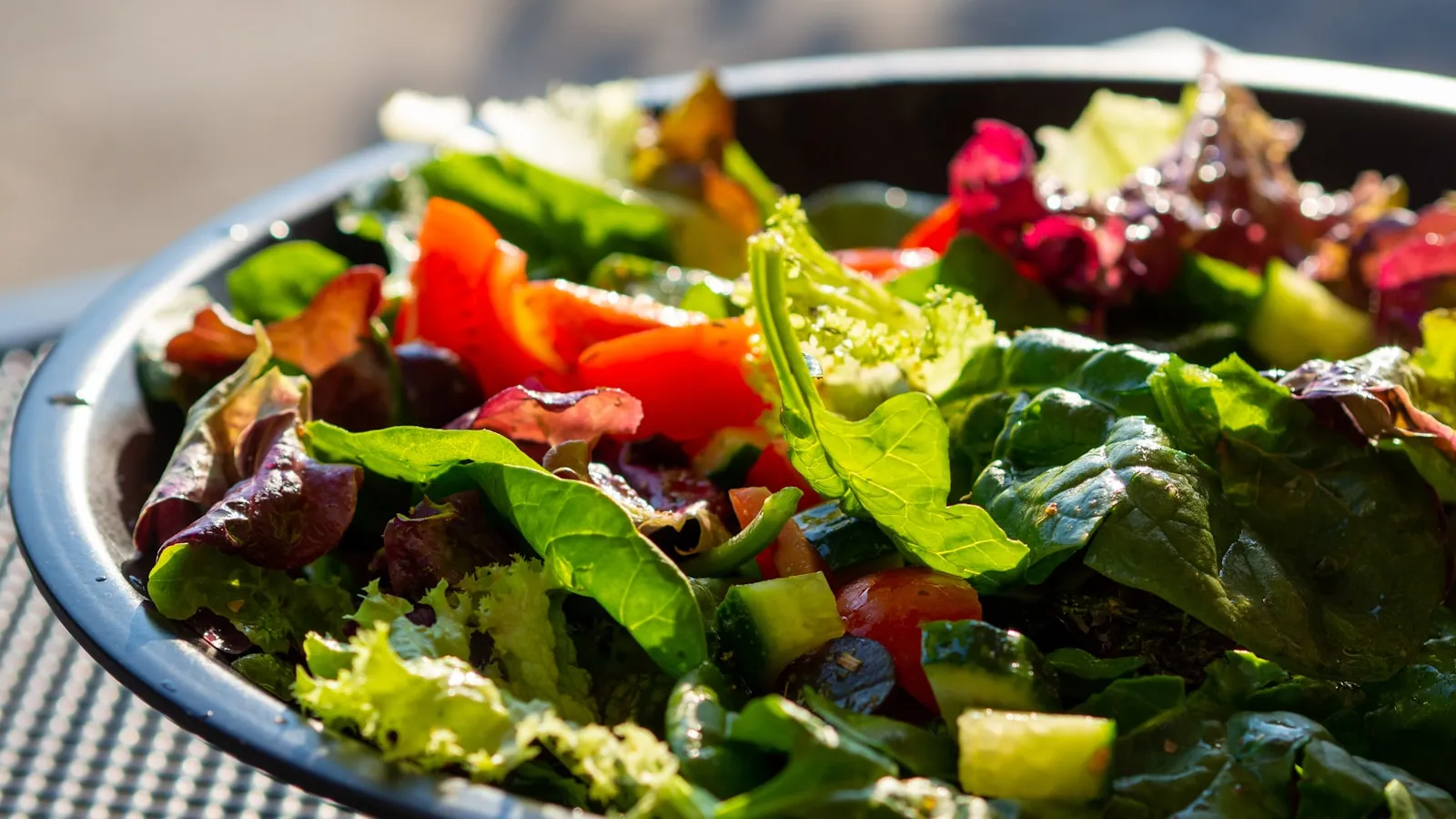
The remaining ten sources are plant based and provide non-haem iron only. Proportionally you absorb less of it, although a few of the highest per portion figures sit in this group. What you eat and drink alongside them makes the biggest difference here.
5. Apple syrup, 3.8 mg per 30 gram
Apple syrup provides 3.8 mg of iron per 30 gram, putting it at the top of this list. It is a typically Dutch bread spread that international round-ups almost always miss. The portion is small, which puts the amount per slice into perspective straight away.
6. Tahini, 2.7 mg per 30 gram
Tahini, or sesame paste, provides 2.7 mg of iron per 30 gram. Sesame seed is one of the richer plant sources. As a paste it is also easier to eat in larger amounts than loose seed.
7. Dried apricots, 2.0 mg per 50 gram
Fifty grams of dried apricots provides 2.0 mg of iron. Because the moisture has been removed, iron sits more concentrated in dried fruit than in fresh fruit. Other dried fruits generally provide less.
8. Tofu, 1.7 mg per 75 gram
Cooked tofu provides 1.7 mg of iron per 75 gram. The iron content differs per brand, because it depends on the coagulant the producer uses. The label often states the exact amount.
9. Cashew nuts, 1.7 mg per 25 gram
A 25 gram handful of unsalted cashew nuts provides 1.7 mg of iron. That is a lot for such a small portion. Other nuts provide iron too, though most sit somewhat lower.
10. Cooked spinach, 1.7 mg per 70 gram
Cooked spinach provides 1.7 mg of iron per 70 gram. Spinach has a reputation as the iron food, but it also contains oxalates that inhibit absorption of its own iron. Other leafy greens therefore often give a more favourable result.
11. Red kidney beans, 1.4 mg per 60 gram
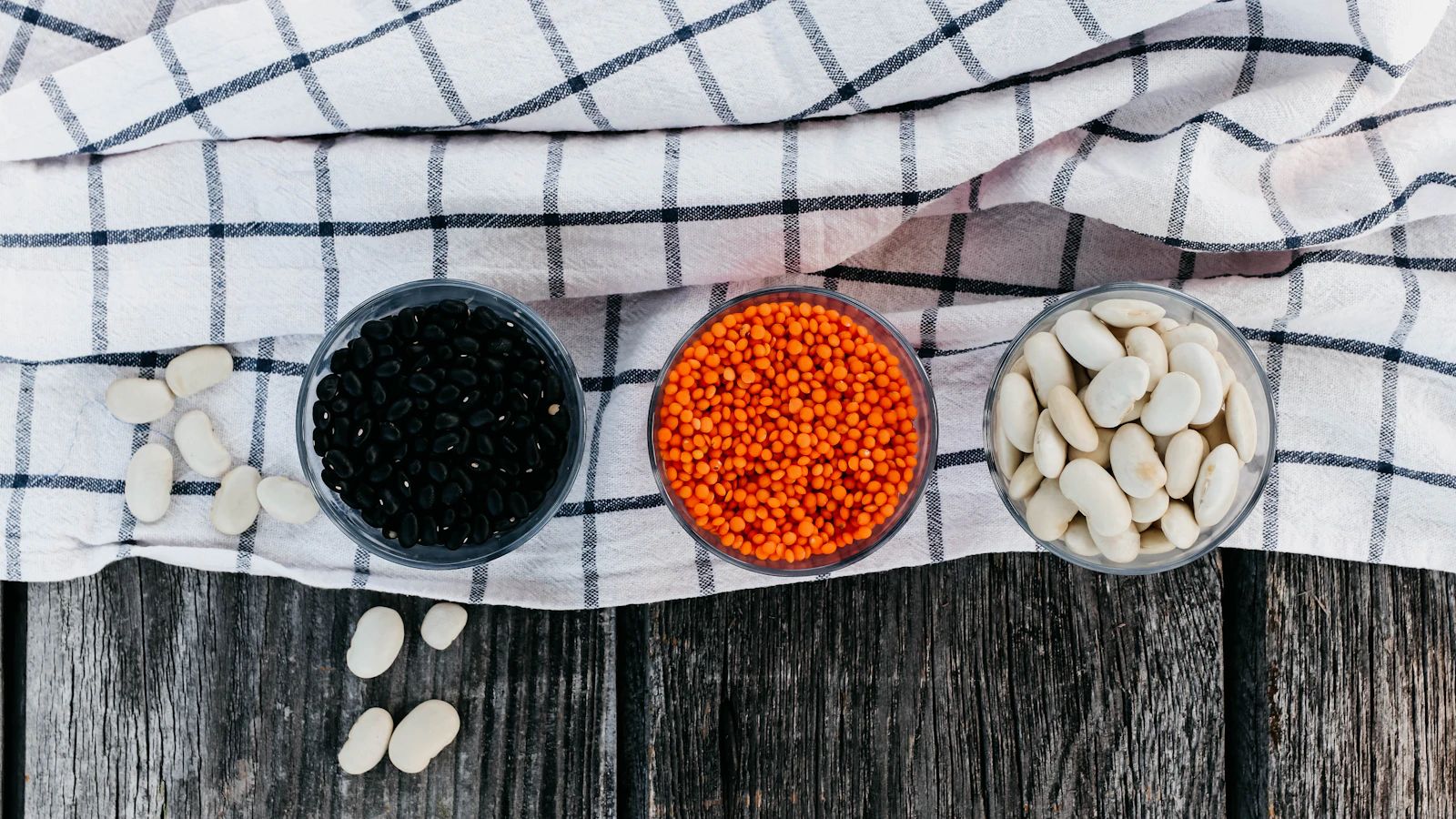
Cooked red kidney beans provide 1.4 mg of iron per 60 gram. Legumes are among the most consistent plant iron sources. Black beans, white beans and lentils sit in the same range.
12. Cooked kale, 0.9 mg per 85 gram
Cooked kale provides 0.9 mg of iron per 85 gram. Kale contains less oxalate than spinach, which leaves its iron more available. It also naturally provides vitamin C, which supports non-haem iron absorption.
13. Wholegrain pasta, 0.8 mg per 45 gram
Cooked wholegrain pasta provides 0.8 mg of iron per 45 gram. The wholegrain version contains more iron than the white one, because the bran is retained. That same bran contains phytates, which inhibit absorption.
14. Wholegrain bread, 0.7 mg per slice
A 35 gram slice of wholegrain bread provides 0.7 mg of iron. Per slice that is little, but across a day with several slices it adds up. Bread is therefore one of the quieter iron suppliers in the Dutch diet.
What changes how much iron you absorb
With non-haem iron, the rest of your meal largely determines how much is actually absorbed. Vitamin C from peppers, citrus fruit or tomato improves that absorption. The polyphenols in tea and coffee work the other way.
Calcium can inhibit absorption too, and the phytates in wholegrains and legumes do the same. With spinach it is the oxalates. That explains why two meals with the same milligrams of iron on paper can work out very differently.
Haem iron is far less sensitive to all this. Its absorption sits around 25 percent and barely changes with what you drink alongside it.
Picture two women who both eat 70 gram of cooked spinach containing 1.7 mg of iron. One drinks orange juice with it and sits towards the top of that 1 to 10 percent, so around 0.17 mg absorbed.
The other drinks tea with it and sits towards the bottom, around 0.02 mg. Same plate, a difference of roughly eight times. So the table above says something about what comes in, but not everything about what you keep.
How much iron do you need per day?
For women between 18 and menopause, the Netherlands Nutrition Centre uses a recommended daily amount of 16 mg. After menopause that drops to 11 mg, the same amount as for men. During pregnancy 16 mg applies again.
That 5 mg difference comes from blood loss during menstruation. Women with heavy periods structurally lose more iron than the recommendation assumes. For them the need runs higher in practice.
A day featuring the top six products from the table already goes a long way towards those 16 mg. What you absorb from it is another story.
Why liver is not on this list
Liver is the richest iron source there is, and it is left out here deliberately. Organ meat contains a great deal of vitamin A: around 11,000 microgram per 100 gram, against a safe upper limit of 3,000 microgram per day.
The Netherlands Nutrition Centre therefore advises pregnant women against liver, liver sausage, liver pate and kidney, because of the risk of congenital abnormalities. Since many of our readers are pregnant or hoping to be, we leave liver off the list.
Plenty of iron round-ups put liver at the top without that caveat. It is exactly the kind of detail worth knowing.
When food alone is not enough
Food governs what comes in, but says little about what sits in your stores. You measure those stores with ferritin, and it can already be low while your haemoglobin is still perfectly normal. That is called iron deficiency without anaemia and is easily missed without a targeted test.
What I often see: someone watches their diet for months and still ends up with a low ferritin. That is less odd than it sounds, because food mainly replaces what disappears day to day.
From an average daily diet you absorb only a few milligrams of iron net. With a substantially depleted store, topping it up through food therefore takes a long time. Your GP can assess whether more than that is needed.
Complaints such as fatigue, paleness, breathlessness or hair loss can fit a deficiency, but also fit plenty of other things. A ferritin value makes that concrete. Always discuss a result that worries you with your GP.
Testing your own iron values
At Lunara you can have your iron status drawn without a referral. The Iron Status test looks at iron, ferritin, transferrin and transferrin saturation in one go. Your blood is drawn at one of 700+ draw locations.
Your result is assessed by a BIG-registered doctor, so you are not left looking at a row of numbers on your own. If you first want to know which value stands for what, read our iron values table.
For the broader context on causes and symptoms, see our article on anaemia in women. Testing yourself is a starting point and does not replace your GP's judgement.
Frequently asked questions
Which food contains the most iron per portion?
Of the 14 sources in this list, apple syrup provides the most iron per portion at 3.8 mg per 30 gram. Beef steak and tahini follow, both at 2.7 mg. Liver contains more still, but is advised against during pregnancy.
What is the difference between haem and non-haem iron?
Haem iron occurs only in animal products and is absorbed at roughly 25 percent. Non-haem iron is absorbed at 1 to 10 percent and occurs in both plant and animal products. Meat and fish therefore contain non-haem iron as well.
Does vitamin C help with iron absorption?
Vitamin C improves the absorption of non-haem iron, the form found in plant products. Peppers, citrus fruit and tomato are common sources of it. On haem iron, vitamin C has hardly any influence.
Do tea and coffee inhibit iron absorption?
The polyphenols in tea and coffee can inhibit the absorption of non-haem iron. The Netherlands Nutrition Centre names them explicitly as an inhibiting factor. On haem iron from meat and fish that effect is much smaller.
Can you resolve an iron deficiency with food?
Food mainly influences what comes in, while a deficiency is about your stores. Because you absorb only a few milligrams net per day, topping up a depleted store takes a long time. Your GP can assess what suits your situation.
Is spinach really that high in iron?
Cooked spinach provides 1.7 mg of iron per 70 gram, which is decent but not exceptional. Spinach also contains oxalates that inhibit absorption of its own iron. Kale and legumes deliver their iron in a more favourable form.
References
- Voedingscentrum. Iron in the diet. Netherlands Nutrition Centre.
- Voedingscentrum. Vitamin A and pregnancy. Netherlands Nutrition Centre.
- Nederlandse Vereniging voor Veganisme. Iron in plant based nutrition.
- Gezondheidsraad. Dietary reference values for vitamins and minerals.
Every blood test result through Lunara includes a professional assessment by a BIG-registered doctor. Blood testing through Lunara does not replace your GP's judgement. For treatment decisions, discuss your results with your GP.
Autor
Lunarahealth
Powiązane badania
Powiązane artykuły
Supplements for hormone balance: what works and what to test first
Seed cycling: does eating seeds for your hormones really work?