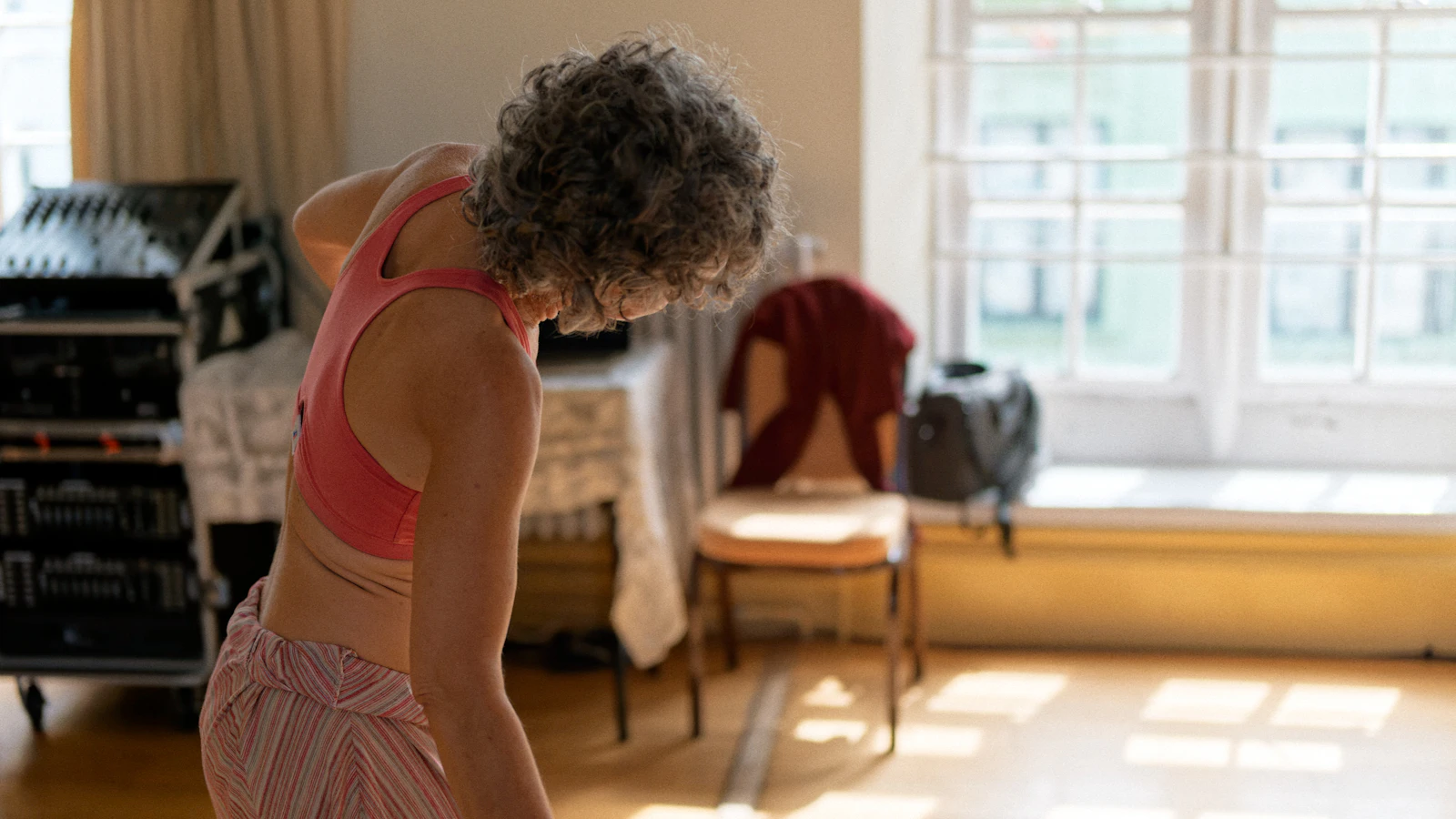
Healthy ageing depends largely on a handful of choices: moving enough, eating well, not smoking, being moderate with alcohol and keeping your mind engaged. That sounds dull, but the payoff is big. Women who combined five healthy habits at age fifty lived on average about fourteen years longer without chronic disease than women who had none (Li et al., 2018).
Still, there is a part of the story women often do not hear. Around menopause a few things shift on their own, regardless of how well you live. Your oestrogen falls, and that touches your bones, your blood vessels and your muscles at once. I think that is the honest starting point: some dials you can turn yourself, others you cannot, and it helps to know which is which.
In this overview you will read what healthy ageing means concretely for women, where the biggest levers sit, and which blood values give you a baseline. The deeper how-to questions live in separate articles that this piece links to.
What does healthy ageing actually mean?
Healthy ageing is not only about living longer, but about staying independent and fit for longer. Researchers call that healthy life expectancy: the years you spend without serious limitations. The goal is not to stop ageing, but to stretch the fit years.
For women, something specific plays a part. Menopause often sits in the middle of this phase, and it shifts several risk factors at once. Your cholesterol can rise, bone loss speeds up and your muscle mass declines faster. That makes the years around fifty a logical moment to pause and look at your health.
The good news is that many of those shifts can be influenced. Not all, and not completely, but enough to make a difference. That is what the rest of this article is about.
Which lifestyle factors matter most?
Four habits surface in almost every large study: moving enough, eating well, not smoking and being moderate with alcohol. Together they determine a large part of your later health. No single habit is a miracle, but the stacking counts.
Movement may be the strongest. In a pooled analysis of more than 660,000 adults, the biggest health benefit already sat in the first blocks of activity per week, plateauing around five to seven times the basic recommendation (Arem et al., 2015). So you do not have to become an athlete to capture most of the gain.
Food is the second pillar. The Dutch Nutrition Centre (Voedingscentrum) advises a pattern with plenty of vegetables, fruit, wholegrains, legumes and fish, and little processed meat and sugar. For women after menopause, extra attention for protein and calcium is often added.
What strikes me in the stories I hear: people underestimate how much the basics still do at a later age. Starting at sixty is late, but certainly not too late.
How important are sleep and stress?
Sleep and stress determine more of your health than many people think. Long-term stress and poor sleep are linked to a higher risk of cardiovascular disease, weight gain and disturbed blood sugar. They are not a side issue in healthy ageing.
For women around menopause, something is added. Hot flushes and night sweats can badly disturb your sleep. And poor sleep makes daytime stress harder to carry, which sometimes creates an unpleasant circle.
Chronic stress also keeps your cortisol raised for longer, and that can affect your metabolism and sleep over time. That does not mean every busy week is harmful, but long-term overload does deserve attention.
The good news is that you have influence here. Regularity in your day, movement in the morning and less caffeine and alcohol in the evening often help. Small, sustained adjustments add up more here than one big intervention.
Does your health change differently around menopause?
Yes. Around menopause your oestrogen falls, and that has consequences in several places at once. Your LDL cholesterol often rises on its own, your bone density declines faster and you lose muscle mass more quickly. These shifts belong to the phase, not necessarily to how you live.
That does not mean you are powerless. It means the starting point changes. A value that was stable for years can suddenly read higher, and that can be a shock. Usually it is not a sign you are doing something wrong, but a result of the hormonal transition.
Bone loss is a good example. After menopause, bone breakdown runs faster than build-up, raising your risk of osteoporosis. Read more in our article on osteoporosis after menopause.
What can you influence and what not?
Some factors sit largely in your own hands, others do not. It helps to keep those two apart, so you spend your energy on what you can change and accept the rest. The table below sets them side by side.
| Factor | Can you influence it? |
|---|---|
| Movement and muscle strength | Yes, largely |
| Food and weight | Yes, largely |
| Smoking and alcohol | Yes, fully |
| Cholesterol | Partly, with lifestyle and sometimes medication |
| Oestrogen decline in menopause | No, this is a natural process |
| Age and genes | No |
See this split as a compass, not a final verdict. The line between "yes" and "no" is sometimes grey. But the idea is clear: you have more influence than you think on the things that matter most.
Why are muscles so important as you age?
Muscle strength is one of the strongest predictors of how your older years go. In the large PURE study, lower hand grip strength was linked to a higher risk of early death and cardiovascular disease (Leong et al., 2015). Muscles are not just for the mirror.
For women this is extra relevant, because muscle loss speeds up after menopause. Without pushback, you gradually lose strength and mass from fifty onwards. Strength training and enough protein can slow that process considerably.
How to approach that practically, with how much protein and which training, is in our article on preserving muscle after 50. In short: two to three times a week some resistance, and enough protein spread across the day.
How old is your body really?
Your calendar age does not say everything. Two women of sixty can differ biologically by years, depending on lifestyle, muscle strength and metabolism. That idea is called biological age, and it captures how fast your body changes better than your birth year.
There are all kinds of online "age tests", but far from all of them measure something reliable. What research does link to ageing are things like walking speed, muscle strength and certain patterns in your DNA. A single blood value is not a validated biological clock.
We looked into this in our article on biological age, including what the science does and does not say about it. Useful if you are curious how your body is doing.
What should you watch for your heart?
Cardiovascular disease is the leading cause of death in women worldwide, and the risk rises after menopause. Yet women are more often recognised late, partly because their symptoms can differ from men. Extreme fatigue, shortness of breath or a pressing feeling belong to the picture too.
The biggest risk factors are partly the same as in men: high blood pressure, smoking, diabetes and high cholesterol. On top of that, pregnancy complications and menopause play a role. Read more about that female-specific side in cardiovascular disease in women.
I mention this early on purpose, because the heart is one of the places where prevention pays off most. Many risk factors are silent and you do not feel them, which is exactly what makes measuring valuable.
What role does vitamin D play in ageing?
Vitamin D helps your body absorb calcium and keeps your muscles and bones stronger. As you age, your skin makes less vitamin D from sunlight, and you often spend less time outside. That is why the Dutch Health Council (Gezondheidsraad) advises women from fifty to take extra vitamin D.
That advice is not new, but it is often forgotten. For women between fifty and seventy it is about ten micrograms a day, above that twenty micrograms. It is one of the few supplements with broad-based advice for this group.
What vitamin D does and does not do, and why the age threshold matters especially for women, is in our article on vitamin D and ageing.
Does your nutritional need change as you age?
Partly yes. At a later age you usually need fewer calories, but not fewer nutrients. For protein and some vitamins your need actually goes up. That calls for more conscious choices, not for eating more.
The Dutch Nutrition Centre (Voedingscentrum) points to extra attention for protein, calcium and vitamin D in older women. Protein helps keep your muscles up, calcium and vitamin D support your bones. Protein is best spread across the day, rather than in one meal.
In practice this means: more vegetables, wholegrain products, legumes and enough protein sources, and fewer empty calories from sugar and alcohol. Oily fish a few times a week also provides omega 3 and some vitamin D.
You do not have to eat perfectly to make a difference. A few fixed habits, such as protein at breakfast and vegetables daily, do more in the long run than a strict diet you cannot sustain.
Is preventive blood testing worthwhile?
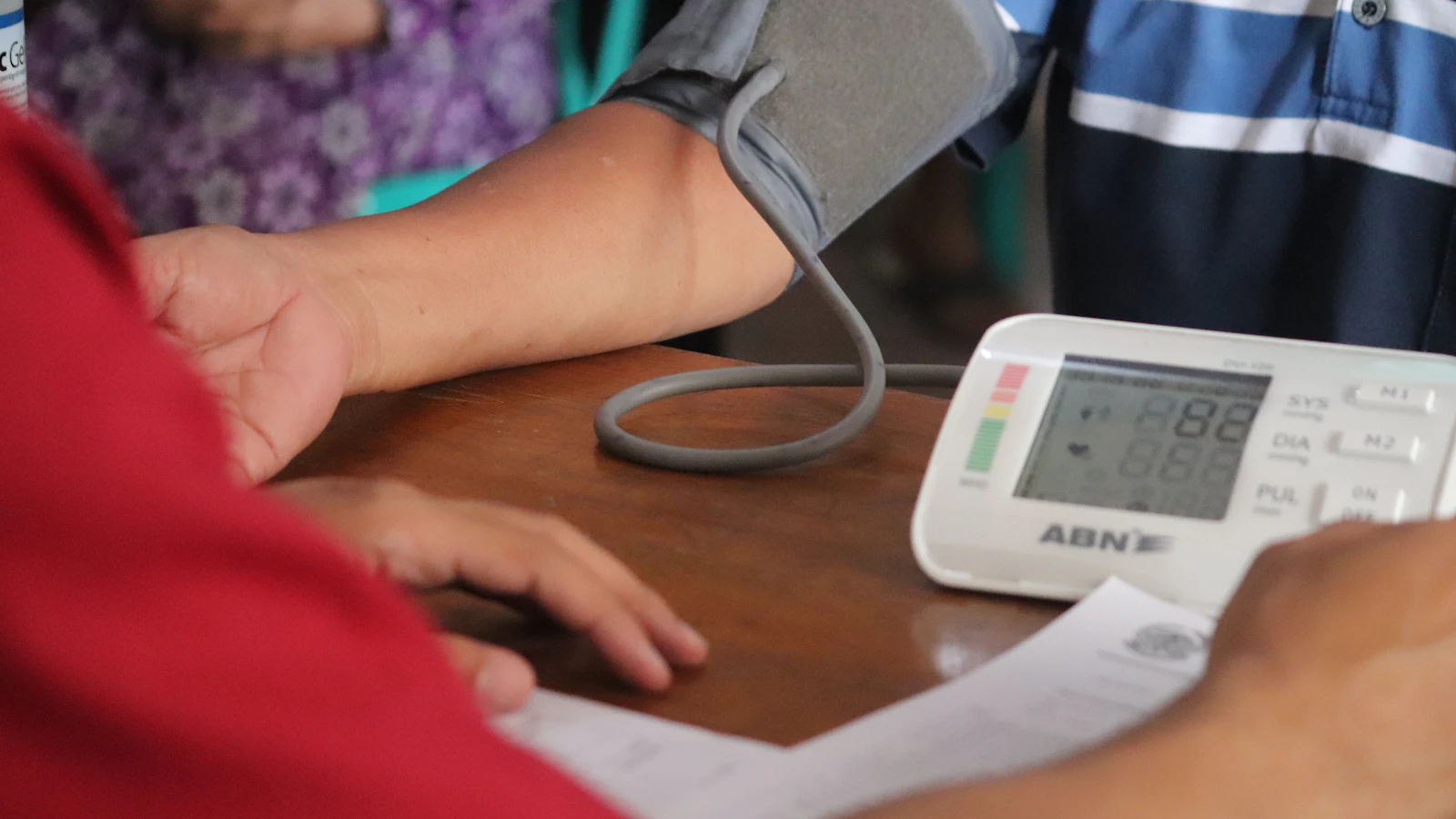
Sometimes yes, sometimes no. A blood test without reason does not automatically bring health gains, and can even cause needless worry. At the same time, some conditions run for a long time without symptoms, and then a measurement can give an early signal.
The art is in the balance. For women around menopause, values like cholesterol, blood sugar and thyroid can be interesting, precisely because they shift silently. What is and is not worthwhile, and why, we set out in preventive blood testing for women.
Always see a test result as a starting point, not a final verdict. What your values mean, you decide together with your GP.
Which blood values give a baseline?
There is no fixed list that fits everyone. But a number of values give a broad view of how your body is doing, especially around menopause. Below you see which values roughly light up which area.
| Value | What it roughly says something about |
|---|---|
| Cholesterol and triglycerides | cardiovascular health |
| Fasting glucose and HbA1c | blood sugar and metabolism |
| TSH and thyroid values | energy and metabolism |
| Ferritin and Hb | iron and blood formation |
| Vitamin D | bone and muscle support |
At Lunara you can measure these values in one go with an extended health check. Every result is assessed by a BIG-registered doctor, so you see your numbers in context. Mainly feeling tired? Then a more targeted check for fatigue may make more sense.
Setting a baseline around fifty has one big advantage: you have something to compare against. If something changes later, you notice it sooner. Discuss what fits your situation with your GP.
Where do you start?
Start small and concrete. Pick one habit you can adjust today: a daily walk, twice a week some strength, or your vitamin D sorted. Stack a second habit on top next month.
Want a baseline in numbers? Discuss with your GP whether measuring your cholesterol, blood sugar and thyroid once fits your situation. That is not an obligation, but it gives you something to steer by.
Sources
- Li Y, Pan A, Wang DD, et al. Impact of Healthy Lifestyle Factors on Life Expectancies in the US Population. Circulation. 2018;138(4):345-355. PMID 29712712.
- Arem H, Moore SC, Patel A, et al. Leisure time physical activity and mortality: a detailed pooled analysis of the dose-response relationship. JAMA Intern Med. 2015;175(6):959-967. PMID 25844730.
- Leong DP, Teo KK, Rangarajan S, et al. Prognostic value of grip strength: findings from the Prospective Urban Rural Epidemiology (PURE) study. Lancet. 2015;386(9990):266-273. PMID 25982160.
- Gezondheidsraad. Dietary reference values for vitamin D. Available via gezondheidsraad.nl.
- Voedingscentrum. Healthy ageing and nutrition. Available via voedingscentrum.nl.
Every blood test result at Lunara includes a professional assessment by a BIG-registered doctor. For treatment decisions, discuss your results with your GP.
الكاتب