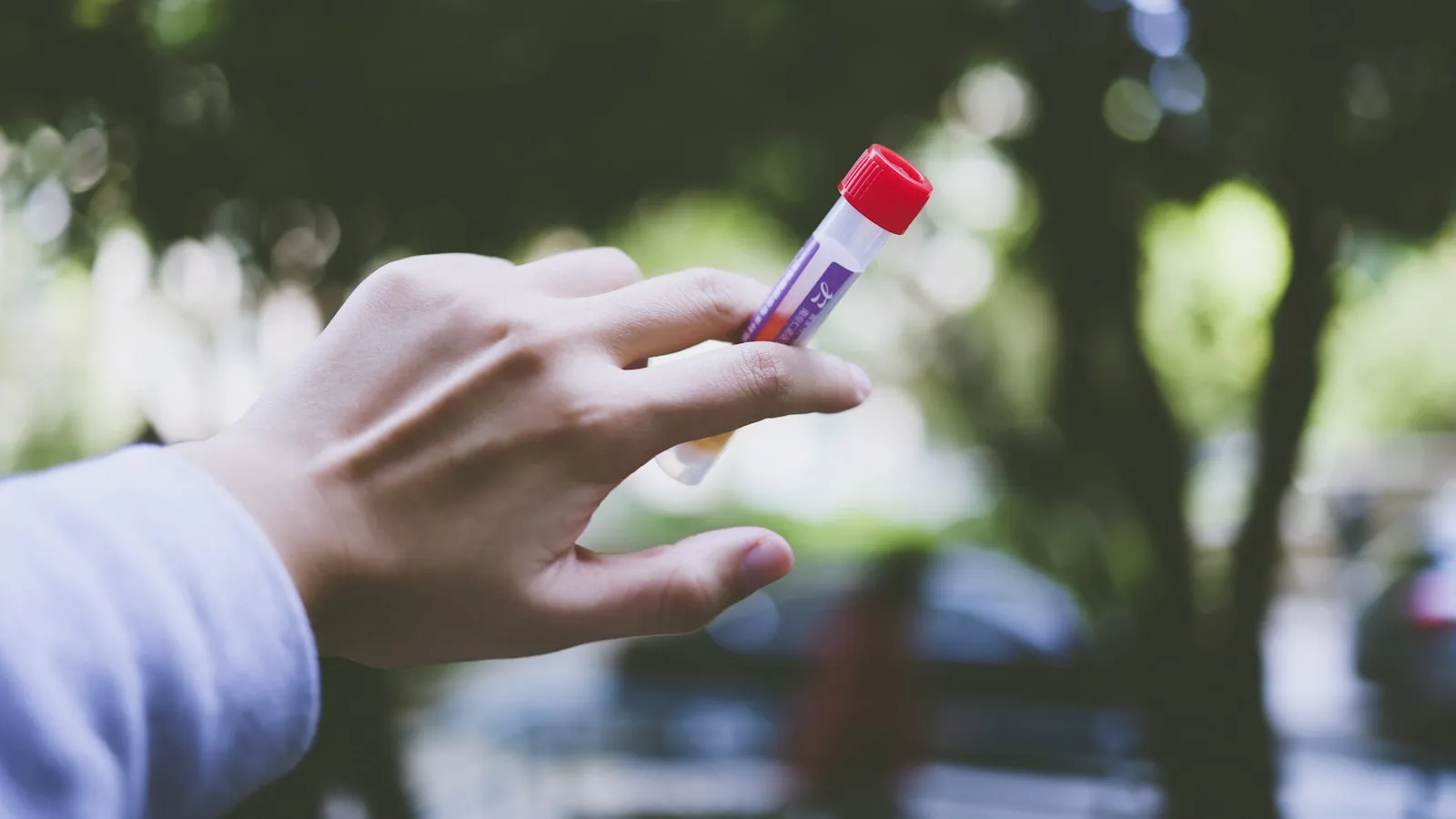
You call the GP practice and hear the first free appointment is in two weeks, for a conversation in which you still have to justify why you want your hormones measured. Sound familiar? For more and more women, that is the moment they think: surely this can be faster and simpler.
It can, and to be fair: for a first baseline reading without acute complaints, self-testing is often more practical than the GP route. But it is not a replacement for medical care, and I want to keep that distinction sharp.
The freedom to test without a referral is well arranged in the Netherlands. You do not have to give a medical reason and you choose which hormones to measure yourself. At the same time, that freedom asks something back: you carry the control over what you test, when, and what you do with the result. In this article we walk through the whole process, from choice to result, so you can take that control with confidence.
Why do women choose testing without a GP?
- Speed without waiting for an appointment.
- Control over which hormones you measure.
- Low threshold, no need to justify your complaints first.
- Privacy, you decide who you share the result with.
- Proactive, a baseline even without complaints.
How it works, step by step
| Step | What you do | Time |
|---|---|---|
| 1 | Choose online the panel that fits your complaint or question | A few minutes |
| 2 | Book an appointment at a collection point near you (750+ in the Netherlands) | Same or next day |
| 3 | Have blood drawn by a professional, just like at the GP | 5-10 minutes |
| 4 | Receive your results digitally with reference values | Usually a few working days |
Is it as reliable as through a GP?
Yes. The blood is analysed in a certified medical laboratory using the same methods and equipment as hospitals. The result contains the same reference values as a GP result. The difference lies in who takes the step, not in the quality of the testing.
What a self-test does not offer is the medical interpretation a GP provides. You receive clear reference values, but linking those numbers to your complaints and your history remains human work. That is why it is wise to still discuss a result that worries you, or that falls far outside the range, with a doctor. So do not see the self-test as a diagnosis, but as a reliable measurement that gives you a head start in that conversation.
Which hormones can you measure?
- Oestradiol and progesterone, your female base hormones.
- FSH and LH, for ovarian function and cycle.
- Testosterone and DHEA-S, for energy, libido and skin.
- TSH, for your thyroid function.
- Cortisol, your stress hormone.
Timing makes the difference
Self-testing gives you control, but that control also means you watch the timing. With hormones, the moment of the draw is often as important as the choice of hormone. For FSH, LH and oestradiol, day 2-5 of your cycle is the standard baseline, while progesterone is measured around day 21, when ovulation has been confirmed. Cortisol is highest in the early morning, so a measurement around 8:00 gives the most usable value. If you no longer have a regular cycle, for example in perimenopause, the cycle-day advice falls away and you can draw at any time, preferably still in the morning.
A few practical points that make the result more reliable: always note your medicines and supplements, because biotin, for instance, can interfere with certain hormone assays. If you use hormonal contraception, the result shows your values including that influence, which is fine to know but does not reflect your natural balance. And compare repeat measurements within the same laboratory where possible, so differences do not arise from different measurement methods.
When is it better to see a GP after all?
Self-testing has limits. For severe, sudden or long-lasting complaints, medical assessment belongs with a doctor. Thuisarts.nl advises contacting a doctor if a period is absent for more than three months, and the Dutch GP guideline (NHG) on menopause stresses that a doctor places complaints in the broader context. The nice part is you can take your self-test result to the GP: concrete values often make that conversation more focused.
To start, a women's hormone panel maps your key values at once. If you are unsure about the route, read GP vs self-testing as a woman. The broader overview is in hormone testing for women. For marker detail, see oestradiol and FSH.
Frequently asked questions
Can I test while on the pill?
Yes, but the result then shows your values including the influence of your contraception. For a picture of your natural balance, testing after stopping is better, in consultation with your doctor.
How often should I test my hormones?
That depends on your situation. A one-off test already gives a lot of insight. For persistent complaints or to track lifestyle effects, a repeat after 3-6 months can be worthwhile.
Is a self-test covered by my health insurance?
Usually not under basic insurance. Some supplementary policies cover preventive blood testing. Check the terms of your own policy.
Autor